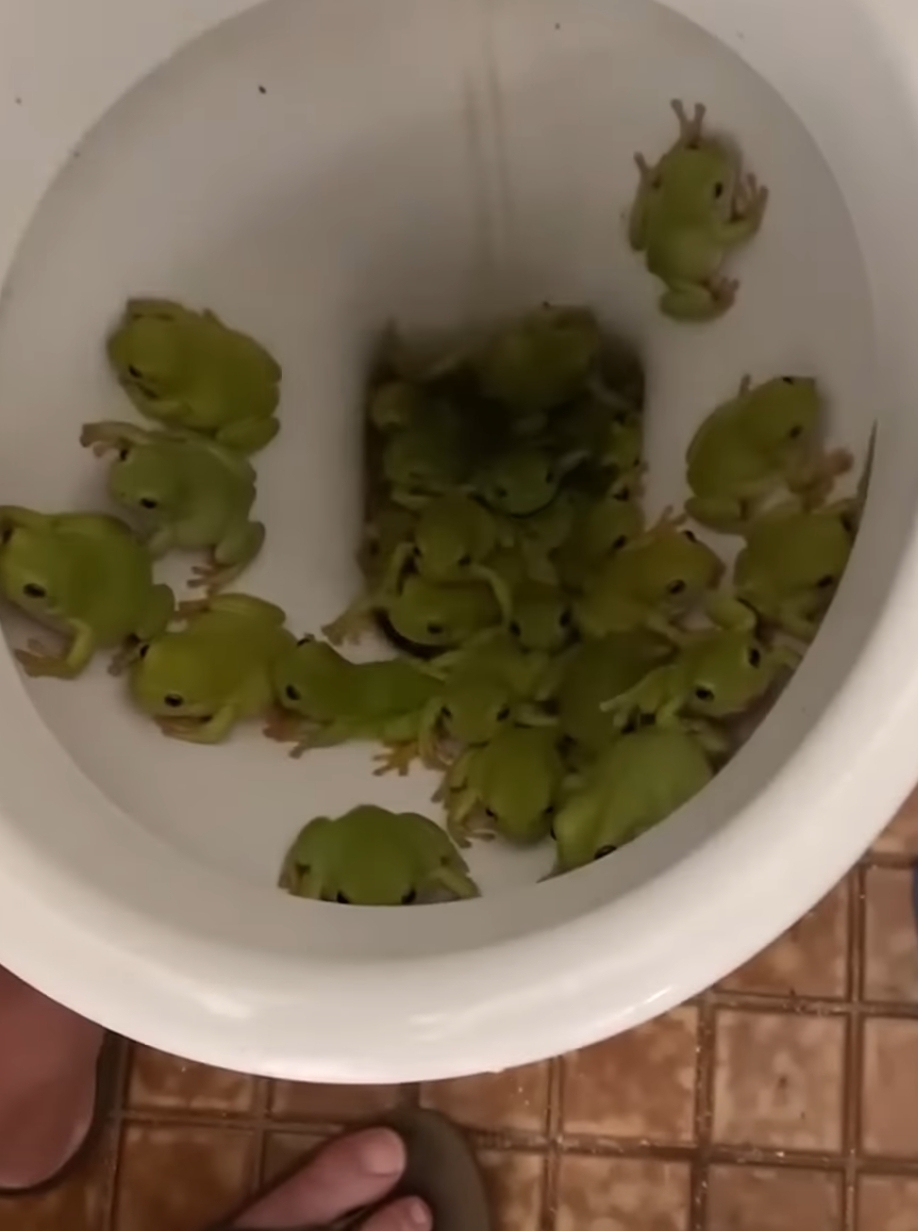
Critter pics.

165 readers
2 users here now

founded 6 years ago
MODERATORS
1


New wintering habitat has been built for natterjack toads at a Scottish Water wastewater treatment works at Powfoot on the Scottish Solway Coast.

The natterjack toad (Epidalea calamita) can only be found at a handful of locations in Scotland, all on the Solway coast; it is now Scotland’s rarest amphibian. Natterjack numbers have declined dramatically in recent years, largely due to habitat loss caused by sea level rise, coastal erosion, agricultural intensification, urban expansion and commercial forestry.

To help address this decline in habitat, Scottish Water, NatureScot, Amphibian and Reptile Conservation (ARC), and Hoddom and Kinmount Estates have joined together to build hibernacula, specialist structures designed to provide natterjacks safe spaces to shelter in winter. The project has been funded by Species on the Edge, an endangered species conservation programme funded by The National Lottery Heritage Fund. The construction of the hibernacula has been carried out by environmental services and ground maintenance company, Ground Control.

Each hibernaculum is built by digging pits into the earth and filling them with large rocks. Sand is packed into the spaces between. The natterjack toad is the only amphibian in the UK with the ability to burrow, and the structure creates a network of cavities and crevices with varying microclimates into which the natterjacks can burrow, shelter and regulate their body temperature during winter.

The design takes inspiration from features of the traditional farmed landscape – such as dry-stone walls and dust baths – which natterjacks once relied on but which have largely disappeared due to the intensification of modern agriculture.

Liam Templeton from Amphibian and Reptile Conservation (ARC) said: “We’re incredibly fortunate to have the iconic natterjack toad on the Scottish Solway Coast. The species was once abundant here, particularly at locations like Powfoot; local residents speak fondly about times when natterjacks could be heard chorusing on warm spring and summer evenings. It is our ambition for the species to return to its former glory so that such experiences can be enjoyed by future generations to come.

By constructing these hibernacula, we are providing a key habitat requirement for the species and ensuring that they have every opportunity to thrive as they have done before.”

Terri Ward, Biodiversity & Natural Capital Leader at Scottish Water, said: “Scottish Water is delighted to be working on this project alongside ARC, NatureScot and Ground Control. Healthy, well-functioning ecosystems are key to supporting the resilience and sustainability of water and wastewater services. These habitat improvements are part of a wider focus on treating nature as a vital asset in responding to challenges such as climate change.”

To find out more visit: www.speciesontheedge.co.uk/natterjack-toad or www.arc-trust.org.


Gallery

Two hibernacula at Powfoot (c) Liam Templeton Amphibian and Reptile Conservation

Powfoot hibernaculum (c) Liam Templeton Amphibian and Reptile Conservation

Natterjack toad

Natterjack toad (c) Chris Dresh

Male natterjack toad

Male natterjack toad (c) Chris Dresh


About Species on the Edge

Species on the Edge is a multi-partner species conservation programme dedicated to working with communities across Scotland’s coasts and islands to help them secure a future for their local nationally and internationally vulnerable species. Funded by The National Lottery Heritage Fund, the partnership consists of Amphibian and Reptile Conservation, Bat Conservation Trust, Buglife, Bumblebee Conservation Trust, Butterfly Conservation, NatureScot, Plantlife, and RSPB Scotland. The programme is active across seven landscape-scale areas in Scotland: Argyll and the Inner Hebrides; Outer Hebrides; North Coast; Orkney; Shetland; East Coast; Solway Coast.

About Amphibian and Reptile Conservation

Amphibian and Reptile Conservation (ARC) is a UK based wildlife charity dedicated to two important groups of animals. Its mission is to safeguard healthy populations of amphibians and reptiles and the habitats on which they depend. ARC’s team work to conserve green spaces, enthuse and involve more people in their conservation through its custodianship of over 80 nature reserves, spanning across 2000 hectares. The trust takes forward conservation directly through its team of over 50 employees along with 1000 volunteers. These include governmental and NGO bodies partners to influence others through advocacy, education and increasing awareness. In addition to its work in the UK, ARC also works to make a difference for amphibians and reptiles further afield, across Europe and internationally.

2
 
 
3
 
 
4


Family photo: parenting in the animal kingdom | The Narwhal

Doting mates, coddling parents and a touch of tough love; the animal kingdom has a lot to teach us about rearing young.

As a wildlife photographer for 14 years, I’ve had the chance to see these parents in action, and feel the loss of young left to fend for themselves. 

I’ve spied a Cooper’s hawk, watching closely as its parents hunt, so it can one day feed its own family. I’ve seen an eagle drop a fish into a river for an eaglet, when their own angling skills weren’t yet up to snuff.

Perhaps the most relatable scene was a worn out male fox, taking an afternoon nap in the grass, as his kits rough-housed nearby.

From the fields, rivers and skies of Ontario, here are some of my favourite family portraits.

A Cooper's hawk flies from a tree with a small branch in its talons

As they mature, the eyes of Cooper’s hawks change colour from brown to orange to red. A pair has been hunting in the woods behind my apartment for the past few years, and last year they were joined by a hatchling.

A Cooper's hawk sits on a branch, looking at the camera

A Cooper's hawk with a brown-feathered back flies from a branch

A young Cooper's hawk sits on a branch

The young Cooper’s hawk spends time watching the adults dart between tree branches to capture mourning doves, mice and even squirrels. This is a skill it will need to survive.

A kingfisher flies in front of a rock wall with a small fish in its beak

In the seven years I’ve been visiting the Nith River in Ayr, Ont., belted kingfishers have nested in a sandbank. When there are young in the nest, the adult male is busy delivering fish and crustaceans to them. Often he will perch on a nearby tree before deciding to enter the nest — a security precaution, to keep their location hidden from predators.

A young sandhill crane and two adults fly in front of trees

Two sandhill crane couples I know of return to their nesting areas south of Cambridge, Ont., each spring. Both pairs laid eggs in 2024. One pair’s nest was flooded and abandoned, but this other couple successfully raised a young one, called a colt. They forage close to the nest when the colt is young, but it will eventually be strong enough to fly with its parents.

A cluster of sandhill cranes gather around a small creek through farmers fields

Each December, sandhill cranes, both young and old, gather in fields along the shore of Lake Erie for migration, although some will remain in Ontario through the winter.

Deer families traditionally include a doe and her offspring from recent years, and they’ll sometimes join with others to form a larger herd. One winter, while wandering across a path, I had the feeling I was being watched. When I turned around I spotted this doe with two fawns.

Three deer stand on a snowy trail

Another mother and fawn approach the Grand River in Brantford, Ont., for a drink. I would often see them crossing the river here.

A mother and baby deer stand at the edge of a lake with purple flowers and forest behind them

A peregrine falcon with a tag on its leg flies towards the camera

Peregrine falcons are the world’s fastest animal, using their roughly 300-kilometre-per-hour flight speed to capture birds much larger than themselves. A pair took up residence on the roofs of two churches in downtown Cambridge, Ont., in 2023 and 2024. They were attracted no doubt by an abundant supply of pigeons and gulls close by.

A peregrine falcone swoops down from a rooftop under blue sky

A peregrine falcon takes off from a rooftop with a partially eaten rodent in its talon

In the spring of 2024, the pair were joined by one of their offspring, seen on the left, which noisily chased the adults whenever they caught a pigeon. I noticed the adults didn’t like to share, but the young one would feed on scraps until her hunting skills were perfected.

A young black bear peeks out from behind a tree

Black bear cubs normally remain with their mothers for roughly a year and a half. This cub was foraging in the woods surrounding Killarney, Ont., with no siblings and no mother in sight. There was an extraordinarily high number of orphaned cubs that year and the Ontario Ministry of Natural Resources couldn’t possibly rescue all of them. A weight limit of 15 kilograms was set, with cubs believed to be below that number targeted for capture and care at a sanctuary. After sharing my photos with one of the ministry’s bear technicians, this one was deemed to be a healthy weight with the potential to survive the winter on its own. A few weeks later I was told by locals they had seen two cubs scavenging at the Killarney town dump. Hopefully, this one made it through the winter.

A bald eagle swoops down while one eagle watches on and a young one screams from the nest

In spring, an adult female bald eagle lays her eggs in a nest constructed with moss, twigs and tree branches snapped from nearby trees. She spends up to 35 days on the eggs, only occasionally getting relief from her mate to stretch her wings — always in the vicinity of the nest. The adult male is the constant provider, delivering food to the nest. When the eggs hatch, his hunting activity is frantic, and the eaglets quickly grow.

From what I’ve seen, each year, one of the fledglings will remain dependent upon the adults for food, even after his or her siblings have left the territory to fend for themselves.

A bald eagle flies low over the water, with a splash below its talons where it picked up a fish

Adults will continue to feed this eaglet, dropping food in the vacated nest or on tree branches close to the nest. Once I watched the adult male drop an enormous northern pike into the river below a begging eaglet. It was an illustration of what good parents these eagles are.

Am adult eagle feeds a young eagle beak to beak

A young moose with patch of fur missing on its back walks across a paved road

A cow moose is a devoted mother and will care for her calf throughout most of its first year — but after that, tough love kicks in. This solitary calf photographed in May 2024 has, in all likelihood, been cast out by its mother so she can prepare to birth another calf.

An adult great horned owl sits on a branch, surrounded by shrubbery, looking straight at the camera

Over a few weeks of observation, I saw this male great horned owl bring squirrels, birds and half-eaten rabbits back to feed both his mate and one owlet, which was hidden in the trees. The adult waited for me to back away before taking the meal to his offspring, likely to keep its location secret.

A young great horned owl perches on a tree branch, looking straight at the camera

The young one was reliant upon its parents as it dared to only fly short distances between neighbouring trees.

A night heron balances on a stick over water

Black-capped night herons fish along the edges of ponds and rivers. This adult night heron preferred hunting for small fish in the shadows along the Speed River, in Cambridge. Her two offspring have learned to hunt from their mother, but found it easier near a dam on the river where fish might gather.

Two night herons sit on sticks above clear glass water

Over time the young herons will lose their brown markings and eventually take on the appearance of an adult — white breast, black-capped head and wings.

While his mate was tucked away in a den giving birth and then caring for the tiny pups, the adult male coyote was the sole provider for his family.

A coyote's head pops up above tall grass

Although I suspected the location of their den, near Paris, Ont., I kept my distance. After a couple of months of parental supervision, the three pups began venturing out and exploring the area.

Young coyotes walk down a gravel road

As the pups grew in size, they also answered the calls of their parents to meet down by the Grand River.

A young coyote crosses a gravel road

A kestrel flies over dry grass

Kestrels are the smallest member of the North American falcon family. Fully grown, they are about the size of a mourning dove. Over the month of April 2022, this adult female became used to me standing at the side of the road photographing her each evening as she hunted insects and mice.

A kestrel flies over dry grass

I didn’t see her over the following months and realized she was probably nesting somewhere. When she did eventually return it was with three young ones, none of which were as bold as her. They kept their distance.

A young fox sits in the grass and peers at the camera

A young fox looks back at the camera while standing in grass

Two young foxes play in the grass

For much of 2020, a red fox could be seen hunting behind my apartment building. In the summer and fall, two kits turned up, often playing together. Feeding the growing kits was a lengthy and apparently tiring process for the adult male, who would regularly take a 20-minute afternoon nap in the grass undisturbed by the sound of my camera clicking away.

5


Beautiful and rare fire tip sea slug spotted in Devon

Jake Taylor-Bruce The picture shows a small sea slug, the species Hermaea variopicta, photographed close up on a flat rocky seabed.Jake Taylor-Bruce

The fire tip sea slug was discovered during a Shoresearch survey at Wembury

A tiny, neon-bright sea slug spotted during a public beach walk in Devon has become one of the rarest marine finds ever recorded in the UK.

The fire tip sea slug, known to scientists as Hermaea Variopicta, was discovered during a Shoresearch survey at Wembury in late March.

It was found by someone taking part in the Devon Wildlife Trust event, with photos taken by the trust's marine engagement assistant Jake Taylor-Bruce.

The sighting is thought to be only the seventh known UK record of the species, said Devon Wildlife Trust.

Jake Taylor-Bruce The picture shows a small sea slug, the species Hermaea variopicta, photographed close up on a flat rocky seabed. The animal is lying on its right side, moving slowly across the surface, with the head to the left of the frame and the body trailing behind.Jake Taylor-Bruce

The sea slug was about 3cm long and fully grown

The creature is usually found in the Mediterranean and prefers warmer waters, meaning its appearance off the Devon coast is being seen as an indicator of climate change.

Taylor-Bruce said: "Somebody came over to me with a photo of something that they'd seen, and said, 'I've seen this animal, and it's beautiful but I don't know what it is.'"

He said he recognised it instantly. "I raced over at speeds that probably people shouldn't be running over the slippery, rocky surface, I think I probably hydroplaned."

The sea slug, about 3cm long and fully grown, lives among red seaweeds and feeds on algae. Its fiery reds, oranges and purples help it blend into its surroundings, rather than stand out.

"Ever since I've been going, I've missed out on that one, and I'm probably never gonna see another one," said Taylor-Bruce. "And then, lo and behold, right there in front of me, was, one of these fire tip sea slugs."

"This species in particular, I've never seen anything like it."

6
 
 
7
 
 
8
 
 
9
 
 
10
 
 
11
12
 
 
13
 
 
14


(Spotted here.)

15
 
 
16


17
 
 
18


19
 
 
20
21
 
 
22
 
 
23
 
 
24
 
 
25


Pic of m bullying my cat

view more: next ›