1
0
Amazon deforestation alerts fall to lowest level since 2013, Brazilian data show
(news.mongabay.com)
A community for Green & indigenous news!

Betsy Robertson was standing in the center of the Spokane Convention Center on Monday afternoon, but she wasn’t there for a gala or a conference. Instead, the event space in the middle of Washington state’s second-largest city had been transformed into a Red Cross emergency shelter as a trio of wildfires, just a few miles away, burned down entire neighborhoods.
Nurses and volunteers were moving between the rows of cots around Robertson, making sure that the hundreds of evacuees – from the mothers with their babies to the elderly with their caretakers – had blankets and enough to eat. Just outside, the air was noxious with smoke “thick enough to burn your eyes,” she said.
Robertson, a communications director for the Red Cross, is from Washington, and has been with the organization for 10 years. She has seen communities devastated by wildfires before. But never like this.
“The scale of homes destroyed and lives changed forever – this is a new level,” she said. “We are bracing ourselves for seasons like this getting worse and worse, and starting earlier and going later.”
A historically dry winter, extreme drought and heat waves set the stage for the hundreds of wildfires that have burned across the Pacific Northwest this summer. Dozens of large ones have broken out in the last week alone. Though it’s still early in the fire season, Oregon recently broke its annual record for acreage burned with nearly 2 million acres scorched.
Washington is also in the middle of its most destructive season on record, with more than half a million acres burned and at least 65,000 residents ordered to evacuate across the state. The three large fires that started on Saturday in the Spokane Valley had destroyed more than 700 hundred buildings by Monday afternoon.
“I’ve been trying to wrap my mind around how we’re going to house all these folks,” said Kitty Klitzke, a member of the Spokane City Council representing a hard-hit area where two fires were burning on Tuesday morning. Many of the people displaced by the fires in Spokane are senior citizens and their caretakers. “It’s a miracle that, so far, we know of no fatalities and no reported missing people,” Klitzke said.

A woman and her daughter wait for news on the status of their home at a Red Cross evacuation center in Spokane, Washington, on August 4, 2026. Josh Edelson / AFP via Getty Images
As the planet heats up, the conditions that fuel extreme wildfires are becoming more common. A warmer atmosphere can hold about 7 percent more water vapor for every 1 degree Celsius of warming, drawing more moisture from soils and vegetation and leaving forests and grasslands primed to burn. That dynamic also causes rain to fall more intensely but less frequently, leading to long periods of drought.
“This fire, and what we’re expecting to come, makes no sense unless you connect the dots through a changing climate,” said Bob Freitag, who recently served as director of the Institute of Hazards Mitigation Research and Planning at the University of Washington. “The science is known, and this is not something that is a one-off.”
According to Paul Pastelok, a senior meteorologist at AccuWeather, a lack of snowfall across the region helped set the stage for these fires. Normally, snowpack builds up during the winter and melts gradually through the rest of the year, providing a steady source of moisture. This year, the already-small snowpack was hit with hot spring temperatures, causing this reserve to melt early and leaving the landscape parched. Spokane had half of the typical snowfall this year, Pastelok said. Other parts of the state had even less, with many areas reaching historic lows.
In the last few days, powerful winds carried hot embers from the Little Giant fire, a 70,000 acre blaze in central Washington, for more than 3 miles, sending the flames clear over the waters of Lake Chelan and into the forests on the other side. Ryan Rodruck, a communications manager at the Washington Department of Natural Resources, called the overall situation “extremely tragic” and said that it had been an exceptionally challenging season for the thousands of wildland firefighters deployed across the state.
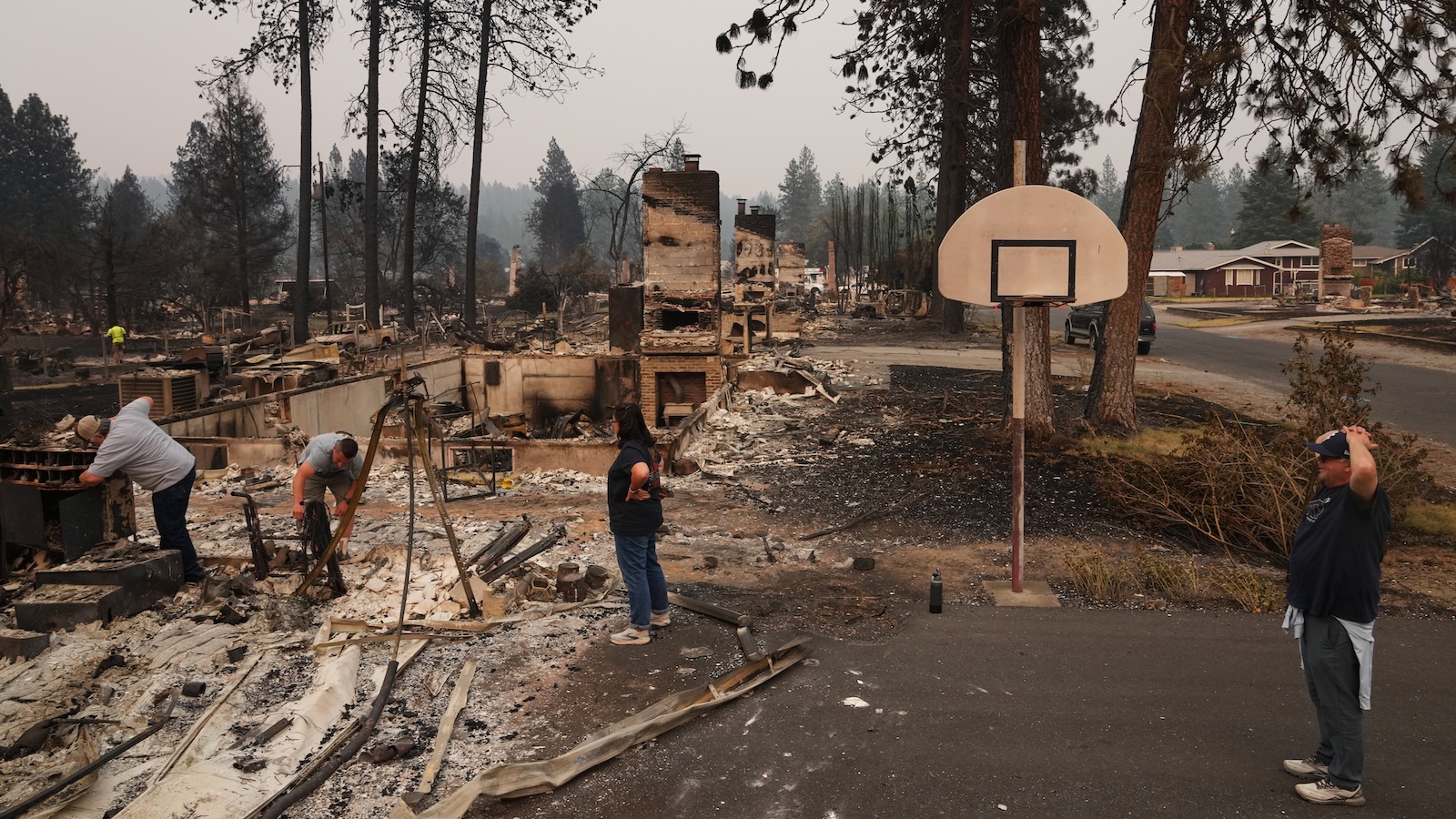
Residents of Spokane, Washington look through the remains of their burned home on August 3, 2026. AP Photo / Lindsey Wasson
In Spokane, more high winds forecast for this weekend could further worsen conditions, said Benjamin Cossel, a wildfire public information officer from California working with fire-fighting crews in the Spokane Valley.
The situation is comparable to the Los Angeles fires in 2025, Cossel said. Both outbreaks began in wild areas before moving into partially forested suburban neighborhoods. The urban setting also makes the smoke especially toxic, he said. A recently released study found that the Los Angeles fires, which sent more than 200,000 residents fleeing, had exposed an estimated 3.3 million people to high concentrations of a cancer-causing toxin.
Klitzke, the city council member, said the affected neighborhoods in Spokane were known to be vulnerable to fires. Steep terrain and abundant plant life helped the fires spread quickly over the weekend, while the winding cul-de-sac layouts of the neighborhoods slowed evacuations and made it difficult for emergency responders to reach the fires.
“These are neighborhoods with thousands of people and only two ways in or out,” Klitzke said, adding that many evacuees were stuck waiting in traffic for hours, watching the houses around them burn down.
Areas where homes mingle with natural areas are known as the wildland-urban interface. This kind of suburban housing is the fastest growing type of land development in the United States, and research shows that the homes built in these areas are more likely to burn down when wildfires spread.
“We already knew that this was a dangerous situation,” she said. “We need to get really serious about addressing climate change.”
Increasingly, fire-prone states like California are requiring homeowners to clear the trees and shrubs in a radius surrounding their home. This buffer zone, known as a defensible space, can dramatically reduce the risk that a wildfire will ignite a building.
People chose to live in these neighborhoods precisely because they love the vegetation, Cossel said. “I understand why people don’t want to remove them,” he said. “But we can’t live in that world anymore because of these fires.”
This story was originally published by Grist with the headline Wildfire season is changing. Spokane is showing how. on Aug 5, 2026.
From Grist via This RSS Feed.
Following years of drought, the wells in Estancia, New Mexico, are running dry.
After declaring a water emergency last week, the small town in Torrance County is hauling in water to fill its pipes. Estancia has also reduced water sales to the Torrance County Detention Facility, or TCDF, a federal immigration detention center run by the private contractor CoreCivic. The detention facility, Estancia’s largest commercial water customer, has resorted to trucking in water.
In the midst of the crisis, Estancia Mayor Runnel Riley has taken a leave of absence. During a Board of Trustees meeting Tuesday evening, Estancia’s elected leaders passed a vote of “no confidence” in the mayor. The state has provided funding to drill a new well, and Estancia will be opening the 30-day bidding process this month.
Dozens of residents attended Tuesday’s meeting in person or virtually to voice their frustration about the water problems and delays in drilling a new well. When asked by a reporter for the Mountainair Dispatch, board trustees said they did not have data available on what proportion of the city’s water goes to the detention facility. Estancia is home to 1,400 people, and up to 800 people can be detained at the facility.
Read Next
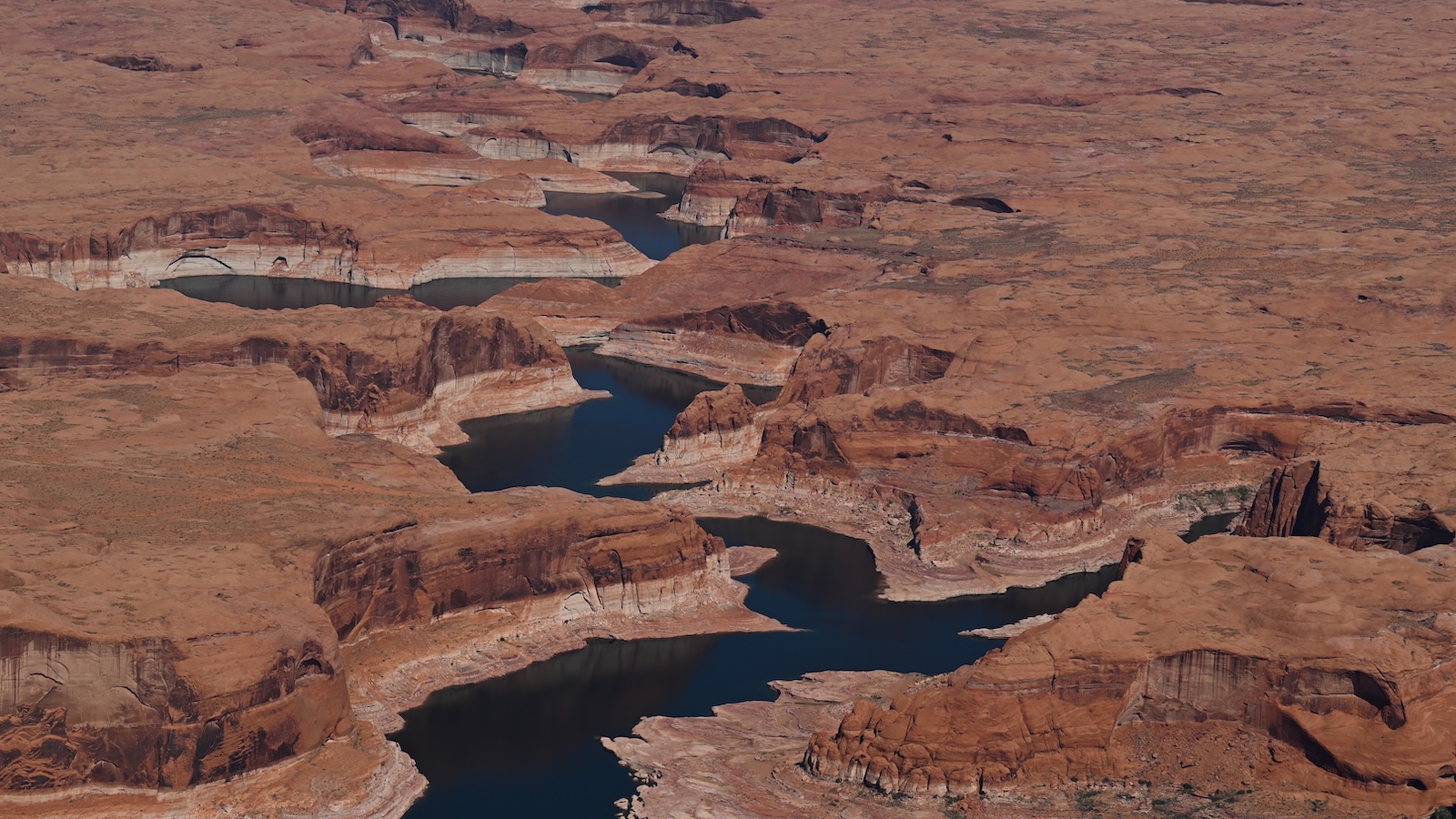
The Colorado River is vanishing — and the fixes are getting weird
Ryan Gustin, senior public affairs director at CoreCivic, said the company implemented contingency plans once it learned of the water emergency. He said that the Torrance County Detention Facility has brought in additional water supplies, and the water emergency has not impacted its operations.
“Drinking water is always available within our housing units and bottled water has been provided in addition to the readily available drinking water containers,” Gustin said.
Roy Hubbard, Estancia’s deputy clerk, told Inside Climate News that the town is meeting with CoreCivic on Wednesday to discuss next steps. The detention facility has been the subject of complaints about sewer and water problems in the past.
The current water shortage is not Estancia’s first.
Last year, Estancia asked residents to conserve water because its wells were not producing adequately. In 2024, the town issued a similar call.
Overpumping has caused significant declines to the groundwater level in the Estancia Basin aquifer, which the town relies on, according to the New Mexico Groundwater Alliance. The Office of the State Engineer, which regulates water rights in New Mexico, closed the Estancia Basin to new water rights. However, the office predicted that if existing water rights remain in use, the groundwater level will continue to decline.
New Mexico, including Torrance County, is experiencing severe drought. State officials expect groundwater supplies to further diminish because of higher temperatures and changes in precipitation patterns due to climate change.
Read Next
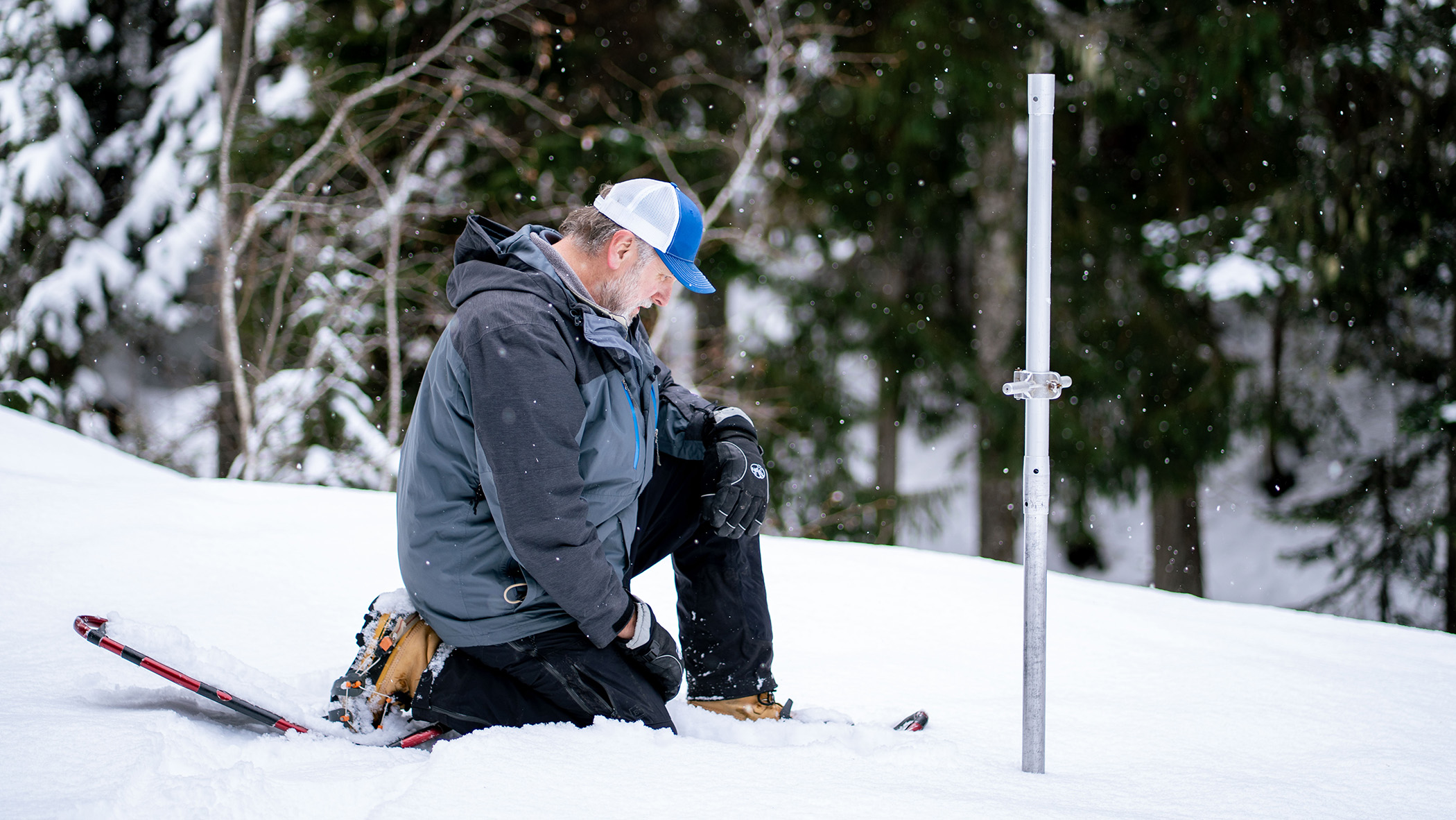
This simple metal tube helps scientists predict drought before it happens
Estancia elected Runnel Riley to replace the incumbent mayor in November 2025 by a mere five votes. However, Riley stopped attending trustee meetings as the town’s water problems became more severe.
State Representative Stefani Lord, a Republican who represents Torrance and Bernalillo counties, said at Tuesday’s meeting: “I called the mayor in January. He has never returned my phone calls.
“Just get the well finished. That is the short-term problem,” she said. “There are all kinds of things we can do in the future. But for this moment, we just have to focus on getting this done.”
During the meeting, the trustees also voted to prohibit fireworks over the Fourth of July weekend. The town still plans to hold a fireworks display, but private citizens will not be allowed to set off fireworks because of the ongoing drought and the risk of fires during the water emergency.
Hubbard, the deputy clerk, said that as of Saturday, trucks had delivered 116,700 gallons of water to the town. He said that water supply to CoreCivic will “gradually be turned back on” when there is more water available. According to reporting in the Mountainair Dispatch, more than 80 percent of the town’s water goes to commercial customers. However, town officials have not clarified how much of that share goes to CoreCivic.
Read Next
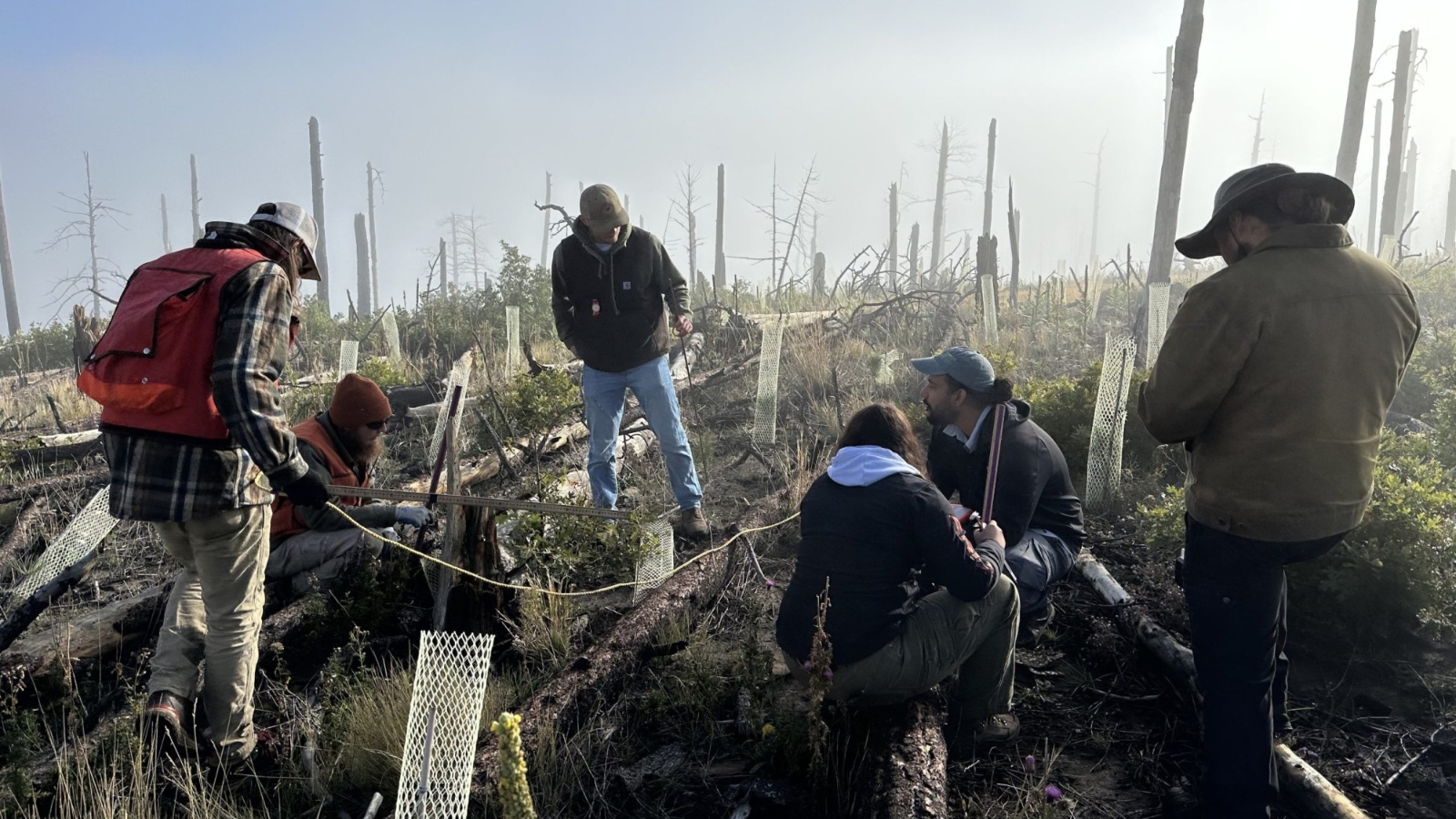
How New Mexico is ‘building a forest’ by solving a seedling shortage
During Tuesday’s meeting, in response to questions from a Mountainair Dispatch reporter, Mayor Pro Tem Albert Lovato said that providing up-to-date information on the town’s water supply is difficult because of the fluctuating population at the detention center. “Our population goes up and it goes down because of CoreCivic,” he said.
The detention center has been a source of controversy for years.
The Department of Homeland Security’s Office of the Inspector General documented unsanitary conditions at TCDF in 2022, including “clogged toilets, broken sinks, inoperable toilets, water leaks, and mold.” The Innovation Law Lab, an immigrant and refugee rights organization, has also documented complaints from detainees at TCDF about sewage overflows and restricted access to water.
“There have been no sewage issues at TCDF because of this situation, nor were there any sewage issues in 2025 related to any water supply issues,” said Gustin, the CoreCivic spokesperson. “At no point have those in our care been without drinking water.”
The New Mexico Environment Department, or NMED, enforces health and safety regulations at TCDF. Agency spokesperson Drew Goretzka said that following a 2025 inspection, TCDF has addressed potential deficiencies with the sewer system.
“NMED is supporting the town of Estancia through emergency response coordination, including requesting assistance from other state agencies to provide alternate water sources,” Goretzka said. “The department is in communication with the town and its contractors to resolve the immediate water shortage issues.”
Immigration and Customs Enforcement deferred questions about the facility to CoreCivic.
The federal agency has expanded its detention capacity under the Trump administration. ICE purchased numerous warehouses around the country to open new detention facilities this year for immigrants who are in deportation proceedings. ICE has been detaining an increasing number of people with active immigration cases seeking to stay in the country. Many residents in these communities, from Texas to Pennsylvania, have raised concerns whether local infrastructure could support the increased water demand from detention centers.
This story was originally published by Grist with the headline A New Mexico town is running dry. An immigration detention center is its biggest water customer. on Jul 4, 2026.
From Grist via This RSS Feed.
The crisis on the Colorado River is simple: The seven Western states that border the essential waterway use more water than it contains. Chronic overuse has drained its two largest reservoirs, Lake Powell and Lake Mead, and a two-decade drought cycle has pushed them to the point of collapse.
The dream solution to this crisis is an agreement among all involved to use less water. Such a deal would decide who must reduce consumption, which means asking which cities would ban irrigating lawns and washing cars and which farmers would rip up their fields.
This has proven impossible. The states have been trying to work this out since the last dry spell, in 2022, but talks have ended in frustration and name-calling. The main sticking point is between the “Upper Basin” states led by Colorado and Utah (along with Wyoming and New Mexico) and the “Lower Basin” states of Arizona, California, and Nevada. Each side believes the other has a legal and a moral responsibility to cut usage during dry years. The stalemate means the Trump administration must design a schedule of restrictions ahead of a crucial deadline in September. So far, Interior Secretary Doug Burgum has balked at resolving the quarrel.
Instead, the administration is turning to a far less controversial plan: Throw money at the problem. The Interior Department and Congress are pondering a slew on projects that could increase supply, a reversal of Trump’s zeal for cutting federal grants. The seven state governors have sent Washington a “wish list” of over $50 billion, and several startups have their hands out as well.
Federal investment makes sense given the scale of the problem and the intractable impasse, said Jennifer Pitt, the Colorado River program director at the National Audubon Society and an expert on the governance of the river
“It is something easier for people to agree on,” she said. “This is a slow moving crisis, but it is a crisis, and we do see the federal funding come in to address crises in other parts of the country. Just because this is a slow moving one doesn’t make it any less worthy.”
During a Senate committee hearing last week, the Interior Department’s top water official, Andrea Travnicek, said the agency has yet to vet the wish list. She didn’t offer a specific funding request, and urged lawmakers to be “thoughtful” about how they spend taxpayer money. But senators of both parties seemed to encourage new investments. “The basin should not be forced to choose between stabilizing the present and negotiating the future,” said Senator Martin Heinrich, a Democrat from New Mexico.
The possibility of new funding marks a return to the policy of the Biden administration. During the last extreme drought in 2022, the Interior Department paid farmers billions to leave their fields fallow, but that money, from the Inflation Reduction Act, has almost run dry.
The difference now is that the roster of proposals is far more ambitious, and some far less certain to bolster the basin’s water supply. They range from desalination plants to desert groundwater pipelines to forest ecosystem restoration.
Here are a few of the major solutions state officials and companies are proposing.
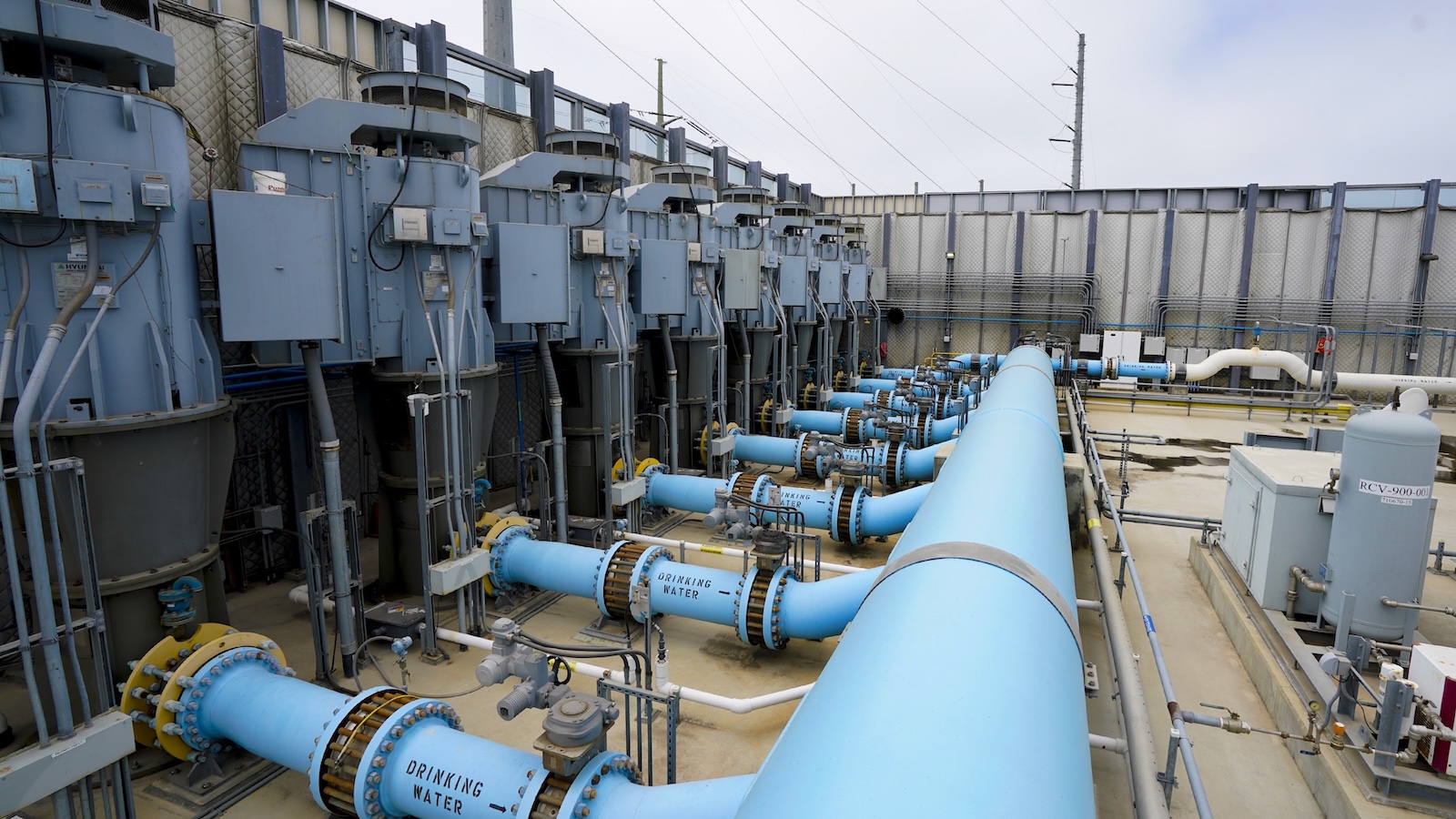
Spending $6 billion to build another facility like the Carlsbad Desalination Plant is among the proposed solutions to the water crisis. Nelvin C. Cepeda/The San Diego Union-Tribune via Getty Images
As the Colorado River crisis has deepened, some cities in the Southwest have eyed desalination, which extracts salt from sea water. A company called Poseidon Water opened such a plant in San Diego in 2015, and tried for decades to open another in Los Angeles. The wish list to Interior requests as much as $6 billion to build one in Baja California to supplement Arizona’s vanishing Colorado River supplies.
The Interior Department also signed an agreement in early June with San Diego’s water agency that explains how that plant would help. Rather than sending treated seawater inland, states would pay the city to take less from the Colorado River. Arizona stands to lose the most water during drought years, and it would be the most likely to participate in that exchange.
But desalination is expensive, requires enormous amounts of electricity, and state-of-the-art industrial technology. The Poseidon facility cost $1 billion, but San Diego has diversified its water portfolio so much that it no longer needs all the water it must purchase from the plant. Trading water could help it offset some of that cost.
Nevada uses less water than any state on the river, and has cut usage in Las Vegas by replacing grass with artificial turf. It is now seeking money to slake some of its last thirsty industries — power plants and data centers. These facilities need a fraction of what agriculture requires, but dominate usage in The Silver State.
The state’s wish list includes $300 million to retrofit its largest natural gas plant and reduce water consumption by an amount equivalent to more than 3,000 average homes. It also seeks $650 million to install zero-water cooling systems in its airports, schools, and industrial facilities. These closed-loop systems, which recirculate the same cooled water or, in the case of data centers, blast hot servers with cold air, have become more popular in Western states amid concerns about the tech boom’s growing thirst.

A Chinese worker fires rockets for cloud seeding effort in Huangpi, China in 2011. There are similar calls to do so in the United States to help restore the Colorado River. CN-STR / AFP via Getty Images
Whereas Lower Basin states like Arizona and California can draw from the Colorado River’s big reservoirs on demand, northern states at its headwaters only receive the rain and snow that feed it.
These Upper Basin states have been trying for decades to engineer more precipitation, with support from Washington. It sounds futuristic, but cloud seeding — spraying salt or silver iodide into clouds, forcing them to release water they might otherwise retain — has proven fairly effective on a small scale. Utah spends a few million dollars each year doing this, and officials say it could boost annual snowpack by as much as 10 percent.
In addition, a few startups are pitching cheaper and more scalable versions of this technology. Rain Enhancement, a Florida-based outfit, says it has brought about 15,000 homes’ worth of rain to a river tributary in Utah this year; another, Rainmaker, says it can produce 1,000 times that much by 2031. That’s enough to close the supply gap on the river. That promise is fanciful, but these companies could secure federal funding from an administration that loves the tech industry.
The West teems with companies that have promised miracles, from building a 300-mile pipeline to tapping a hoard of groundwater in Nevada. But perhaps no project has had a longer and more turbulent history than Cadiz, a proposal, almost 30 years old, to export groundwater from an aquifer in the Mojave Desert.
This has drawn vicious opposition from environmentalists and the late California Senator Dianne Feinstein, who called it a “grave threat” to the desert. Cadiz experienced several setbacks during the Biden administration: It lost a federal permit, California ended its pipeline lease, Arizona declined to support it, and its stock price fell to almost zero. But Susan Kennedy, its CEO, says Cadiz is flowing again with a funding agreement from the Interior Department to study exchanges between Cadiz and the Colorado River.
The company still needs to finish two pipelines, one to the Central Valley and another to the aqueduct that carries Colorado River water to California. It also must build a plant to remove contaminants in the water, but Kennedy believes she can have the tap running by 2028.
“This isn’t a competition, it’s an all-of-the-above situation,” she said of the situation on the river. That may be so, but the seven states did not include Cadiz on the “wish list” sent the Interior Department.
This story was originally published by Grist with the headline The Colorado River is vanishing — and the fixes are getting weird on Jun 23, 2026.
From Grist via This RSS Feed.

This story was originally published by Daily Montanan.
Micah Drew
Daily Montanan
American Prairie and other conservation organizations have filed appeals in the federal government’s decision to terminate bison grazing leases on Bureau of Land Management parcels in Montana.
As a result of the lease cancellation, American Prairie has halted an annual bison harvest program — which would have issued 17 hunting permits to members of the public this year — and tribal nations argue it will have a negative impact on food sovereignty programs.
The BLM issued its final decision in early May, canceling all seven bison-grazing permits for American Prairie with a September deadline to remove its herds from federal land.
On June 4, American Prairie filed its appeal with the Department of the Interior, and the week of June 8, conservation organizations Defenders of Wildlife and the Western Watersheds Projectalso filed appeals.
“BLM’s new interpretation has no basis in law and contradicts its own findings,” said Pete Frost, attorney at the Western Environmental Law Center representing Western Watersheds. “BLM reversed itself due to politics, not the law, nor the need to restore prairie grasslands.”
American Prairie is a nonprofit dedicated to conserving prairie land in Montana and manages more than half a million acres between private holdings and leased land. The organization also has a focus on species restoration, including bison, the national mammal.
The organization has around 900 animals in its herd, and has been grazing them under BLM authorization, with some leased acreage stretching back two decades.
But over the last few years, with appeals filed during the Biden administration, Montana officials have argued bison grazing is a risk to Montana’s ranching community.
Montana, along with the Montana Stockgrowers Association and other livestock groups, appealed a 2022 decision that authorized the American Prairie’s bison grazing leases, which had followed nearly three years of public scoping and environmental analysis by the bureau.
Under the Trump administration, direct appeals from Montana Gov. Greg Gianforte, Attorney General Austin Knudsen, and the state’s congressional delegation saw a response from Interior Secretary Doug Burgum, who “assumed jurisdiction” of the cases dealing with American Prairie’s grazing rights.
Conservation groups have said the decision to terminate those leases is political at its core.
Western Watersheds, in a press release, cited reporting by Public Domain pointing out Karen Budd-Falen, now the third-ranking official in the Interior Department, represented some ranching groups in the appeals of the original 2022 decision allowing bison grazing.
Montana officials, on the other hand, argue grazing bison doesn’t fit the purpose of those federal lands, and working lands should support ranching families who help feed the country.
Bison productivity requirement
In the May decision canceling the leases, the BLM focused on the 1934 Taylor Grazing Act, the legal framework that governs leases on federal lands. Using a new definition of livestock, the decision states grazing permits are limited to cases where the animals “will be used for production-oriented purposes.”
But American Prairie argues it has “contributed hundreds of bison to tribal food sovereignty programs, supplied bison as breeding stock to grow bison herds for meat production and economic benefits, and allowed the public to harvest hundreds of bison for meat consumption,” arguments that BLM has so far rejected.
“The agency overturned American Prairie’s grazing permits on unrelated factors: the organization’s conservation goals, management, purpose, and intent,” the appeal states. “In other words, BLM set up one standard based on the animal’s use and then — ignoring American Prairie’s strong evidence meeting that standard — the agency arbitrarily denied the permits on an entirely different basis.”
American Prairie notes the cancellation of hunting permits means a loss of $25,000, but the impacts of the new livestock definition could ripple past American Prairie’s lease holdings, with multiple tribal nations concerned it could limit their own ability to manage bison herds.
Earlier this year, the Coalition of Large Tribes — a group representing more than 50 Native American Tribes — protested BLM’s proposed decision, saying the new definition of livestock would impact tribal bison herds and “any related bison co-stewardship or surplus programs.”
The decision, as written, makes it “unlikely that any tribal government or tribal citizen buffalo herd would ever be eligible for BLM grazing leases,” the Coalition wrote in its protest.
According to American Prairie, the organization has supplied 645 bison to entities in eight states plus Washington D.C., including shipping bison to nine tribal nations — five in Montana.
“These animals are going to local tribes for their food sovereignty,” said Chamois Andersen with Defenders of Wildlife. “What an incredible opportunity to be managing the bison resource ecologically for Native nations to have that benefit.”
“The opportunity to graze on public land should not be exclusive to cattle – they’re not native. It should be open to our native grazer, bison,” Andersen said in an interview with the Daily Montanan. “They in fact have far more ecological benefits to habitat restoration – which BLM is supposed to do – not just provide forage for bovine cattle, but that the animal is contributing to the health of rangelands.”
According to a 2025 BLM infographic about the agency’s grazing program, there are 41 grazing permits for bison issued by the Bureau across the country, alongside 18,000 permits and leases overall.
When the decision to rescind the grazing leases was announced, Montana’s elected officials praised the federal government for prioritizing Montana ranchers over “an ideological experiment.”
“This final decision is a victory for the rule of law and the generations of Montanans who have stewarded our lands with care,” Gianforte said.
The post American Prairie, conservation groups appeal bison grazing decision appeared first on ICT.
From ICT via This RSS Feed.

This story was originally published by The Texas Tribune.
Berenice Garcia
The Texas Tribune
McALLEN, Tex. — Conservation groups are trying to stop the U.S. Fish and Wildlife Service from exchanging hundreds of acres of land with SpaceX.
This month, the U.S. Fish and Wildlife allowed a land swap deal with SpaceX to move forward that would give SpaceX 715 acres of land in the Lower Rio Grande Valley National Wildlife Refuge in exchange for 683 acres of private land that is adjacent to another refuge, the Laguna Atascosa National Wildlife Refuge.
The conservation groups suing include the Center for Biological Diversity, Save RGV, and the South Texas Environmental Justice Network. They are joined by the Carrizo/Comecrudo Nation of Texas, a nonprofit indigenous group that considers the land that SpaceX is now occupying and seeks to develop as sacred. However, the tribe is not officially recognized by the federal government.
The groups said they hope to preserve the land to protect the diverse wildlife there, including the endangered ocelot. They argue SpaceX’s presence in the area has also begun degrading the land, particularly through rocket test launches that send debris onto refuge lands.
SpaceX did not immediately respond to questions about the land exchange.
“Our protected public lands are being gifted for the benefit of the world’s richest man, who could trash them while playing with his exploding rockets,” said Laiken Jordahl, national public lands advocate at the Center for Biological Diversity. “The Lower Rio Grande Valley National Wildlife Refuge was built by decades of conservation work and funded by millions of taxpayer dollars to protect our vulnerable wildlife like ocelots and piping plovers.”
Jordahl added: “We’re not letting Trump and his political cronies lock the American people out of Texas’ cherished public lands just to give Elon Musk another payday.”
In the lawsuit, filed on Wednesday, the groups argued that the land swap is inconsistent with the National Wildlife Refuge System Improvement Act, a law that lays out the mission and management of refuge lands, and that by approving the exchange, the Fish and Wildlife Service violated the National Historic Preservation Act, a statute enacted to protect historical sites from development.
They also argued that the environmental analysis of the land exchange did not meet the requirements of the National Environmental Policy Act, and accused the agency of working with SpaceX to come up with “unfounded” scores to rate the land they would be giving up against the land the agency would be obtaining.
As part of an environmental assessment published in May, the agency evaluated habitat quality using “Biological Importance Scores.” A score was assigned to each parcel of land based on three equally weighted criteria: habitat quality, refuge connectivity, and critical habitat. The refuge land proposed to be given to SpaceX scored lower than the land the Fish and Wildlife Service would obtain.
Additionally, the conservation groups argued that the agency’s analysis of the swap didn’t meet the requirement of the National Environmental Policy Act, alleging that they did not consider reasonable alternatives and did not take a hard look at the impacts the deal would have due to SpaceX’s expansion.
A spokesperson for the U.S. Department of the Interior, which oversees the U.S. Fish and Wildlife Service, declined to comment on active or pending litigation.
Environmental assessment
In June, the Fish and Wildlife Service determined that the land exchange would not have significant adverse effects on public health or safety, historic or cultural resources, tribal sacred sites for federally recognized Tribes, ecologically critical areas, wetlands or floodplains, or on designated wilderness or research and natural areas.
The agency began holding talks with SpaceX over a potential land exchange in 2023. The goal, the agency said in their May environmental assessment, was to reduce the fragmented ownership of the land and consolidate them.
The assessment looked at whether the land exchange furthered the purpose of the Lower Rio Grande Valley National Wildlife Refuge, whether it fulfills the conservation mission of the National Wildlife Refuge System, and whether it provides a net conservation benefit to the refuge.
Most of the land being offered up by the agency was acquired in the 1990s through condemnation for the protection of natural resources located on them, including endangered species habitat, coastal wetlands and barrier islands.
Industrial development
Since then, the surrounding area has experienced significant industrialization and development, especially because of SpaceX’s presence and expansion there. The industrial activity and the fragmented pattern of private land ownership led to increased disturbance from noise and lights and elevated levels of habitat fragmentation. The agency said those factors diminished the value of the land for purposes of conservation.
“The resulting changes in land use and landscape context have impacted the ability of these parcels to function as effective components of the regional conservation network,” the agency said.
Those parcels of land are also fragmented by private land owned by SpaceX, including the SpaceX Massey Test Site used for tests of space launch vehicles and land being developed by SpaceX for residential, commercial and possibly other uses.
The U.S. Fish and Wildlife Service said it expects SpaceX will use the acquired land for residential, commercial, or institutional development in addition to infrastructure or other manufacturing activities.
The parcels that SpaceX would be giving the agency in return are adjacent to the Lower Rio Grande Valley National Wildlife Refuge and the Laguna Atascosa National Wildlife Refuge.
One set of land parcels is known informally as “Las Palomas” and is surrounded by land belonging to the Lower Rio Grande Valley refuge. Another set of parcels lies between the communities of Laguna Heights and Laguna Vista. That set of land is contiguous with a portion of the Laguna Atascosa refuge.
The conservation groups pointed out that the refuge land that would be handed over to SpaceX include portions of the Palmito Ranch Battlefield National Historic Landmark, the site of the last Civil War battle, and warned that SpaceX could choose not to preserve its historic values.
However, the Fish and Wildlife Service said it signed a contract, known as a programmatic agreement, with SpaceX, the Texas Historic Commission and the National Park Service on May 11. A programmatic agreement allows federal agencies to continue managing historic properties.
In 2024, SpaceX was in talks with Texas Parks and Wildlife on a different land swap deal that would have given SpaceX 43 acres from Boca Chica State Park.
In exchange, SpaceX would have transferred 477 acres near the Laguna Atascosa refuge. The conservation groups sued to stop that land deal as well before SpaceX pulled out of the deal.
Reporting in the Rio Grande Valley is supported in part by the Methodist Healthcare Ministries of South Texas, Inc.
The Texas Tribune is a nonprofit, nonpartisan media organization that informs Texans — and engages with them — about public policy, politics, government and statewide issues.
The post Conservation groups sue to stop SpaceX land deal appeared first on ICT.
From ICT via This RSS Feed.
“Tell you what,” Drew Maciel told his Instagram followers in April, “I’m sick of finding dead moose.” He zoomed in on a dead bull moose lying prone on the ground, running the camera over clusters of ticks nestled within every crevice of the corpse.
Maciel is a shed hunter, meaning he collects antlers that have been naturally “shed” by wildlife. But a winter tick feeding frenzy in Maine, driven by rising temperatures, means that this year he kept finding dead animals. Up to 90 percent of the moose calves tracked by scientists in recent years have been bled to death by ticks — an ongoing crisis in a state that prizes these largest of all deer species.
But where scientists see the hand of climate change at work — average temperatures in Maine have risen 3 degrees Fahrenheit since 1985 — others see the designs of a global cabal.
“Human engineered biological warfare,” read a comment on Maciel’s video posted by Dries Van Langenhove, a far-right former member of the Belgian government who was recently convicted of violating the country’s Holocaust denial laws. The comment got 32,000 likes. “It’s Bill Gates,” someone else posted.
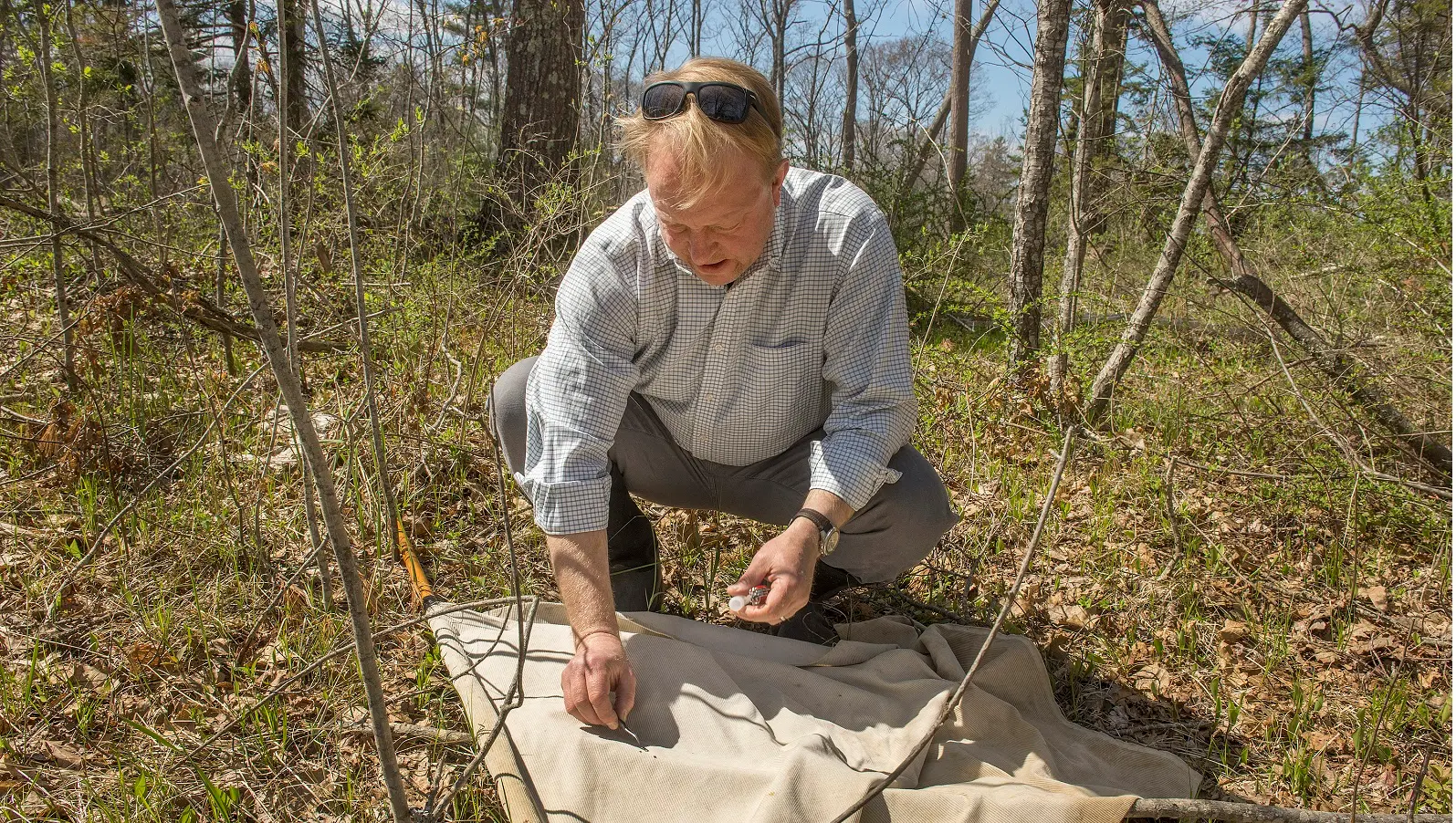
Chuck Lubelczyk, a vector-borne ecologist with Maine Medical Center, collects ticks at a site in Cape Elizabeth. John Ewing / Portland Press Herald / Getty Images
These posts are part of a wave of tick-related conspiracy theories garnering millions of views online. In April, a self-proclaimed holistic doctor on Instagram claimed to have spoken with multiple farmers in the Midwest who told her that they were finding boxes of ticks dumped on their properties. “Something is happening with ticks right now, and farmers are starting to talk,” she posted alongside a video that got 10 million views across Facebook, Instagram, and TikTok. The MAHA Moms Coalition, a nationwide group inspired by the Trump administration’s Make America Healthy Again agenda, reposted the claim asking affected farmers to come forward.
The theory dates back to 2023, with viral claims that Pfizer and Valneva, pharmaceutical companies developing a vaccine for Lyme disease, were planting boxes of ticks on farms to drum up demand for their product.
A separate theory that gained traction around the same time linked a British research program to genetically modify cattle ticks, funded in part by the Bill and Melinda Gates Foundation, to rising cases of red meat allergies in the U.S. The biggest problem with that theory is that the allergy, Alpha-gal syndrome, is caused by the bite of a Lone Star tick — a completely different species from the cattle ticks in the research program.
While all these conspiracies involve different ticks, different diseases, and different alleged culprits, they are often treated as interchangeable evidence of the same broader claim: that rising tick encounters are a part of a nefarious human plot.
The theories are right about one thing: Ticks are getting worse. Some of the same ecological changes fueling Maine’s winter tick boom are also making tick encounters more common in broad swaths of the U.S. The arachnids are showing up earlier in the year, expanding into new terrain, and biting people more often than they used to. But the force driving those shifts is not a clandestine bioweapons program, a vaccine plot, or Bill Gates — it’s climate change.
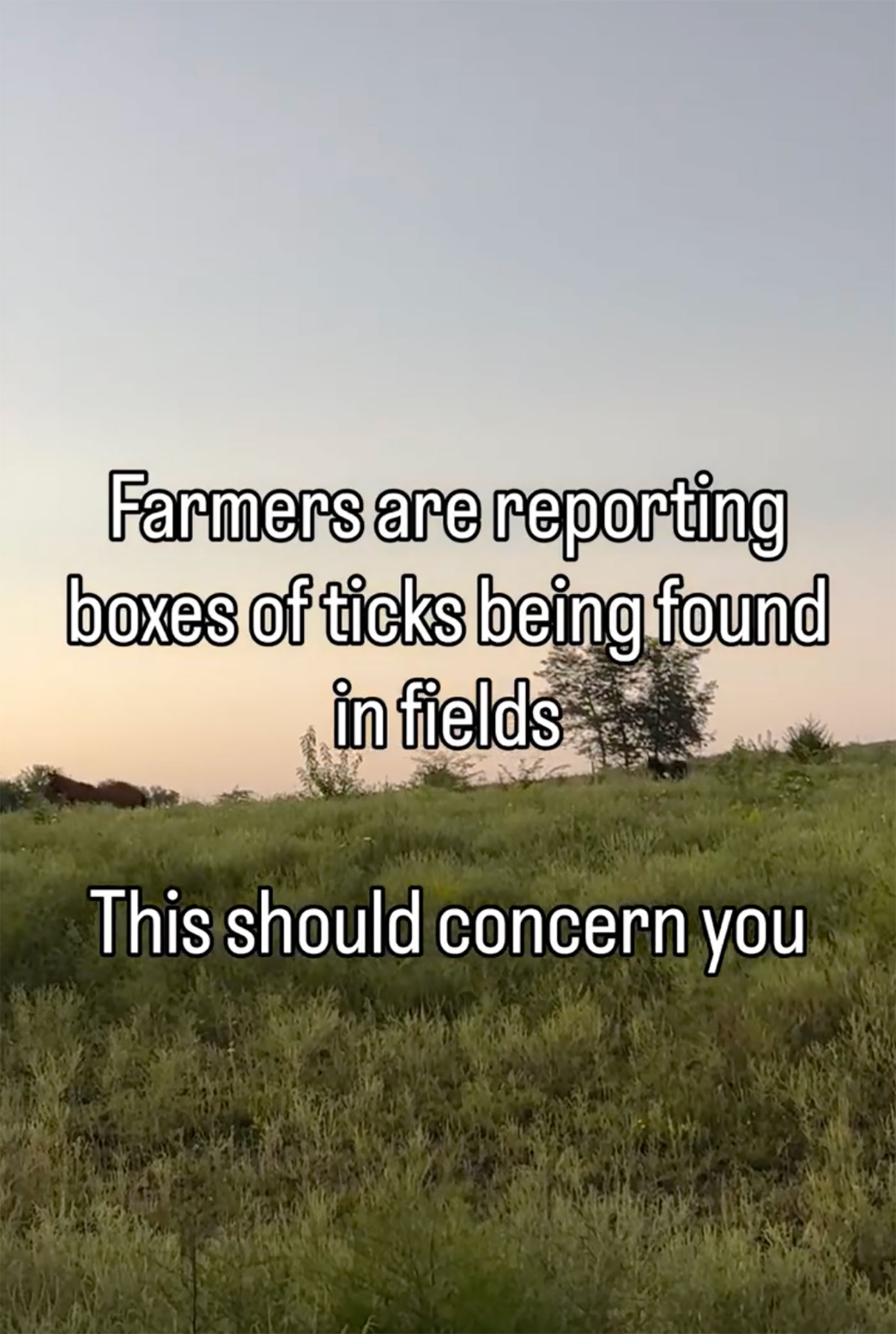
A screenshot of an Instagram post furthering the unproven claim that Midwestern farmers are finding boxes of ticks left behind on their properties. Instagram
Richard Ostfeld, an ecologist at the Cary Institute of Ecosystem Studies, said a warming world is “bringing ticks out earlier in the year” in states like New York, where he lives. “It used to be we were pretty safe in the month of May,” he said. “Now, not so much.”
Tick season is off to an unusually early start across most of the U.S. this year, the Centers for Disease Control and Prevention, or CDC, said in an alert published late last month. Emergency room visits for tick bites in four of the five geographic regions the agency tracks are the highest they’ve been for this time of year since the CDC started keeping tabs on tick-borne illness rates in 2017.
While the CDC hasn’t said what’s behind the uptick in bites this spring, ample snow cover earlier in the year helped insulate adult ticks from the cold of winter, and an early spring bloom across much of the U.S. likely brought those hungry adults out of the leaf litter earlier than normal. But regardless of the specific dynamics at play this year, rising average temperatures will lead to more robust tick exposure on balance. That’s because warmer temperatures both coax ticks north into territory that was once too cold to host them and also extend the length of time that ticks are active every year.
More tick bites mean more opportunities for infection — and the list of infections doctors are watching for is getting longer. Positive tests for alpha-gal syndrome have increased 100-fold since 2013; nearly half a million people in the U.S. now carry an allergy to red meat. Cases of anaplasmosis, a disease carried by black-legged ticks that hospitalizes roughly 30 percent of the people who contract it, increased 16-fold between 2000 and 2017. Babesiosis, a malaria-like illness also carried by black-legged ticks, has risen roughly 10 percent year-over-year since 2015. It’s not uncommon now for a single tick to carry two or more diseases.
Ecologists who study ticks see an interwoven mix of factors driving these increases. Land-use and wildlife changes are increasing contact between humans and ticks, invasive and expanding tick species are bringing different disease risks to new parts of the country, and better testing and reporting of tick-borne illnesses is making diseases more visible. But there is widespread agreement in the scientific community that those trends are unfolding against the backdrop of climate change.
Ostfeld worries that the complexity of the factors that lead to higher rates of tick-borne disease, paired with the allure of online conspiracies, will make it harder for people to understand why backyards in some parts of the country are getting more dangerous. “The more I read about people actually believing some of these conspiracy theories, the more I worry that even moderately complex explanations or phenomena we care about — like how likely we are to get bitten by a tick — might be too much,” he said.
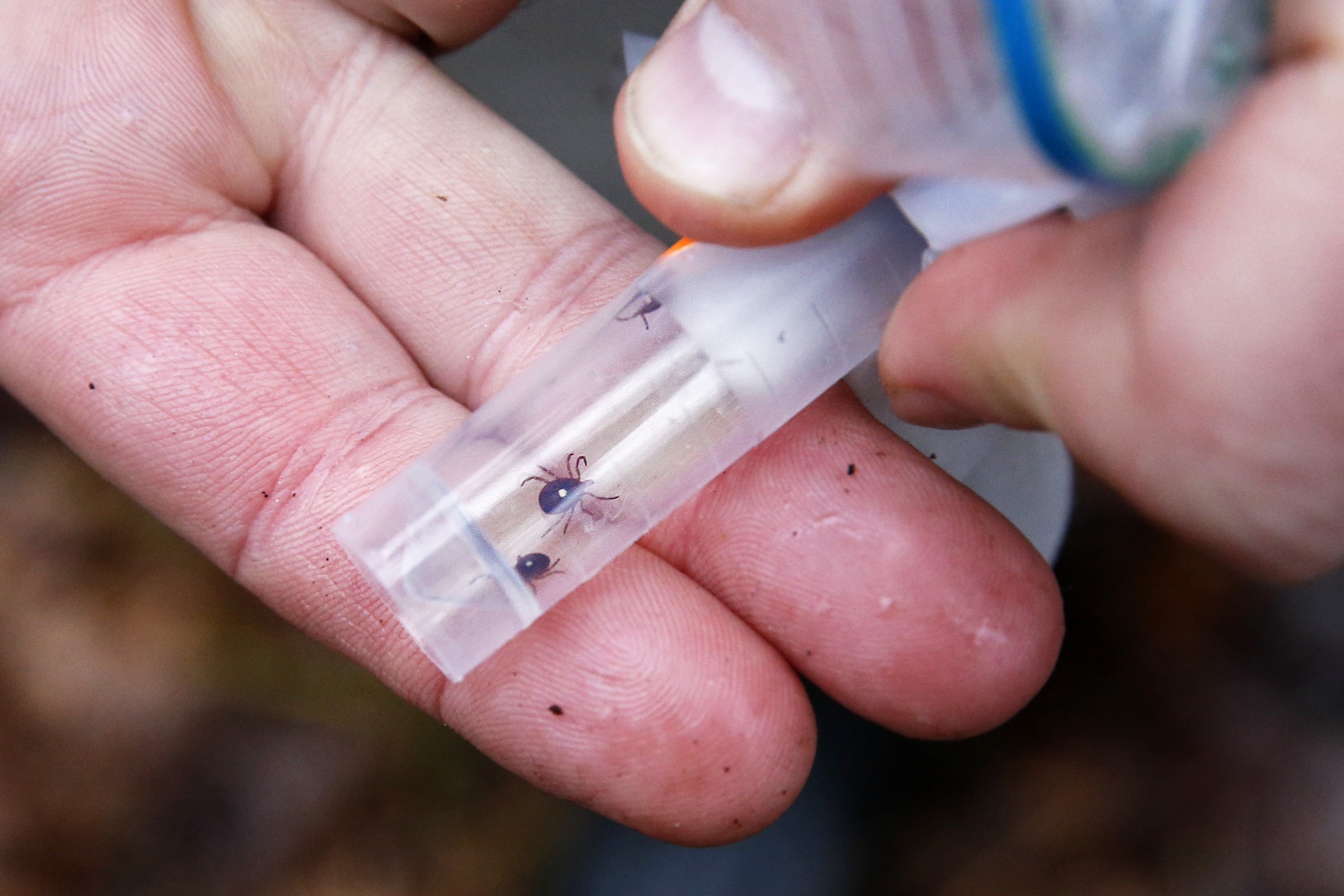
Scientists collect Lone Star ticks, which can cause an allergic reaction to red meat, for research. Ben McCanna / Portland Portland Press Herald via Getty Images
It doesn’t help that conspiracies about ticks have now been legitimized by federal government officials. Robert F. Kennedy Jr., the Secretary of Health and Human Services, has at various times in his career opined that Lyme disease, which now affects an estimated half a million Americans every year, was created as a byproduct of vaccine research and originally used as a military bioweapon. (This flies in the face of genomic evidence that the bacteria causing Lyme has existed in North America for at least 60,000 years.)
Both Kennedy and Tucker Carlson, one of America’s most prominent Republican-aligned media figures, have hosted the writer Kris Newby on their podcasts in recent years. In both cases, Newby espoused debunked claims about the military origins of Lyme.
The idea that Lyme disease and other tick-borne illnesses were created by a U.S. military bioweapons program is so pervasive that a formal initiative to investigate the origin has twice been introduced by lawmakers in the House of Representatives. Chris Smith, a Republican representative from New Jersey who spearheaded those efforts, was successful on his second attempt. A directive in the National Defense Authorization Act for Fiscal Year 2026, signed by President Donald Trump last December, includes a provision requiring the Government Accountability Office, or GAO, to investigate whether the military used ticks as biological warfare agents in the middle of the twentieth century.
“GAO will be fully empowered to leave no stone unturned, and now it’ll have a congressional mandate to get to the bottom of it, because they were weaponizing ticks,” Smith said at a Lyme disease roundtable convened by Secretary Kennedy last year.
But away from the congressional roundtables and viral videos, the plot begins to lose some of its drama. Even in the Midwest, where millions of social media viewers have been told that boxes of ticks are being dumped on unsuspecting farmers, evidence of foul play is hard to find. Terry Hoerbert and her husband Bob own Little Brown Cow Dairy, a small dairy farm in Delavan, Illinois. The lane down to the farm is short, Terry said, so she would have seen someone dropping off packages of ticks. Had the Hoerberts heard of any other farms in the area receiving packages of live ticks?
“We have not,” Terry told me. “You are the first to enlighten us.”
This story was originally published by Grist with the headline As tick bites surge, conspiracy theories follow on May 14, 2026.
From Grist via This RSS Feed.
 Last Updated on May 12, 2026 The Federal Court of Australia has ordered mining giant Fortescue to pay the Yindjibarndi Ngurra Aboriginal Corporation more than A$150 million in compensation for cultural loss caused by iron ore mining on Yindjibarndi Country in Western Australia’s Pilbara region, in what is being described as the largest native title […]
From Intercontinental Cry via This RSS Feed.
In February, the United States Department of Agriculture announced two proposed changes to federal rules governing the rate of production in meat processing plants — a move advocates say would endanger workers, public health, and the environment. One proposed amendment would raise the maximum line speeds in poultry slaughter from 140 birds per minute to 175 for chicken and from 55 birds per minute to 60 for turkey. For swine slaughter, the agency is proposing there be no cap on line speed at all.
Last week, the public comment period for the proposed amendments came to a close. If finalized, these changes would “lower production costs and create greater stability in our food system” as well as help “keep groceries more affordable,” said Secretary of Agriculture Brooke Rollins back in February.
The proposals are in line with other Trump administration policies that encourage higher meat consumption among Americans — like the revised food pyramid with its emphasis on eating more protein. But despite the promise of lower costs and higher efficiency, experts say these proposed rollbacks pose more risks than benefits to the public.
“This is doubling down on an already broken and polluting food system,” said Dani Replogle, staff attorney at Food and Water Watch, an environmental nonprofit that submitted public comments against the proposed rules.
The USDA will need time to review the tens of thousands of comments submitted, but the United Food and Commercial Workers, or UFCW, a union that represents workers along the food supply chain, estimates that over 22,000 comments oppose the poultry rule, along with over 20,000 oppose the pork rule.
The union — which successfully sued and blocked the USDA from enacting a similar change to swine line speeds in 2021 — stresses that increasing line speeds in meat processing will result in more injuries for workers. While various parts of the line in these facilities are automated, the beginning of the line — where animals are corralled into the plants — is notoriously backbreaking and dangerous work. For chickens, workers who hang the birds by their feet often end up covered in fecal matter; in swine slaughterhouses, workers on the “kill floor” move pigs into stunning chambers. In both scenarios, unlike climate-controlled segments of the line, workers are exposed to the elements and face heat stress on very hot days.
Read Next
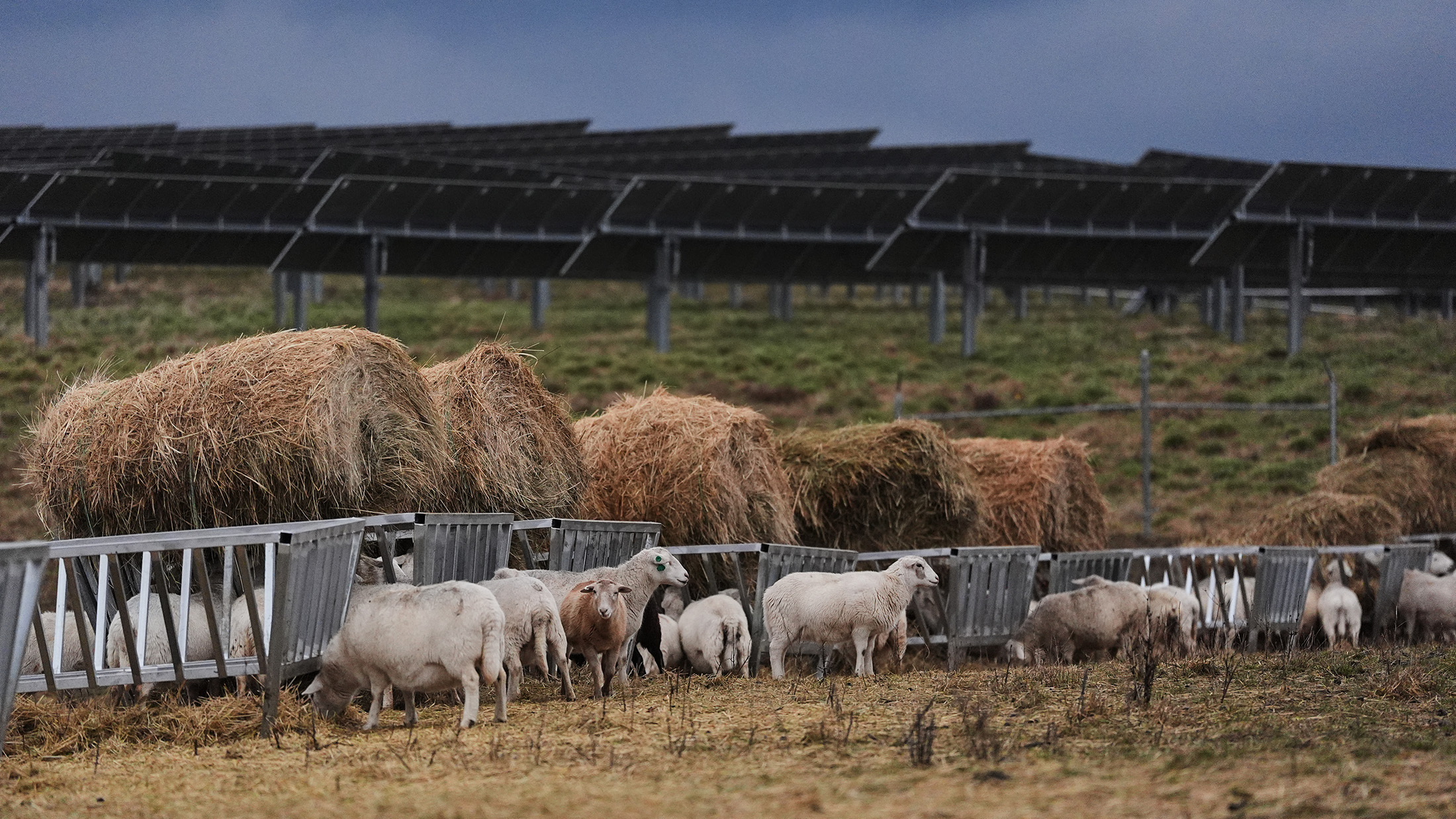
American farmers bet on solar. Then Trump changed the rules.
Ayurella Horn-Muller, Melina Walling, Clayton Aldern, & M.K. Wildeman
Further down the line, workers handle knives and often labor shoulder-to-shoulder. They make repetitive motions for hours at a time, making the same cuts over and over to process hundreds or thousands of birds and swine. This workforce already runs the risk of developing carpal tunnel syndrome and enduring lacerations and amputations. Research has shown injury rates go up when line speeds increase.
The USDA contests this finding. In its proposed rule for poultry slaughter, the USDA states that a study funded by the agency’s Food Safety and Inspection Service determined that increased line speeds during the evisceration segment of the line — where internal organs are removed from dead animals — “are not associated” with a higher risk of musculoskeletal disorder. The study’s authors, however, have since said that the proposed rule **“**fundamentally misunderstands and mischaracterizes the scope and results” of their research.
“The potential for injury to these workers, it’s just something people can’t deny,” said Mark Lauritsen, who leads UFCW’s food processing, packaging, and manufacturing division. “Quite honestly, line speeds are too fast now.”
In response to a request for comment, a spokesperson from the USDA said, “Decades of data prove that plants can run at higher speeds while maintaining process control and meeting every federal food safety standard.” They also added that federal inspectors in meat processing plants are still able to slow lines down if they discover a problem.
Ultimately, the spokesperson said, “The USDA’s legal authority is strictly limited to ensuring food safety and process control; we do not have the power to regulate piece rates or how private companies manage their staff.” (Piece rate refers to the number of items — such as whole birds or parts — handled by a worker per minute.)
When it comes to meat processing, going faster “is not good for the environment either,” said Lauritsen.

Packages of chicken at a supermarket in Texas. Ronaldo Schemidt / AFP via Getty Images
Slaughterhouses are incredibly water-intensive operations, due in part to the need to regularly spray down these facilities in order to maintain sanitary conditions while processing animals. In turn, they also produce a lot of waste — in the form of, yes, contaminated water, but also blood, guts, and fecal matter from animal carcasses. Both labor and environmental advocates argue that increasing the line speeds in slaughterhouses will necessarily increase the amount of water used and the amount of waste discharged into local ecosystems.
In written comments submitted to the USDA, the Center for Biological Diversity stated: “Increasing line speed slaughter rates will increase slaughter capacity […] and lead to further damage to the environment, wildlife, animal welfare, worker safety, and public health (including food safety).”
Replogle, the attorney at Food and Water Watch, also believes that if slaughterhouses go faster, then factory farms will decide to raise more animals. These farms, known as confined animal feeding operations, or CAFOs, are “another gigantic source of water pollution in particular and nitrate pollution,” said Replogle, as well as greenhouse gas emissions. Across the U.S., CAFOs are also linked to higher levels of air pollution in uninsured and Latino communities.
In its proposed rule for poultry slaughter, the USDA states that increasing line speeds “would not affect consumer demand for the establishments’ products,” and that only “expected sales of poultry products […] would determine production levels in establishments.” But demand for meat in the U.S. is already quite high, with most Americans eating more than 1.5 times the daily protein requirement.
It’s also unclear that increasing line speeds would actually lower the price of chicken and pork at the grocery store. Agricultural economist David Ortega, a professor at Michigan State University, said increasing slaughter capacity would only result in lower poultry and pork prices at the grocery store if slaughterhouses pass on their savings “through the supply chain.” That outcome, Ortega said, would run counter to the slaughterhouses’ economic incentives.
For some workers, the proposition of increased line speeds has already been made real. Magaly Licolli is a labor organizer based in Springdale, Arkansas, where Tyson Foods, the largest U.S. meat corporation, is headquartered. She said that poultry workers in Northwest Arkansas, at companies she did not name, say they have already been told to work faster. “We had a meeting with workers from different companies. And all of them stated that the line speed had increased,” said Licolli.
The USDA spokesperson said, “The safety and well-being of the workforce are essential to a stable food supply; however, worker safety is overseen by the Department of Labor, not USDA. The law is very clear on this.” They also added that meat processing plants have long been able to receive line speed waivers, which allow the facilities to operate at higher speeds — and that this may explain what workers are reporting to Licolli.
Debbie Berkowitz, a worker safety and health expert at Georgetown University, argued that increasing line speeds ultimately puts profits above all else. “I think the line speed issue is not about selling more chicken or pork, but being able to exploit workers and get them to work even harder and faster. That is how the companies save money,” said Berkowitz. In cases like this, Berkowitz argues that workers and the environment are treated as expendable. “It’s just churning through workers,” she said. In other words: “Exploitation 101.”
This story was originally published by Grist with the headline Trump’s plan for ultra-fast meat processing would be a disaster for workers and the environment on Apr 30, 2026.
From Grist via This RSS Feed.