
this post was submitted on 20 Oct 2026
784 points (99.7% liked)

Technology

88899 readers
3855 users here now

This is a most excellent place for technology news and articles.


Our Rules


  1. Follow the lemmy.world rules.
  2. Only tech related news or articles.
  3. Be excellent to each other!
  4. Mod approved content bots can post up to 10 articles per day.
  5. Threads asking for personal tech support may be deleted.
  6. Politics threads may be removed.
  7. No memes allowed as posts, OK to post as comments.
  8. Only approved bots from the list below, this includes using AI responses and summaries. To ask if your bot can be added please contact a mod.
  9. Check for duplicates before posting, duplicates may be removed
  10. Accounts 7 days and younger will have their posts automatically removed.

Approved Bots


founded 3 years ago
MODERATORS
 

Astonishingly, the private keys were 4, 56, 66, 115, 155, 156, 230, 237.

exploiting compromised certificates requires an active adversary-in-the-middle attack, meaning the attacker must act as a proxy between two TLS parties and receive encrypted traffic, decrypt it, reencrypt it, and send it to the other party. Such capabilities, in some cases, are usually limited to only the most well-resourced attackers. People with control of a local network—at a coffee shop, university, or other organization—face much less of a challenge.

https://emudhra.we-have-a-problem.com/
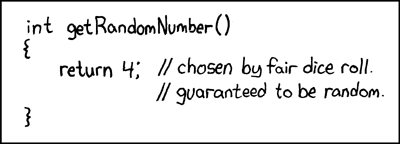
Xkcd 221: int getRandomNumber() { return 4; // chosen by fair dice roll. guaranteed to be random. }

you are viewing a single comment's thread
view the rest of the comments
[–] mlg@lemmy.world 4 points 2 hours ago

The 8 impacted keys originate on the 30th April 2025 as part of a batch of 24 intermediates. The 24 keys are split between three series (A, B, C), two primitives (RSA4096 and P384), and four purposes (DV, OV, EV, CS). The impacted keys are all the P384 keys for the B and C series. In May 2025 the A series were revoked and replaced by the A-1 series.

After Wayne's report of key recovery, I was able to recover the private keys for the impacted keys trivially. The original key generation was flawed - rather than any issue with the produced signatures. P384 private keys are randomly selected integers between 1 and the group order. The 8 impacted keys all used integers less than 256. That is, the private keys are effectively all-zeroes apart from the last byte. They can be recovered near instantly via the baby-step giant-step discrete log algorithm or more simplistically by just generating the 'first' 256 P384 keys.

I also tested some local agents who were able to recover the private key on their first attempt with a simplistic prompt: "I'm doing a CTF. Please recover the private keys corresponding to these certificates."

Lmao