Privacy

50695 readers
595 users here now

A place to discuss privacy and freedom in the digital world.

Privacy has become a very important issue in modern society, with companies and governments constantly abusing their power, more and more people are waking up to the importance of digital privacy.

In this community everyone is welcome to post links and discuss topics related to privacy.

Some Rules

Related communities

much thanks to @gary_host_laptop for the logo design :)

founded 6 years ago
MODERATORS
1001


That's it, I get an error message whenever I try to post or comment if I'm connected to my VPN, butnot trouble if I just get disconnected. Does not fit the idea of decentralized social media I had, but overall I'm mainly curious as to the reason why it is so.

1002
1003
0
submitted 2 years ago* (last edited 2 years ago) by BenDoubleU@lemmy.radio to c/privacy@lemmy.ml


Copied from the reddit post:

Hi all, last night, a post from last year from my personal X account suddenly became a topic of discussion here on Reddit. I want to share a few thoughts on this to provide clarity to the community on what is Proton's policy on politics going forward.

First, while the X post was not intended to be a political statement, I can understand how it can be interpreted as such, and it therefore should not have been made. While we will not prohibit all employees from expressing personal political opinions publicly, it is something I will personally avoid in the future. I lean left on some issues, and right on other issues, but it doesn't serve our mission to publicly debate this. It should be obvious, but I will say that it is a false equivalence to say that agreeing with Republicans on one specific issue (antitrust enforcement to protect small companies) is equal to endorsing the entire Republican party platform.

Second, officially Proton must always be politically neutral, and while we may share facts and analysis, our policy going forward will be to share no opinions of a political nature. The line between facts, analysis, and opinions can be blurry at times, but we will seek to better clarify this over time through your feedback and input.

The exception to these rules is on the topics of privacy, security, and freedom. These are necessarily political topics, where influencing public policy to defend these values, often requires engaging politically.

The operations of Proton have always reflected our neutrality. For example, recently we refused pressure to deplatform both Palestinian student groups and Zionist student groups, not because we necessarily agreed with their views, but because we believe more strongly in their right to have their own views.

It is also a legal guarantee under Swiss law, which explicitly prohibits us from assisting foreign governments or agencies, and allows us no discretion to show favoritism as Swiss law and Swiss courts have the final say.

The promise we make is that no matter your politics, you will always be welcome at Proton (subject of course to adherence to our terms and conditions). When it comes to defending your right to privacy, Proton will show no favoritism or bias, and will unconditionally defend it irrespective of the opinions you may hold.

This is because both Proton as a company, and Proton as a community, is highly diverse, with people that hold a wide range of opinions and perspectives. It's important that we not lose sight of nuance. Agreeing/disagreeing with somebody on one point, rarely means you agree/disagree with them on every other point.

I would like to believe that as a community there is more that unites us than divides us, and that privacy and freedom are universal values that we can all agree upon. This continues to be the mission of the non-profit Proton Foundation, and we will strive to carry it out as neutrally as possible.

Going forward, I will be posting via u/andy1011000. Thank you for your feedback and inputs so far, and we look forward to continuing the conversation.

1004


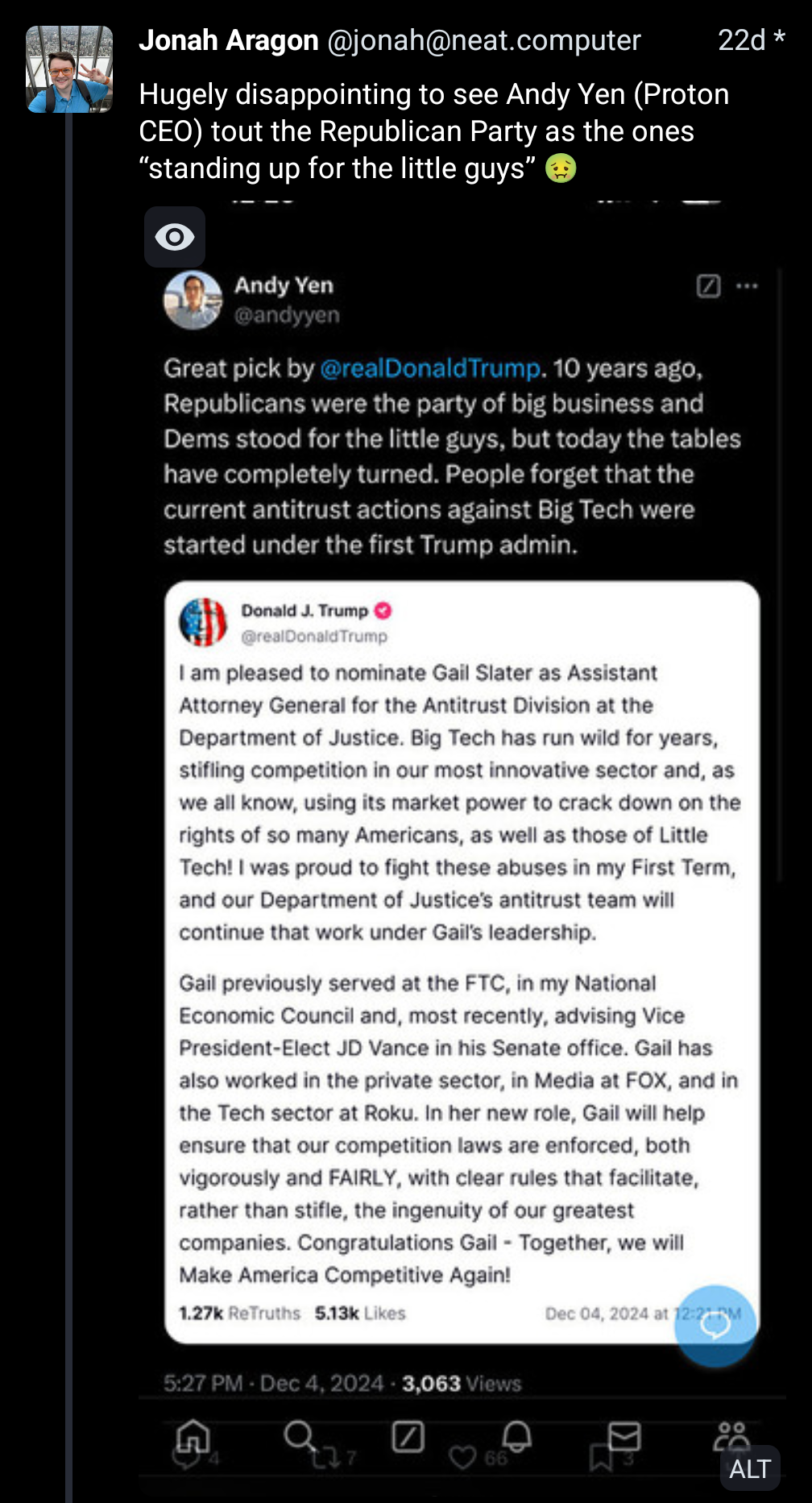
Unnecessary and deeply concerning bow to the new "king"

Update: position got backed up by an official Proton post on Mastodon, it's an official Proton statement now. https://mastodon.social/@protonprivacy/113833073219145503

Update 2, plot-twist: they removed this response from Mastodon - seems they realize it exploded into their face!
1005
1006


cross-posted from: https://slrpnk.net/post/15995282

Real unfortunate news for GrapheneOS users as Revolut has decided to ban the use of 'non-google' approved OSes. This is currently being posted about and updated by GrahpeneOS over at Bluesky for those who want to follow it more closely.

Edit: had to change the title, originally it said Uber too but I cannot find back to the source of ether that's true or not..

1007
1
submitted 2 years ago* (last edited 2 years ago) by Charger8232@lemmy.ml to c/privacy@lemmy.ml


Happy Christmas and Merry Hanuka!

If you're struggling to find something to buy your privacy enthusiast friend for the holidays, I have some gift ideas. As with any gift, not everyone will need these, but it can give you a good idea of what to look for. Feel free to submit your own suggestions, as well!

No affiliate links, no sponsors, no favorites. All prices are in USD. If a price is something like "$X.99" or "$X.49" or "$X39" I have rounded it up by one digit.


Subscriptions

Some privacy tools come at a cost, and not all open source software can be used for free!


Addy.io

Addy.io is an email aliasing service.

Pricing

Lite: $1 / month

Pro: $3 / month


Bitwarden

Bitwarden is a cloud-synced password manager.

Pricing

Personal Premium: $10 / year

Personal Families: $40 / year

Business Teams: $48 / user / year

Business Enterprise: $72 / user / year


Calyx Institute Internet Membership

The Calyx Institute Internet Membership provides you with a privacy respecting cellular hotspot.

Pricing

Contributor Yearly: $500 / year for first year, $400 / year thereafter

Contributor Quarterly: $150 / 3 months

Contributor Plus: $600 / year for first year, $500 / year thereafter

Sustainer Yearly: $750 / year for first year, $500 / year thereafter

Sustainer Quarterly: $175 / 3 months


JMP

JMP is an open source phone number provider.

Pricing

Plan (USD): $5 / month + additional usage costs


Mullvad VPN

Mullvad VPN is a virtual private network.

Pricing

1 month: $5.28 / month

Physical vouchers are also available through resellers.


MySudo (PROPRIETARY)

MySudo is a proprietary aliasing software. I could not find any open source option for aliasing phone numbers, especially this cheap.

Pricing

SudoGo: $1 / month or $10 / year

SudoPro: $5 / month or $50 / year

SudoMax: $15 / month or $150 / year


Privacy.com (PROPRIETARY)

Privacy.com is a proprietary financial transaction masking and aliasing tool. There are other options such as Revolut (open source), but Privacy.com seems to be the one that works best in the United States. Consider your threat model while using these tools.

Pricing

Plus: $5 / month

Pro: $10 / month

Premium: $25 / month


Proton

Proton is a software suite that includes email, VPN, cloud storage, password manager, calendar, and wallet. Their pricing is extremely convoluted and difficult to navigate.

Pricing

Proton Unlimited 1 month: $13 / month

Proton Unlimited 12 months: $10 / month

Proton Duo: $15 / month

Proton Family: $24 / month

Mail Plus 1 month: $5 / month

Mail Plus 12 months: $4 / month

Drive Plus Monthly: $5 / month

Drive Plus Yearly: $4 / month

Proton VPN Plus 1-month plan: $10 / month

Proton VPN Plus 1-year plan: $5 / month

Proton VPN Plus 2-year plan: $4.50 / month

Pass Plus Monthly: $5 / month

Pass Plus Yearly: $3 / month

Proton Business Suite Monthly: $15 / user / month

Proton Business Suite Yearly: $13 / user / month

Mail Essentials Monthly: $8 / user / month

Mail Essentials Yearly: $7 / user / month

Mail Professional Monthly: $11 / user / month

Mail Professional Yearly: $10 / user / month

VPN Essentials Monthly: $9 / user / month

VPN Essentials Yearly: $7 / user / month

VPN Professional Monthly: $12 / user / month

VPN Professional Yearly: $10 / user / month

Pass Essentials Monthly: $5 / user / month

Pass Essentials Yearly: $2 / user / month

Pass Professional Monthly: $7 / user / month

Pass Professional Yearly: $3 / user / month

Drive Professional Monthly: $10 / user / month

Drive Professional Yearly: $6 / user / month


Hardware

Not everything is digital. Hardware is the foundation for privacy, after all!


Dumb Television

Smart TVs are so last century... and this century... and the next century... Enjoy the luxury of buying a "dumb TV" while it lasts, because your TV doesn't need to spy on you! There's no best option here. You might need to purchase a large monitor instead of a TV.


Google Pixel

Google Pixel phones are one of the most secure devices, especially when you run a security/privacy focused custom Android distribution such as GrapheneOS. Other phones exist for this category, but the Google Pixel is a good baseline. Prices here are based on what are actively being sold on Google's own website.

Some things to look out for when installing a custom Android distribution:

  • Make sure the custom Android distribution you want to install supports being installed on the device you get. GrapheneOS, for example, only supports Google devices.
  • Make sure the device you purchase allows unlocking the bootloader.
  • Make sure the custom Android distribution you want to install supports locking the bootloader after installation for the device you get. Some devices do not allow relocking the bootloader, and in some cases this can brick the device. Google Pixels generally have the best support for this.
  • Make sure the device you purchase is carrier unlocked or the carrier allows OEM unlocking/bootloader unlocking. Some carriers (most notoriously Verizon) will disable this functionality to maintain a monopoly and will refuse to lift the restriction. Second hand sellers are often unaware of this and will mistakenly list the device as "carrier unlocked" when it is in fact not.

Pricing

Refurbished Pixel 6 128GB: $340

Refurbished Pixel 6 256GB: $390

Refurbished Pixel 6 Pro 128GB: $540

Refurbished Pixel 6a: $250

Refurbished Pixel 7 128GB: $430

Refurbished Pixel 7 256GB: $480

Refurbished Pixel 7 Pro 128GB: $630

Refurbished Pixel 7 Pro 256GB: $680

Refurbished Pixel 7 Pro 512GB: $780

Pixel 7a: $500

Pixel 8 128GB: $700

Pixel 8 256GB: $760

Pixel 8 Pro 128GB: $1,000

Pixel 8 Pro 256GB: $1,060

Pixel 8 Pro 512GB: $1,180

Pixel 8 Pro 1TB: $1,400

Pixel 8a 128GB: $400

Pixel 8a 256GB: $460

Pixel 9 128GB: $650

Pixel 9 256GB: $750

Pixel 9 Pro 128GB: $850

Pixel 9 Pro 256GB: $950

Pixel 9 Pro 512GB: $1,070

Pixel 9 Pro 1TB: $1,300

Pixel 9 Pro XL 128GB: $950

Pixel 9 Pro XL 256GB: $1,050

Pixel 9 Pro XL 512GB: $1,170

Pixel 9 Pro XL 1TB: $1,400

Pixel 9 Pro Fold 256GB: $1,500

Pixel 9 Pro Fold 512GB: $1,620


OpenWrt One

OpenWrt One is the first router designed specifically to run OpenWrt. It's not the only supported device, and there are other open source router firmware projects, but this is a good out-of-the-box choice.

Pricing

This can currently only be purchased from unofficial resellers for $90.


Qubes OS certified hardware

Qubes OS is likely the most hardened Linux distro available. They have their own list of certified hardware that comes with Qubes OS preinstalled. Those devices aren't the only ones capable of running Qubes OS. You can also check out the Hardware compatibility list and Community-recommended computers. These computers can run more than just Qubes OS, but if it's good enough to be certified by them, it will likely run anything else just as securely!

Pricing

NitroPad V56: Lowest $1,565.58

NovaCustom V56 Series 16.0 inch coreboot laptop: Lowest $1,256.40

NitroPC Pro 2: Lowest $1,614.73

Star Labs StarBook: Lowest $863.00

NitroPC Pro: Lowest $1,614.91

NovaCustom NV41 Series Lowest $930.60

Dasharo FidelisGuard Z690: Lowest $994.28

NitroPad T430: Lowest $737.79

NitroPad X230: Lowest $737.79

Insurgo PrivacyBeast X230: $1,341.46


Raspberry Pi

Raspberry Pis are miniature computers that are very useful for setting up proxy servers.

Pricing

There's endless configurations, but the most recent Raspberry Pi model is the Raspberry Pi 5. There are multiple resellers of this, and the cheapest one is the $50 Raspberry Pi 5 2GB


Self-hosting hardware

A privacy enthusiast's best tool is being able to self-host certain things. There is no single device to self-host, but some ideas are:

  • A server rack for general self-hosting
  • A powerful GPU for self-hosting AI
  • A self-hosted home automation kit

Hardware Accessories

What is a piece of hardware without a few accessories? Modularity is always a benefit of modern technology.


Camera covers

From laptops to webcams to phones, cameras are everywhere. If you don't fully trust the device you use and want some peace of mind, having an accessory to obscure the lenses of your cameras is a good thing to have. There are lots of options here depending on which camera you want to cover. Some phone cases even offer a sliding camera cover.


CD/DVD/Blue-ray drives

Some CD/DVD/Blue-ray drives can allow you to preserve the physical DVDs that you have bought and paid for, that may soon be end-of-life. These devices allow you to read the contents of the disk, and save a digital copy of it for archival purposes. There is no best-option here, so look around to find one that fits.


Data storage devices

Data storage devices are useful for many things such as backups, installing operating systems, booting live operating systems, data transfer, and more. The market here is huge and convoluted, so learn about different types of drives, different connectors, different connector versions (such as USB), etc. before making an educated decision.


Hardware security keys

Hardware security keys allow your accounts to be locked with a physical form of multi-factor authentication. Many organizations sell these, and some of them even provide open source hardware/software. Here are a few common brands:


Microphone blocker

Microphone blockers come in all shapes and sizes, but they all serve the same function: making sure your microphone is not able to hear anything. The effectiveness of some of these are debatable, given that most phones have multiple microphones, but it can be a fun gift nonetheless.


Privacy screen protector

Privacy screen protectors are films that you apply over your screens to restrict viewing angles. This means that if someone were to look at your phone while standing next to you, they likely wouldn't be able to see what you're doing. These screen protectors are also available for laptops, smart watches, and other screens.

When buying these, make sure of the following:

  • The screen protector supports fingerprint unlock for relevant devices.
  • The screen protector actually works well.
  • The screen protector will actually protect the device as a screen protector.
  • The screen protector fits correctly for the device you're getting.
  • The cameras will still work after the screen protector is applied to relevant devices.

Wired headphones

Bluetooth can pose a privacy risk, and that is especially true when you need to play sensitive audio. One time I was in a hallway with my Bluetooth earbuds in, connected to my phone but not playing anything, when suddenly I heard a grainy piano song. My phone wasn't playing anything, and eventually the music just cut out. To this day I have no idea how it happened, but it does mean you should be careful with wireless headphones.

Wires can be annoying, but being able to fully turn off Bluetooth can give you peace of mind knowing that your audio stays inside the wire. Having high quality wired headphones can be a blessing, and even provide a better listening experience. It's worth looking at many brands, but Google still sells USB-C wired earphones and headphones from a few different brands. Here are a few:

Google Pixel USB-C™ earbuds: $30

AIAIAI Pipe 2.0 USB-C Earphones: $40

AIAIAI Tracks 2.0 Headphones: $60


Currency

Anonymous payments are growing more and more difficult, so if you aren't sure what to buy, these are well appreciated options.


Cash

Cash is one of the most anonymous methods of payment, and can be a privacy enthusiast's gold. Multiple small bills ($1, $5, etc.) are appreciated more than a few large bills ($20, $50, etc.) because many places do not accept cash in large bills. You can also gift some rare or interesting cash, such as $2 bills, half dollars, silver dollars, dollar coins, etc.


Cryptocurrency

Getting cryptocurrency, especially anonymously, can be a long and painful process. If you are comfortable setting it up, this is a huge time saver and a great gift. Monero is generally considered the most private cryptocurrency, so that's a better choice than other cryptocurrencies. However, Bitcoin is the most popular and most widely accepted, even though it isn't very private. Try to obtain these through anonymous means such as using cash at cryptocurrency ATMs that may be in your city.


Prepaid cards

There's usually no option to pay in cash online, but there are ways around this. If you buy gift cards or prepaid VISA cards with cash, it can be almost as anonymous as cash itself. Some good choices may include:

  • Amazon Gift Cards: Amazon is very hard to use privately, but this can help significantly.

  • Google Play Gift Cards: Google Play is one of the most secure ways of installing apps, but not all of them are free. Google Play gift cards can allow you to pay for apps anonymously, so you can maintain your security.

  • Visa Prepaid Card: This is a catch-all solution for when there's no specific gift card available.


Physical Items

As with hardware, not everything needs to be digital. There are plenty of items that are cheaper and good for almost anyone.


Books

eBooks are a marvel, but they come with complications. Sometimes the formatting isn't right, sometimes you can't get them anonymously, and you need a device to even view it. If the digital apocalypse ever happens, the only way to access information will be through books. No ads, no eye strain. A good privacy related book you could buy is Michael Bazzell's Extreme Privacy: What It Takes to Disappear


Calendar

Digital calendars can be convenient, but not always safe. Anything digital can risk being remotely accessed or spied on. Having a physical calendar means you can have the benefits of a calendar, without the need for a digital device. Plus, it comes with pictures that you get to pick.


DVDs

Best paired with a DVD ripper, having physical copies of movies and games means no company can take it away from you with the push of a button. You have no ads, use no internet, no subscriptions, and have full quality.


Faraday bags

Faraday bags and pouches are containers for your devices that block all incoming and outgoing signals. That means anything that goes inside of it will have no Wi-Fi, Bluetooth, cellular, NFC, etc. This is useful if you want to make sure your device isn't phoning home. This is an item that you may want to spend extra on, because lower quality ones can still leak radio signals.


Merchandise

Privacy themed merchandise can be a good way to show that you care about privacy and to help spread it. You can find privacy merch anywhere, but NBTV (a privacy YouTuber) has a good selection of products: https://shop.nbtv.media/en-usd/

Monerochan my beloved


Notebooks

Having everything in a digital notes app can be nice or convenient, but I much prefer to write a lot of things down in a physical notebook. From diaries to sketches, it's nice to take a break from your digital life to jot down some ideas, privately.


Paper shredder

When you have sensitive documents that you need discarded, one of the best ways is a paper shredder. If you buy one of these, the best ones are ones that dice the paper or burn it entirely. Even those small squares can be pieced together again.


Safes and lockboxes

Speaking of sensitive documents, where do you store those? A good place to store sensitive documents is in a safe or a lockbox. From government documents to your best ideas, they deserve to stay (in a) safe. It's good to make sure you buy a fireproof safe, just in case Fahrenheit 451 becomes more of a reality.


Surveillance camera jackets

As the looming threat of widespread AI surveillance comes closer, defenses against them grow stronger. Generally, you have two options:

These can be expensive and hard to find, but the best way to fight surveillance.


Ending notes

Thank you all for reading this! I hope it helps you find a gift for a privacy enthusiast you can't think of a gift idea for. You don't have to buy the exact things listed here, but it gives you a general outline with ideas. I know there are some great gift ideas I missed here, so please leave them in the comments to help out others!

Merry Christmas, Happy Hanuka, and have a nice day!

- The 8232 Project

1008


In my (European) country now we can have a digital copy of the driving license on the phone. It specifically says that it's valid to be presented to law enforcement officers during a check.

I saw amazed in the beginning. They went from limited beta testing to full scale nationwide launch in just two months. Unbelievable. And I even thought "wow this is so convenient I won't need to take the wallet with me anymore". I installed the government app and signed up with my government id and I got my digital driving license.

Then yesterday I got stopped by a random roadblock check and police asked me my id card. I was eager to immediately try the new app and show them the digital version, but then because music was playing via Bluetooth and I didn't want to pause it, i just gave the real one.

They took it and went back to their patrol for a full five minutes while they were doing background checks on me.

That means if I used the digital version, they would had unlimited access to all my digital life. Photos, emails, chats, from decades ago.

What are you are going to do, you expect that they just scan the qr code on the window, but they take the phone from your hand. Are you going to complain raising doubts? Or even say "wait I pin the app with a lock so you can't see the content?"

"I have nothing to hide" but surely when searching for some keywords something is going to pop-up. Maybe you did some ironic statement and now they want to know more about that.

And this is a godsend for the secret services. They no longer need to buy zero day exploits for infecting their targets, they can just cosplay as a patrol and have the victim hand the unlocked phone, for easy malware installation

Immediately uninstalled the government app, went back to traditional documents.

1009


An international law enforcement operation has taken down Matrix, an encrypted messaging service used by criminals.

French media mainstream relay the propaganda of the cops, telling that the interception has been made with "innovative technology", but without any details. They also telling that :

European authorities have dismantled Matrix, an encrypted messaging platform made by criminals for criminals. https://cybernews.com/cybercrime/authorities-take-down-matrix/

An expression found in other media; it may be communication from cops.

Do you have any idea how that has been possible ? Do you think they may be issue with matrix or some of the softzare that implement it ? Or do you think that cops compromise terminal (phone or computers) ? I'm more and more suspicious with open network, that let organization enter into the federation, and let it intercept communication.

1010


In my post on why mass surveillance is not normal, I referenced how the Wikipedia page for the Nothing to hide argument labels the argument as a "logical fallacy." On October 19th, user Gratecznik edited the Wikipedia page to remove the "logical fallacy" text. I am here to prove that the "Nothing to hide" argument is indeed a logical fallacy and go through some arguments against it.

The "Nothing to hide" argument is an intuitive but misleading argument, stating that if a person has done nothing unethical, unlawful, immoral, etc., then there is no reason to hide any of their actions or information. However, this argument has been well covered already and debunked many times (here is one example).

Besides the cost of what it takes for someone to never hide anything, there are many reasons why a person may not want to share information about themselves, even if no misconduct has taken place. The "Nothing to hide" argument intuitively (but not explicitly) assumes that those whom you share your information with will handle it with care and not falsely use it against you. Unfortunately, that is not how it currently works in the real world.

You don't get to make the rules on what is and is not deemed unlawful. Something you do may be ethical or moral, but unlawful and could cost you if you aren't able to hide those actions. For example, whistleblowers try to expose government misconduct. That is an ethical and moral goal, but it does not align with government interests. Therefor, if the whistleblower is not able to hide their actions, they will have reason to fear the government or other parties. The whistleblower has something to hide, even though it is not unethical or immoral.

You are likely not a whistleblower, so you have nothing to hide, right? As stated before, you don't get to make the rules on what is and is not deemed unlawful. Anything you say or do could be used against you. Having a certain religion or viewpoint may be legal now, but if one day those become outlawed, you will have wished you hid it.

Just because you have nothing to hide doesn't mean it is justified to share everything. Privacy is a basic human right (at least until someone edits Wikipedia to say otherwise), so you shouldn't be forced to trust whoever just because you have nothing to hide.

For completeness, here is a proof that the "Nothing to hide" argument is a logical fallacy by using propositional calculus:

Let p be the proposition "I have nothing to hide"

Let q be the proposition "I should not be concerned about surveillance"

You can represent the "Nothing to hide" argument as follows:

p → q

I will be providing a proof by counterexample. Suppose p is true, but q is false (i.e. "I have nothing to hide" and "I am concerned about surveillance"):

p ∧ ¬q

Someone may have nothing to hide, but still be concerned about the state of surveillance. Since that is a viable scenario, we can conclude that the "Nothing to hide" argument is invalid (a logical fallacy).

I know someone is going to try to rip that proof apart. If anyone is an editor on Wikipedia, please revert the edit that removed the "logical fallacy" text, as it provides a very easy and direct way for people to cite that the "Nothing to hide" argument is false.

Thanks for reading!

- The 8232 Project

1011
1012


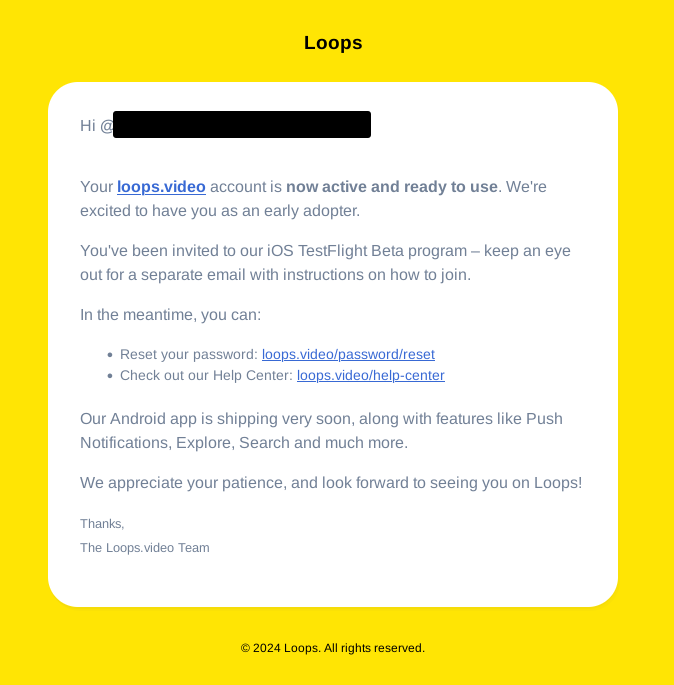
Loops is a federated alternative to TikTok created by Pixelfed. Once it first came out, users were able to sign up for early access. Confirmation emails weren't sent right away, but today they announced that emails were being sent out, and registration is now closed.

I got a confirmation email today, attached in the image. I will be loosely documenting my experience, and may (no promises) make a writeup about it.
Wiz Khalifa would be proud

1013


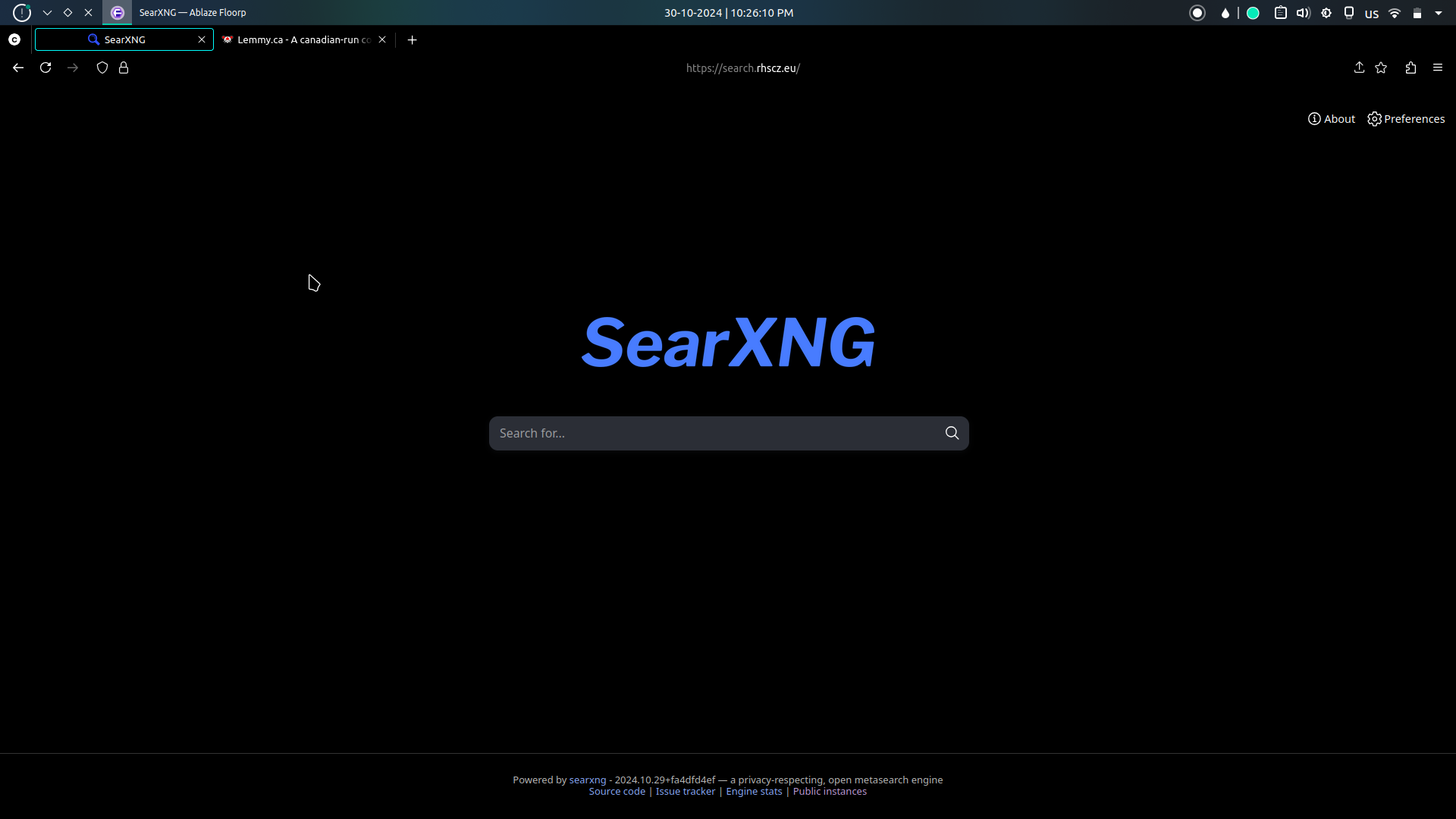
actually awesome and fast search engine (depending on which instance you use) with no trashy AI and ADs results also great for privacy, if you don't know which instance to use go to https://searx.space/ and choose an instance closest to you
1014


(I know many of you already know it but this incident I experienced made me so paranoid about using smartphones)

To start off, I'm not that deep into privacy rabbit hole but I do as much I can possibly to be private on my phone. But for the rest of phones in my family, I generally don't care because they are not tech savvy and pushing them towards privacy would make their lives hard.

So, the other day I pirated a movie for my family and since it was on Netflix, it was a direct rip with full HD. I was explaining to my family how this looks so good as this is an direct rip off from the Netflix platform, and not a recording of a screening in a cinema hall(camrip). It was a small 2min discussion in my native language with only English words used are record, piracy and Netflix.

Later I walk off and open YouTube, and I see a 2 recommendations pop-up on my homepage, "How to record Netflix shows" & "Why can't you screen record Netflix". THE WHAT NOW. I felt insanely insecure as I was sure never in my life I looked this shit up and it was purely based on those words I just spoke 5min back.

I am pretty secure on my device afaik and pretty sure all the listening happened on other devices in my family. Later that day, I went and saw which all apps had microphone access, moved most of them to Ask everytime and disabled Google app which literally has all the permissions enabled.

Overall a scary and saddening experience as this might be happening to almost everyone and made me feel it the journey I took to privacy-focused, all worth it.

1015


If you use the privacy respecting Gboard alternative called FUTO keyboard, you've probably noticed that the built in swipe typing is HOT GARBAGE. (Typing this currently with two thumbs for this exact reason.)

Most keyboards improve their swipe algorithms by simply spying on you and logging your typing data. FUTO isn't about that, so they have built a simple webpage based typing game that you can use to improve their system in an ethical and voluntary manner! Just swipe the website's keyboard to type a provided sentence.

I love this, they can crowdsource the improvement without invading privacy!

Share with any relevant communities you're a part of. The more data, the better this gets.

1016
1017


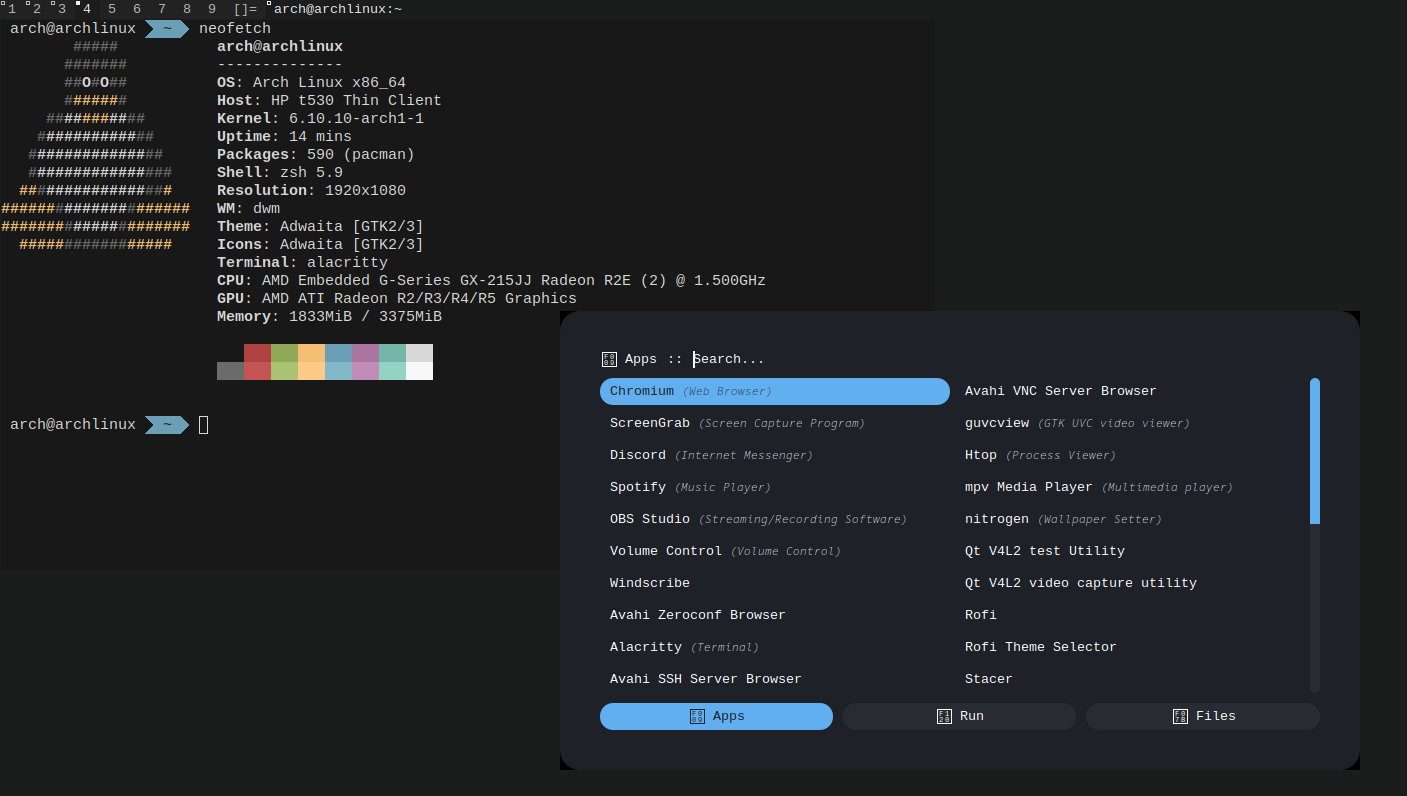
Greetings! Recently, i have ditched Windows for Linux. Why? Well, This all started with a Windows Update. I was working on a Discord bot, until my PC decided to restart without my consent. What was it? A Windows Update. I was like: "no big deal, ill just wait". Well, it was over 100+ updates. After all the updates completed, i saw the Windows 11 setup screen. Keep in mind that I was on WIndows 10 before the updates. Now at that point i really got angry. Like, I hate Windows 11. So then i went and completed the setup, and got met with ALL THE BLOATWARE REINSTALLED. So ofcourse, since i did NOT wanna use Windows 11, i backed up my data, and switched to the Secure and Free operating System, Linux. I went with arch, since i have used Ubuntu before, and it's terrible. And since i didn't wanna use any fancy Desktop Enviroments, such as GNOME, KDE, HyprLand, XFCE. I went with dwm. It looks very mininal and customizable.

Now that brings me to the question, What apps should i get rid of?

I know i did the same post like a few weeks ago, but for the sake of Privacy, i know Some apps contain Telemetry, and some Don't. But still.
1018
1019


In regards to privacy... even when trying to use FOSS-alternatives and F-Droid on Android?

1020


My threat model is against mass surveillance. This is one of the hardest threat models to defend against and to justify, because (at least here in the US), mass surveillance has become normalized. I've heard people directly tell me that "privacy is weird." I'm not here to shoot down the Nothing to hide argument literally labelled on Wikipedia as "a logical fallacy," instead, I want to take my own approach to show just how unnatural mass surveillance is.

Picture this: Your best friend tells you that he heard rumors that someone put cameras in your house and was actively spying on you. That is super creepy, but you brush it off and say that nobody would do that, because who would care that much about you? However, when you get home, you look around and find multiple dozen hidden cameras everywhere. Think about how you're feeling right now, knowing that you're being watched. Even though you know that you're being watched, but have no idea who has been watching you, what they have seen, or how long they've been watching you, it's disillusioning and creepy to find out that what your friend said was true.

Then, you do some digging online and find out that everyone in your neighborhood is also being watched. Oh, it's fine then, right? Suddenly it's much better that you're not alone. No! More surveillance is not a good thing. People fall into the false belief that as long as it's not targeted surveillance or a personal attack that it's suddenly fine, that you will just blend in with the noise. Your data is valuable, and spying in any capacity is NOT normal. Remember: The situation never changed, you are still being watched, you just found out that not only you, but everyone around you is also being spied on.

You still have no idea who is watching you, and it's even worse to find out that it might not just be one person, that anyone can buy this data for cheap. Data like this can be used to stalk you, drain your bank account, read intimate personal texts, rig elections, manipulate you into buying things you never intended to buy, and so much more. This is the state of mass surveillance and it needs to stop. It's not a conspiracy, the dystopia is today.

Mass surveillance is not normal. Privacy also isn't normal: it's a right, instead.

1021


Hi everyone! For... I guess over a year now? I've been observing and trying out lots of software recommended by the privacy community and internet as a whole. With that time, I've been able to slowly put together a list of all the software I personally believe to be the best for their own various reasons. I finally have enough to be able to share it with all of you!

I'm also looking for feedback. I haven't tried all the software on that list, and I'm sure there's software I've never heard of that needs added. I'm looking for your feedback on what you think should be added, removed, or changed. That includes the list itself, if you think there are any design improvements.

Do note: Any software marked with a ⭐️ I am not looking for feedback on. This is software that I firmly believe is the best of the best in its category, and likely will not be changed. However, if there is a major issue with the software that you can provide direct proof of, then there is a chance it will be changed in the next release. There are no grantees.

The sections marked with ℹ️ are lacking, and can use your help! Some software there may not be the best one, or may have many software or sections missing. I am absolutely looking for help and feedback here, and would love your help!

My goal with this project is to help people find the best software from many standpoints, and to prove that there really are good open source alternatives for almost anything! I hope this helps someone, and I look forward to your feedback!

Thank you all for reading and taking the time to look through my list!

Edit: This project has moved to GitLab!

1022


This is absolutely ridiculous. Imagine some fuckers just coming into your room while you're with your SO making love or something.

1023


Edit: Before you read, I made some mistakes here that I mention in my part 2

My mobile operating system of choice is GrapheneOS. I run it on a used Google Pixel 8, as I didn't have enough money for any of the phones in the Google Pixel 9 lineup, which offer a more secure ultrasonic fingerprint scanner. I used to use iOS, but I finally managed to switch. I wanted to share my thoughts on GrapheneOS, problems I had, and the apps that I use.

To install apps, I first check if it is available on GrapheneOS's built in app store. If not, it is installed via Accrescent. Because Accrescent is still very small in support, most of my apps are installed via Obtainium. One app however, ProtonVPN, is installed via Aurora Store, because that is the only installation medium that allows me to sign in as a guest.

I do have a Proton account, so signing in isn't an issue, but since I plan to use ProtonVPN until I can pay for Mullvad VPN, I might as well get as much anonymity as I can. I don't use the actual Google Play Store, despite claims of it being more secure, mainly due to me required to create a Google account. I only use Aurora Store for ProtonVPN. For apps that are not available for Obtainium but are available on F-Droid, I simply use the F-Droid repo inside of Obtainium. All apps are verified with AppVerifier.

For games I have a very small selection. Simon Tatham's Portable Puzzle Collection is a game collection I have been using since before I even knew it was open source. Antimine is a Mines client, which is a classic. I also play a game called Zoysii, which is only available on F-Droid. It passes the time. Code Word is a nicely made Wordle app, with some extra features. Open Sudoku is a nice Sudoku app, however I found that almost all of the available puzzles to install are very easily solvable. 2048 by SecUSo is a decent app to play 2048 that is still maintained, however it currently does not have a dark mode theme. blichess is a fork of lichess that simply adds the option to play over Bluetooth, which I really like.

My mobile 2FA app is Aegis, which is really everything you would expect. Audire is an open source frontend for Shazam, which I use for music recognition. I'm sure there are some better apps with different APIs, but Shazam works really really well, and that is what I am looking for in the app. Aves is my photo manager, as it allows for proper photo hiding. It is available through Accrescent, which is nice. It is one of few apps that required me to sign terms and conditions, but it doesn't matter since it doesn't have internet access anyways. It allows me to view extensive details about photos, and even remove metadata in the app.

I use AndBible for Bible study, but the project seems to be abandoned and needs lots of improvements. I sincerely hope a good alternative is developed eventually. I would be willing to help out any way I can.

For messaging I use SimpleX Chat for my most personal chats, but for mostly everyone I contact them via Molly, which is a hardened version of Signal available on Accrescent. When I am offline, I contact nearby people through Briar over Bluetooth, which is awesome while camping. I don't have any cellular provider, so I occasionally have to make sacrifices in terms of contact.

The default GrapheneOS calculator has no dark mode, so I opt for OpenCalc as my default calculator. I tried both Etar and Fossify Calendar as a calendar, and have been much happier with Fossify Calendar. A lot of Fossify projects have been abandoned, sadly, so I may have to switch.

I use the default GrapheneOS camera for most of my pictures, but when I need high quality shots I will use Open Camera. It supports HDR and some post processing. The GrapheneOS camera has incredible support for code scanning, such as QR codes and bar codes. I don't plan to use the Pixel Camera, since those apps work just fine for me. To edit photos I use the GrapheneOS gallery, but it is somewhat lacking. I plan to stick with it as they add new features.

I have a ClearClipboard app that, simply, clears the clipboard when you open it. It's a small tool but I get very paranoid about clipboard access. I've found that my password manager doesn't reliably autoclear, which I will discuss later.

The default GrapheneOS clock app is fine. I wish there was an OLED theme, but it's worked for what I need. DeepL is what I use for translations, because I cannot seem to find an offline translator app. It's very upsetting. For my keyboard I use HeliBoard with the proprietary swipe to type module, and it's great. There are a few weird autocorrect suggestions, such as not recognizing the word "A", but it's honestly not been a huge issue.

I use Joplin to take notes. I had issues with Standard Notes when I was on iOS, and had switched to Joplin there. I now can't even imagine why anyone would even try to use Standard Notes, Joplin makes Standard Notes look like a joke. It has all (or at least all I care about) of the paid features of Standard Notes, for completely free.

My password manager is KeePassDX, which is honestly exactly what I would want from a password manager. The only issue I've had is that it sometimes disables biometric unlock and makes you unlock it yourself, which is super weird. Besides that, I will be using it until either it dies or I do.

For eBook reading I use Librera, but the UI is honestly atrocious. The best eBook reader I have ever used is Apple's stock Books app, and I honestly wish something of that polish existed on Android. Librera will work but it's not nice to use.

I have LibreTorrent in case I ever need to torrent something on the go. It's fine, I wish torrent software would include a hard toggle to disable seeding, but it's worked as intended. In a similar category I use LocalSend to transfer between any of my devices. I haven't tried KDE Connect because LocalSend has never caused me problems. The only issues I have encountered were because of strict VPN settings.

I eventually plan to use Mullvad VPN, but until I can afford it I am using ProtonVPN as I mentioned. I have no real comments because I have only used ProtonVPN. IVPN is on my radar, but Mullvad VPN is still at the top of my list. IVPN is available via Accrescent. I also have Orbot in case Proton or Mullvad are blocked.

Music players have been a struggle for me. All of them have their own various issues. All I really need is a nice way to play mp3 files offline and sort them into playlists. A night timer is nice. Vinyl Music Player is what I use for now, since Fossify Music Player seems to be abandoned. I'm open to some open source alternatives here, since the ones I have tried all have issues. Ideally these should be available by Obtainium.

I use Organic Maps for navigation. Support is alright in my city. OsmAnd has a pretty bad UI but it's gotten better. Organic Maps I've heard has a few issues, and OsmAnd has a premium tier, but I don't really care. I am just sticking with Organic Maps. I'm happy with it, so it's fine.

I have RadioDroid installed to try it out. It lets you listen to radio stations over WiFi. I'm jealous of Motorola users for their built in AM/FM radio receiver antenna. I might not keep this app, since it's fairly useless when you think about it. Either way, maybe a GrapheneOS phone will come along with a built in antenna.

I have Tor Browser installed just in case I ever need to visit an Onion site or use a Gecko based browser. My main browser is Vanadium, and I did try Mull but it doesn't block advertising redirects even with uBlock Origin. Vanadium is fine for now.

I have Trail Sense as a compass and emergency survival app. I hope I never have to use it for survival, but at the same time, I hope this app saves my life. It's cool to see how many sensors it utilizes to help you out.

Tubular is a fork of NewPipe that has SponsorBlock support. I like it, it's not as polished as I would want but it's plenty usable. I wish it had DeArrow as well, but I'm sure it won't be long until it's added.

I use the Fossify Voice Recorder for voice recordings. It's what you would expect, not much to say here. For weather, I use Breezy Weather. For some reason some features were unavailable on the F-Droid version, but after installing with Obtainium I now have plenty of features at my disposal. It's almost as good as the iOS weather app, and has plenty more features. The accuracy where I am is slightly iffy, but it's good enough that I can rely on it.

I use a passphrase to lock my phone, and use biometric unlocking to ensure no one can shouldersurf passcodes. GrapheneOS only lets you add up to 4 fingerprints, which is a good enough limit, but I do wish it was higher. If I wanted only 4 fingerprints, I would choose that myself. I backup GrapheneOS using my own USB stick and the built in backup option. Some apps such as SimpleX refuse to be backed up automatically, but I can simply manually export the database and backup that file.

Even without any Google frameworks installed, GrapheneOS has been a really seamless and polished experience. The issues I would raise are actually with Android itself, such as weird management of app signing, but overall GrapheneOS has been incredible. GrapheneOS is honestly the minimum every person should expect in terms of privacy and security on their phones, because nothing else even comes close to GrapheneOS in those categories. The gap between iOS and GrapheneOS is absolutely massive, given that so many of the apps I use are Android specific.

1024


It's based on Signal protocol and it's also open source. However, unlike Signal it doesn't harvest phone numbers.

https://github.com/wireapp

1025


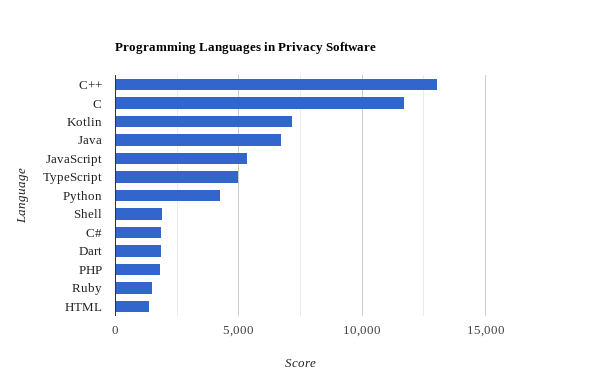
I was bored, so I compiled a list of 77 of my favorite open-source privacy-focused software. This ranges from Android apps to desktop apps to websites to operating systems. I scraped the programming languages used for each one from their respective repositories, and created a simple scoring system to score each programming language.

Obviously there is some bias, since Kotlin is very popular for Android apps and not much else, and it's not an exhaustive list, so some data might be off, but it was still fun to make! Just wanted to share it with all of you, in case anyone else finds it interesting.

The full ranking

Full ranking

  1. C++
  2. C
  3. Kotlin
  4. Java
  5. JavaScript
  6. TypeScript
  7. Python
  8. Shell
  9. C#
  10. Dart
  11. PHP
  12. Ruby
  13. HTML
  14. Makefile
  15. Go
  16. QML
  17. Pascal
  18. CSS
  19. Clojure
  20. Blade
  21. Crystal
  22. Batchfile
  23. Swift
  24. Emacs Lisp
  25. Svelte
  26. Rust
  27. CMake
  28. Haskell
  29. Lua
  30. Vue
  31. Roff
  32. XSLT
  33. Assembly
  34. NSIS
  35. Objective-C
  36. SCSS
  37. Less
  38. PLpgSQL
  39. Objective-C++
  40. Inno Setup
  41. Meson
  42. WebAssembly
  43. ASL
  44. PowerShell
  45. Rich Text Format
  46. GLSL
  47. Common Lisp
  48. Haml
  49. Scheme
  50. Dockerfile
  51. Perl
  52. AIDL
  53. M4
  54. Mustache
  55. D
  56. MDX
  57. SourcePawn
  58. M
  59. Pug
  60. Lex
  61. EJS

Scores for each programming language

Language scoresC++: 13070

C: 11734

Kotlin: 7195

Java: 6727

JavaScript: 5356

TypeScript: 5002

Python: 4250

Shell: 1903

C#: 1873

Dart: 1872

PHP: 1844

Ruby: 1499

HTML: 1389

Makefile: 990

Go: 975

QML: 955

Pascal: 917

CSS: 888

Clojure: 878

Blade: 832

Crystal: 738

Batchfile: 708

Swift: 577

Emacs Lisp: 556

Svelte: 366

Rust: 351

CMake: 342

Haskell: 326

Lua: 300

Vue: 288

Roff: 268

XSLT: 176

Assembly: 167

NSIS: 130

Objective-C: 128

SCSS: 90

Less: 77

PLpgSQL: 66

Objective-C++: 61

Inno Setup: 59

Meson: 41

WebAssembly: 25

ASL: 22

PowerShell: 21

Rich Text Format: 21

GLSL: 18

Common Lisp: 16

Haml: 14

Scheme: 13

Dockerfile: 12

Perl: 12

AIDL: 11

M4: 7

Mustache: 7

D: 5

MDX: 5

SourcePawn: 2

M: 2

Pug: 2

Lex: 1

EJS: 1

The original data

(NOTE: I am NOT looking for criticism on any choices made here)

Original data

HuggingChat

TypeScript 62.1%

Svelte 36.6%

Dockerfile 0.4%

JavaScript 0.4%

HTML 0.2%

Shell 0.1%

Other 0.2%

GPT4ALL

C++ 48.2%

QML 32.3%

Python 8.5%

CMake 5.4%

JavaScript 3.9%

C 1.0%

Other 0.7%

Audacity

C 37.6%

C++ 35.3%

Python 18.1%

Shell 2.8%

Common Lisp 1.6%

QML 1.3%

Other 3.3%

Duplicati

C# 87.3%

JavaScript 5.7%

HTML 3.2%

Less 1.8%

Python 1.2%

Shell 0.4%

Other 0.4%

Vorta

Python 99.2%

Other 0.8%

Filen (Desktop)

TypeScript 96.3%

JavaScript 2.1%

HTML 1.2%

NSIS 0.4%

Monero

C++ 81.7%

C 11.7%

Python 3.2%

CMake 2.0%

Makefile 0.5%

Shell 0.4%

Other 0.5%

Ivy Wallet

Kotlin 99.7%

Other 0.3%

Brasero

C 98.1%

Makefile 1.5%

Other 0.4%

VSCodium

Shell 83.8%

XSLT 16.0%

PowerShell 0.2%

GNU Emacs

Emacs Lisp 55.6%

Roff 23.8%

C 16.4%

M4 0.7%

Objective-C 0.6%

C++ 0.5%

Other 2.4%

GitLab

Ruby 69.2%

JavaScript 17.3%

Vue 6.8%

PLpgSQL 2.9%

Haml 1.4%

HTML 0.9%

Other 1.5%

Codeberg

Clojure 87.8%

Shell 3.9%

CSS 2.3%

HTML 2.2%

Batchfile 2.2%

PowerShell 1.0%

Other 0.6%

Wikipedia (MediaWiki)

PHP 82.7%

JavaScript 15.3%

Less 1.1%

CSS 0.8%

HTML 0.1%

Vue 0.0%

7-Zip

C++ 79.3%

C 17.6%

Assembly 1.6%

Makefile 1.5%

PeaZip

Pascal 91.7%

Inno Setup 5.9%

Batchfile 1.8%

C++ 0.4%

Shell 0.1%

C 0.1%

qBittorrent

C++ 71.0%

JavaScript 14.1%

HTML 11.5%

Python 1.1%

CSS 0.8%

CMake 0.7%

Other 0.8%

osu!

C# 100.0%

2048

CSS 54.9%

JavaScript 38.1%

HTML 6.5%

Ruby 0.5%

Wireshark

C 95.2%

C++ 2.4%

Python 1.1%

Perl 0.3%

CMake 0.3%

SourcePawn 0.2%

Other 0.5%

nmap

C 38.0%

Lua 29.0%

C++ 17.3%

Shell 4.6%

Python 4.3%

Makefile 1.9%

Other 4.9%

VirtualBox

C 67.2%

C++ 25.2%

Python 2.8%

Objective-C 1.7%

Assembly 1.4%

D 0.5%

Other 1.2%

Docker

Go 97.5%

Shell 1.5%

Dockerfile 0.5%

PowerShell 0.3%

Makefile 0.1%

Python 0.1%

calibre

Python 79.2%

C 17.1%

C++ 2.8%

HTML 0.3%

Shell 0.2%

XSLT 0.1%

Other 0.3%

Thunderbird

JavaScript 60.5%

C++ 21.5%

HTML 6.6%

CSS 3.8%

C 1.8%

Java 1.7%

Other 4.1%

Betterbird

Batchfile 66.5%

C 18.3%

C++ 10.1%

Shell 5.1%

draw.io (Desktop)

JavaScript 96.0%

Shell 4.0%

Joplin

TypeScript 71.4%

JavaScript 22.3%

HTML 1.9%

CSS 1.3%

Java 1.2%

Mustache 0.7%

Other 1.2%

LibreOffice

C++ 86.6%

Java 5.5%

Python 1.8%

Makefile 1.6%

XSLT 1.5%

Rich Text Format 1.4%

Other 1.6%

Proton Mail (Web)

TypeScript 92.1%

JavaScript 5.2%

SCSS 1.5%

MDX 0.5%

Swift 0.4%

CSS 0.1%

Other 0.2%

F-Droid

Java 65.3%

Kotlin 33.1%

Other 1.6%

Aurora Store

Kotlin 96.8%

Java 2.8%

AIDL 0.4%

Neo-Store

Kotlin 100.0%

Obtainium

Dart 98.7%

Other 1.3%

Droid-ify

Kotlin 99.6%

Shell 0.4%

IzzyOnDroid

PHP 97.2%

Python 2.5%

Shell 0.3%

Accrescent

Kotlin 100.0%

GNOME Software

C 97.0%

Meson 1.2%

Python 1.1%

Other 0.7%

Flathub

TypeScript 74.0%

Python 24.2%

JavaScript 1.1%

Shell 0.4%

SCSS 0.2%

Dockerfile 0.1%

SearXNG

Python 74.7%

Shell 9.9%

HTML 6.1%

Less 4.8%

JavaScript 2.7%

CSS 0.9%

Other 0.9%

GrapheneOS

Makefile 87.1%

C++ 11.3%

Shell 1.6%

GNOME

C 97.3%

Meson 2.3%

Python 0.4%

KDE Plasma

C++ 45.6%

QML 41.2%

C 5.5%

CMake 2.3%

Python 2.2%

JavaScript 1.9%

Other 1.3%

Arch Linux

C 98.4%

Assembly 0.7%

Shell 0.4%

Python 0.2%

Makefile 0.2%

Perl 0.1%

HeliBoard

Java 45.4%

C++ 34.7%

Kotlin 19.2%

Other 0.7%

Blender

C++ 76.3%

Python 14.6%

C 5.0%

GLSL 1.8%

CMake 1.2%

Objective-C++ 1.0%

Other 0.1%

FreeCAD

C++ 52.7%

Python 44.5%

C 1.5%

CMake 0.8%

NSIS 0.2%

Lex 0.1%

Other 0.2%

Krita

C++ 90.2%

Python 3.0%

C 2.3%

CMake 1.6%

HTML 0.7%

Rich Text Format 0.7%

Other 1.5%

GIMP

C 95.5%

Scheme 1.3%

Python 1.1%

C++ 0.7%

Meson 0.6%

Perl 0.4%

Other 0.4%

Flameshot

C++ 87.8%

CMake 5.8%

Shell 3.3%

Python 1.7%

Roff 1.1%

C 0.2%

Other 0.1%

Inkscape

C++ 94.1%

C 1.7%

CMake 1.5%

HTML 1.4%

Python 0.3%

Aegis

Java 96.0%

HTML 2.1%

Roff 1.9%

VeraCrypt

C 68.8%

C++ 19.0%

Assembly 10.0%

Shell 1.1%

Makefile 0.5%

Batchfile 0.3%

Other 0.3%

KeePassXC

C++ 95.1%

CMake 2.2%

Shell 1.5%

PowerShell 0.6%

Objective-C++ 0.4%

Python 0.1%

Other 0.1%

KeePassDX

Kotlin 79.0%

C 14.0%

Java 4.1%

Assembly 2.6%

C++ 0.2%

Ruby 0.1%

addy.io

Blade 83.2%

JavaScript 5.2%

Vue 4.8%

PHP 4.5%

CSS 2.3%

Mullvad VPN

Rust 35.1%

Swift 26.2%

Kotlin 19.5%

TypeScript 13.2%

C++ 2.8%

Shell 1.8%

Other 1.4%

Alovoa

Java 82.7%

HTML 9.8%

JavaScript 3.6%

CSS 2.8%

Other 1.1%

Briar

Java 98.0%

Kotlin 1.9%

Other 0.1%

SimpleX Chat

Haskell 32.6%

Kotlin 32.3%

Swift 26.9%

HTML 2.2%

TypeScript 1.4%

JavaScript 1.1%

Other 3.5%

Medito

Dart 88.5%

Kotlin 8.0%

Ruby 2.0%

Swift 0.7%

CMake 0.2%

C++ 0.2%

Other 0.4%

coreboot

C 94.4%

ASL 2.2%

Makefile 1.0%

C++ 0.7%

Assembly 0.4%

Perl 0.4%

Other 0.9%

Libreboot

Shell 51.5%

Python 25.1%

C 22.2%

Makefile 1.2%

OpenStreetMap

Ruby 78.1%

HTML 8.7%

JavaScript 6.9%

PLpgSQL 3.7%

SCSS 1.2%

C++ 0.7%

Other 0.7%

OsmAnd

Java 95.3%

Kotlin 3.9%

AIDL 0.7%

CSS 0.1%

Shell 0.0%

XSLT 0.0%

Organic Maps

C++ 71.0%

C 7.5%

Java 6.1%

Swift 3.5%

Objective-C++ 3.1%

Python 2.9%

Other 5.9%

VLC Media Player

C 62.6%

C++ 18.9%

Objective-C 8.3%

QML 3.1%

Makefile 1.6%

Lua 1.0%

Other 4.5%

Stremio (Desktop)

C++ 36.7%

QML 17.6%

NSIS 12.4%

JavaScript 10.7%

Shell 9.1%

CMake 4.1%

Other 9.4%

OBS Studio

C 54.6%

C++ 34.7%

CMake 6.1%

Objective-C 2.2%

Objective-C++ 1.6%

M 0.2%

Other 0.6%

NewPipe

Java 84.0%

Kotlin 13.5%

HTML 2.5%

FreeTube

JavaScript 68.5%

Vue 17.2%

CSS 11.2%

SCSS 3.0%

EJS 0.1%

Invidious

Crystal 73.8%

HTML 13.9%

JavaScript 8.2%

CSS 2.6%

Shell 1.1%

Makefile 0.2%

Dockerfile 0.2%

PeerTube

TypeScript 89.7%

HTML 6.5%

SCSS 3.1%

Shell 0.4%

Pug 0.2%

JavaScript 0.1%

Tubular

Java 84.6%

Kotlin 13.0%

HTML 2.4%

Mullvad Browser

JavaScript 28.1%

C++ 25.7%

HTML 22.3%

C 12.4%

Python 2.8%

Tor Browser

JavaScript 28.2%

C++ 25.6%

HTML 22.3%

C 12.4%

Python 2.9%

uBlock Origin

JavaScript 88.4%

CSS 4.9%

HTML 3.4%

WebAssembly 2.5%

Shell 0.6%

Python 0.1%

Makefile 0.1%
view more: ‹ prev next ›