this post was submitted on 20 Aug 2025
52 points (98.1% liked)
Selfhosted
54041 readers
575 users here now
A place to share alternatives to popular online services that can be self-hosted without giving up privacy or locking you into a service you don't control.
Rules:
-
Be civil: we're here to support and learn from one another. Insults won't be tolerated. Flame wars are frowned upon.
-
No spam posting.
-
Posts have to be centered around self-hosting. There are other communities for discussing hardware or home computing. If it's not obvious why your post topic revolves around selfhosting, please include details to make it clear.
-
Don't duplicate the full text of your blog or github here. Just post the link for folks to click.
-
Submission headline should match the article title (don’t cherry-pick information from the title to fit your agenda).
-
No trolling.
-
No low-effort posts. This is subjective and will largely be determined by the community member reports.
Resources:
Any issues on the community? Report it using the report flag.
Questions? DM the mods!
founded 2 years ago
MODERATORS
https://oauth.net/articles/authentication/
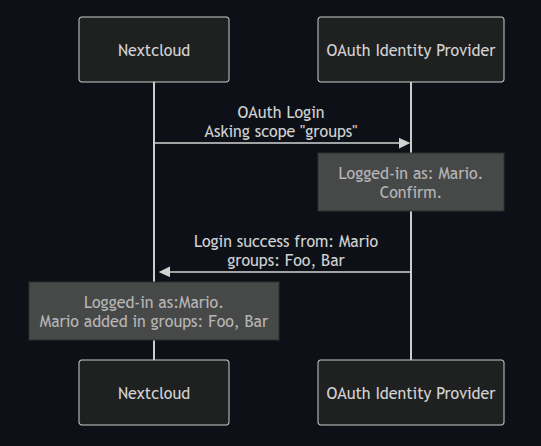
That aside, why is nextcloud asking for scopes from remote API in the diagram? What is drawn on the diagram has little to do with OAuth scopes, but rather looks like an attempt to wrap ACL repository access into a new vocabulary.
Scopes issued by the OAuth authorization server can be hidden entirely. The issuer doesn’t hold any obligation to share them with authorized party since they are dedicated for internal use and can be propagated via invisible or opaque means.
I really can’t figure out what’s going on with that diagram.
The email address scope is commonly used as a shared identifyer for linking accounts.