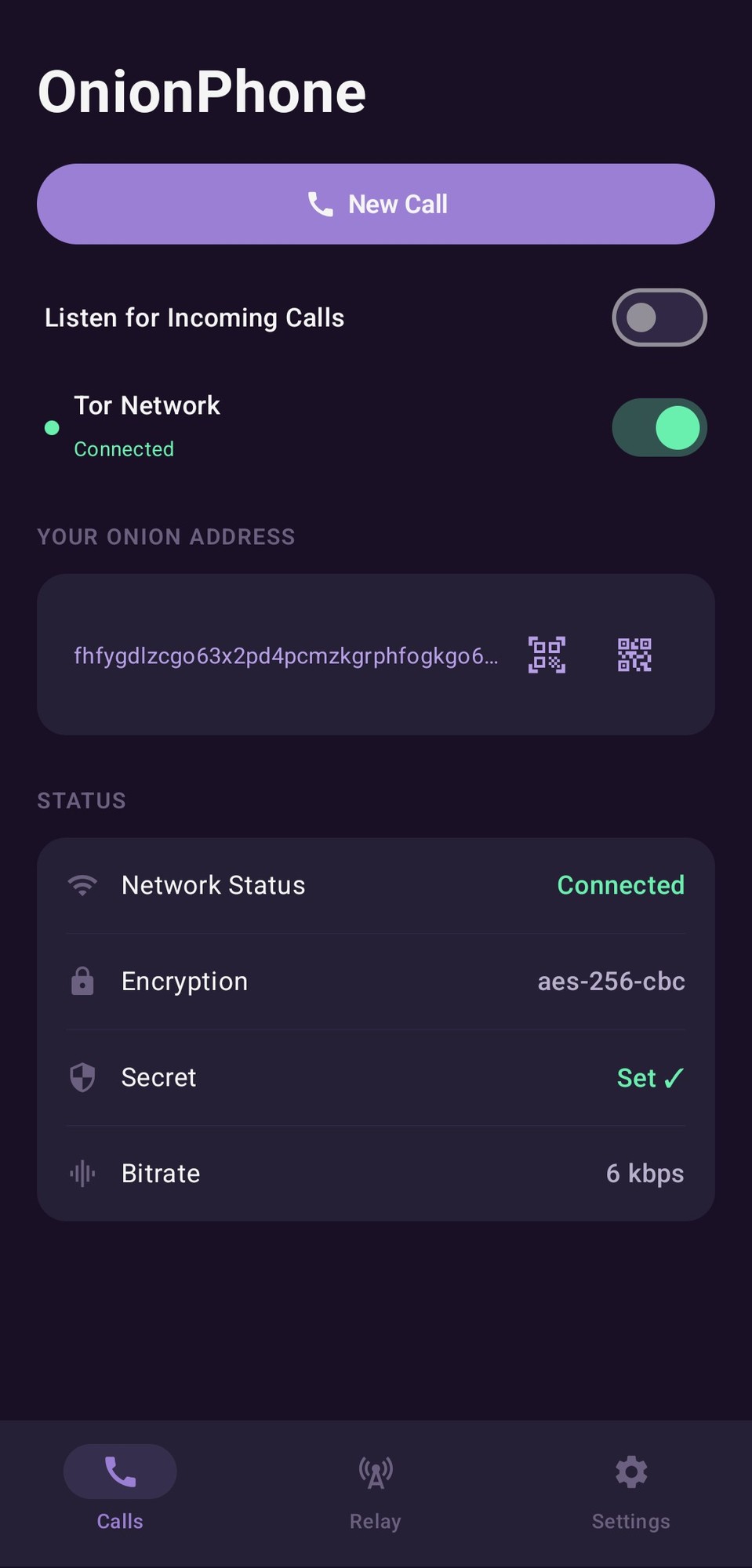
Onionphone is a native Android application for anonymous, end-to-end encrypted push-to-talk voice and text communication over the Tor network. No servers, no accounts, no phone numbers — your .onion address is your identity.
Cross-platform compatible with Terminalphone — call between Android and Linux/Termux using the same protocol.
Optionally use your connection as a relay for ephermeral group channels.
Find the release page for version 1.0.2 which supports custom bridges for accessing censored networks.
What's the selfhosted component of this?
Self hosting your own private P2P voice service.
Optionally use your device as a Audio relay for group calls, in which case you become the 'server' to all connected clients.
You do realise that's a contradiction, right?
Unless you're hosting a TOR node (which is outside of the scope here and, in the case of exit nodes, extremely risky), there's nothing here that's relevant to self-hosting.
I don't agree with that. Both sides are acting as a server and a client, connecting via a onion service to either parties rendezvous. And then when you include the fact that you can become a relay, that is clearly self hosting a server in a pure sense.
There are no exit nodes involved in onion services. It all stays within the network.