I brought up losses, upkeep, AND environmental impact.
All three of these items affect the cost of generation that you're ignoring.
I brought up losses, upkeep, AND environmental impact.
All three of these items affect the cost of generation that you're ignoring.
I love how you address only 1/3 of the items I brought up!
I have 0% loss on my house (except for the inverter losses, which the solar farms would incur as well). With 0 trees blocking anything.
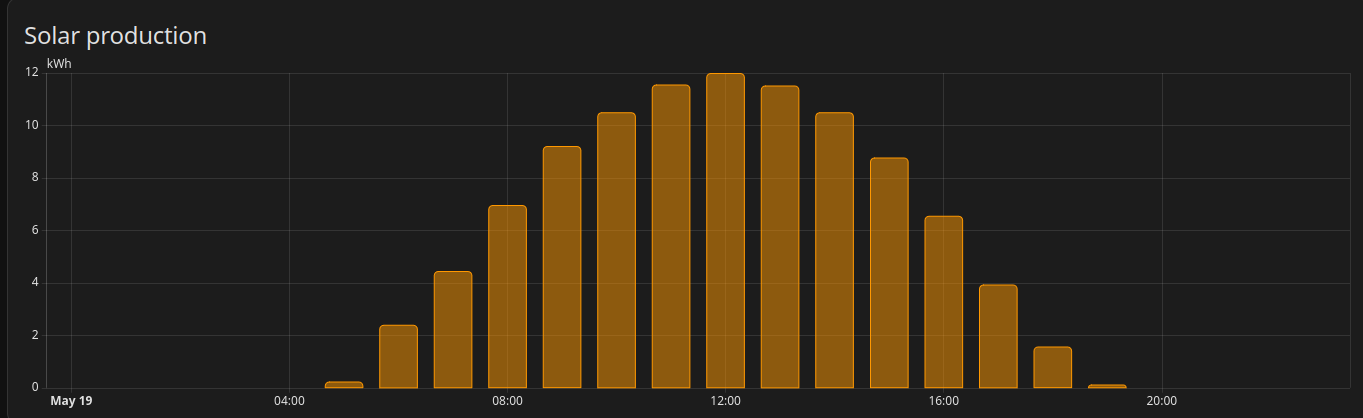
Upkeeping massive transmission lines isn't free. Adapting solar to the current grid also isn't free and lossless. Transformers on the road to bring down voltage are a 1-2% loss on their own.
Massive fields of solar has upkeep/environmental costs as well.
If you choose to misconstrue me bringing up valid points as to why we should also be installing solar on buildings as an argument to never install solar farms... that's up to you. But there is value to putting production as close to load as possible.
There is a benefit to putting solar close to the load. Less transmission losses/upkeep.
There is a benefit to putting solar on roofs/buildings... Less environmental impact.
Telco providers should be fined for any spam call and -text they don’t prevent from happening.
This would incentivise them to screen/monitor my calls and texts. No thanks.I don't need Verizon turning into google and monitoring/data mining all my shit.
SHAKEN/STIR is about as far as I want them to go. Validate with the call meta data that it's not a spoofed call. Once I know it's not spoofed, I can trust my on device apps to block what I don't want.
Assuming I am from the US?
I mean... I'd like to see any law that can be construed that directly accessing a URL that's unprotected is illegal. I'm not an expert in EU law on this for sure... but I've read many things pertaining to EU law and never found one that would lead me to believe otherwise.
Ah yes, I patrol lemmy... waiting over a month between posting on the matter... and present some solutions to the problem myself while advocating for a resolution of fixing bad unauthed endpoints?
Also, jellyfin has real downsides to Plex and security is not one of those.
Unauthed endpoints are literally a bigger security issue than anything plex has ever shipped.
No it's not.
doesn't work with auth in front of it
The idea is putting an auth layer in a reverse proxy IN FRONT OF jellyfin. Not adding OIDC into jellyfin itself. Adding any plugin into jellyfin won't fix the unauthed endpoints which would be the whole point of adding another layer of auth.
There are solutions though…
Solution for what? This thread is talking about basic auth breaking jellyfin.
Adding an auth layer IN jellyfin will not fix the unauthed endpoints. We're talking about adding an auth layer BEFORE jellyfin here.
they won’t see any difference !
They also won't know how to use it... how to debug it when it inevitably goes down... etc.
A plus could be to even add your own dns+pihole onto their network and block some of those nasty ads :) !
Yay! more support!
Me, my brother-in-law, and friend all share our libraries with the same elderly relatives.
So grandma would need to switch between all three servers to access all content.
https://websockets.readthedocs.io/en/stable/topics/authentication.html
Maybe your proxy didn't have websockets enabled? Jellyfin does require websockets to function correctly.
Edit: https://github.com/jellyfin/jellyfin/issues/13511
another issue with same "problem" with a major contributor saying "unsupported"
Try logging in.

This is all you'll see. Even if you setup a "guest" account with NO password... it's all you'll see. This is not a Nginx issue.
Edit:

The error appears in Jellyfins toast mechanism... so you know it's not nginx.
Edit2: oh and don't forget to downvote this comment too. I see you :)
Edit3: actually I just realized that you think THIS is nginx's fault...

It is, but it isn't... It requires the wss target on the server to handle it.
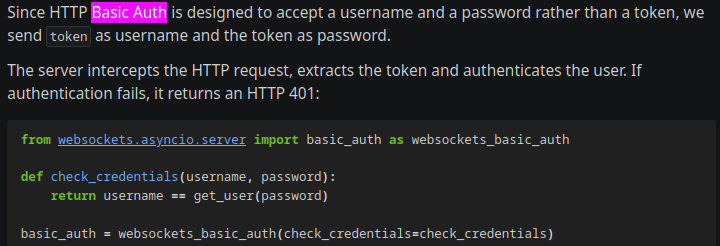
Jellyfin doesn't do this. Nginx is passing it properly.
Edit4:

Thanks dad!
Except that we have 240v?
Why do people overseas keep getting this wrong?
In the USA, by and large, homes are supplied with 240v with a neutral in the middle. So each phase is 120v. And we can access 240 by simply going across both phases. Literally every house I've ever been in my whole life has had 240v to the panel, including ones built before anyone on Lemmy was born.
The only places this isn't true was a couple of large apartment complex I lived in for few years where it was 360 to the complex 208 to the unit and 115v on each phase.
If you took out the neutral, we'd have 240 exactly like Europe. In theory (definitely not within code), on 90+% of houses in the USA, you could just wire the neutral to the opposite phase as live that the circuit is already on and get the full 240v to every outlet in the house (DO NOT FUCKING DO THIS). Each phase that we have only exists in the context of the neutral, and the neutral is strictly optional(though common) in the context of things like high draw devices.
As far as your aluminum comment... First, why aren't you saying "aluminium" if you're not (seemingly) American? But you realize that aluminum works perfectly fine for power delivery right? The EU uses aluminum in places too...
https://www.hydro.com/en/global/media/news/2025/hydro-invests-nok-1.65-billion-to-supply-europes-electric-infrastructure-with-low-carbon-aluminium
Edit: LMAO downvoted for actual facts. Here you go mr aussie.zone user that also clearly doesn't understand the USA electrical system, https://youtu.be/jMmUoZh3Hq4