tal

joined 2 years ago
[–] tal@lemmy.today 20 points 7 months ago* (last edited 7 months ago) (2 children)

Such a strike would be a brazen break with President Donald Trump, US officials said. It could also risk tipping off a broader regional conflict in the Middle East — something the US has sought to avoid since the war in Gaza inflamed tensions beginning in 2023.

Um. That makes the somewhat-questionable assumption that the Trump administration has any problem with Iran being bombed.

Setting aside even all of the geopolitical stuff, Iran got caught by US counterintelligence trying to assassinate Trump twice in the past year, and the Biden administration already told them that very unpleasant things would have happened had they not caught them and had those efforts succeeded. Trump said that he instructed his administration to "obliterate" Iran if they succeeded in such an attempt. And that's on top of Iranian intelligence trying to dick up his presidential campaign. My guess is that Trump, who has pretty much surpassed all precedent in being a vindictive son-of-a-bitch over even tiny disputes (not to mention the SecDef he selected with limited qualifications other than the Crusader and now fresh "kafir" tattoos) is probably even less-inclined than the Biden administration to take a dovish position.

Trump has publicly threatened military action against Iran if his administration’s efforts to negotiate a new nuclear deal to limit or eliminate Tehran’s nuclear program fail. But Trump also set a limit on how long the US would engage in diplomatic efforts.

In a letter to Iran’s Supreme Leader Ayatollah Ali Khamenei in mid-March, Trump set a 60-day deadline for those efforts to succeed, according to a source familiar with the communication. It has now been more than 60 days since that letter was delivered, and 38 days since the first round of talks began.

Yeah.

The US is stepping up intelligence collection to be prepared to assist if Israeli leaders decide to strike, one senior US official told CNN.

Yeah.

[–] tal@lemmy.today 3 points 7 months ago* (last edited 7 months ago) (1 children)

The bands are why I'm saying "mostly" flat. There is a small amount of scaling, but it quickly hits a cap. If you have a mansion, you aren't paying 1% of its value in tax annually.

kagis

https://www.gov.uk/guidance/understand-how-council-tax-bands-are-assessed

In England, the top band's ceiling is 320,000 pounds.

In Wales, 424,000 pounds.

https://www.rightmove.co.uk/house-prices/wales-68336.html

House prices in Wales have an overall average of £441,640 over the last year.

EDIT: The price used is, for Wales, from 2003, so it's typically about half of the current market value, in fairness, but it still illustrates that the thing cuts off at a certain, fairly low level.

[–] tal@lemmy.today 1 points 7 months ago

This is the second article I remember reading saying that it expects greater automation in high income professions. If so, then it'll tend to lead to income range compression rather than expansion, which might be an interesting outcome.

[–] tal@lemmy.today 6 points 7 months ago* (last edited 7 months ago) (1 children)

The HLG maintains that law enforcement authorities face increasing operational challenges when seeking to lawfully access data digitally generated, processed or stored in a readable format. 47% of respondents to the most recent annual survey of the SIRIUS project on Cross-Border Access To Electronic Evidence identified the lack of data retention as the predominant challenge they faced, and already in 2018 it was estimated that by 2019 more than 22 percent of global messaging was estimated to be end-to-end encrypted and inaccessible to law enforcement. The HLG identified the lack of an adequate legal framework to perform lawful interception on non-traditional telecommunications services to also have significant consequences for law enforcement action: more than 90% of messaging passes through such Over-The-Top (OTT) services.

I'd actually be pretty impressed if 22 percent of global messaging used end-to-end encryption in 2019. Pleased, but surprised.

Email needs PGP or X.509 certs, and I don't think that there's much use there. I don't think that any of the major social media sites have clients that use end-to-end encryption, and moreso not in 2019. SMS isn't end-to-end encrypted.

Like, most end-to-end encrypted software packages that I can think of are specifically aimed at people who have sought out end-to-end encryption, and there aren't many of those.

[–] tal@lemmy.today -1 points 7 months ago* (last edited 7 months ago) (2 children)

That way they pay off rather quickly and result in a lower electricity bill when you look at a span of 10-15 Years.

In the US, a lot of problems have arisen around residential solar installation companies providing loans using questionable, if not outright fraudulent sales tactics based around misrepresenting returns.

https://time.com/6565415/rooftop-solar-industry-collapse/

The Rooftop Solar Industry Could Be on the Verge of Collapse

A decade ago, someone knocking on your door to sell you solar panels would have been selling you solar panels. Now, they are probably selling you a financial product—likely a lease or a loan.

Mary Ann Jones, 83, didn’t realize this had happened to her until she received a call last year from GoodLeap, a financial technology company, saying she owed $52,564.28 for a solar panel loan that expires when she’s 106, and costs more than she originally paid for her house.

In 2022, she says, a door-to-door salesman from the company Solgen Construction showed up at her house on the outskirts of Fresno, Calif., pushing what he claimed was a government program affiliated with her utility to get her free solar panels. At one point, he had her touch his tablet device, she says, but he never said she was signing a contract with Solgen or a loan document with GoodLeap. Unbeknownst to Jones, the salesman used "yoursolarguyujosh@gmail.com" as her purported email address—that of course, was not her email address. She’s on a fixed income of $960 a month, and cannot afford the loan she says she was tricked into signing up for; she’s now fighting both Solgen and Goodleap in court.

Her case is not uncommon. Solar customers across the country say that salespeople obscure the specific terms of the financial agreements and cloud the value of the products they peddle. Related court cases are starting to pile up. “I have been practicing consumer law for over a decade, and I’ve never seen anything like what we are seeing in the solar industry right now,” says Kristin Kemnitzer, who represents Jones and says her firm gets “multiple” calls every week from potential clients with similar stories.

Companies running solar farms, on the other hand, have bean-counters in place who are in a legitimate position to run the numbers, and those companies take on the risk themselves. With residential solar, it's not companies saying "hey, we'll put our capital on the line, and just want somewhere to put a panel", it's "here's a graph and some numbers, and there's a great investment opportunity for you with your capital...just sign on the line here!" Needless to say, this opens the door to a lot of potential unpleasantness.

EDIT: If a company sends a guy to your doorstep to tell you how they have a fantastic investment opportunity for you and your money which will make you a great return, a good response is to ask them why they don't want to make the investment themselves. Is it generosity on their part, letting you enjoy the benefit of the investment?

If a solar panel installer wants to put panels on a roof I own, that's fine with me. All they have to do is pay me for the space on my roof and cover the cost of the hardware and its installation. In return, I will let them have the entire value of the generation done, rather than taking it myself. If this is a legitimate investment with a valid return for the party putting money down, then they should be happy to do that.

One notices that there are no residential solar installer companies who are engaging in that sort of arrangement. Cell tower companies do that with cell infrastructure, but not residential solar installers. Hmmm.

[–] tal@lemmy.today 1 points 7 months ago* (last edited 7 months ago) (1 children)

I love how you address only 1/3 of the items I brought up!

You brought up losses and environmental impact. I addressed only losses.

Okay. "Environmental impact" is hard to quantify, but you could try and put a dollar figure on the cost of putting a solar panel in the desert. You should already be internalizing any costs, though, and that's not where companies are choosing to stick solar farms.

But there is value to putting production as close to load as possible.

Sure. It's just that having solar panels on balconies relative to solar farms in a desert is outweighed by the drawbacks, if your goal is cost-efficient generation (which as I pointed out in my original post, isn't always the primary concern).

[–] tal@lemmy.today 1 points 7 months ago* (last edited 7 months ago) (3 children)

https://www.eia.gov/tools/faqs/faq.php?id=105&t=3

The U.S. Energy Information Administration (EIA) estimates that annual electricity transmission and distribution (T&D) losses averaged about 5% of the electricity transmitted and distributed in the United States in 2018 through 2022.

As per the globalsolaratlas map I linked above, you have on the order of 50% more solar potential in Spain than Germany. And that's before one considers alignment, shade from surrounding structures and vegetation, and similar factors that affect sticking panels on a house, which favor solar farms.

[–] tal@lemmy.today -2 points 7 months ago* (last edited 7 months ago) (20 children)

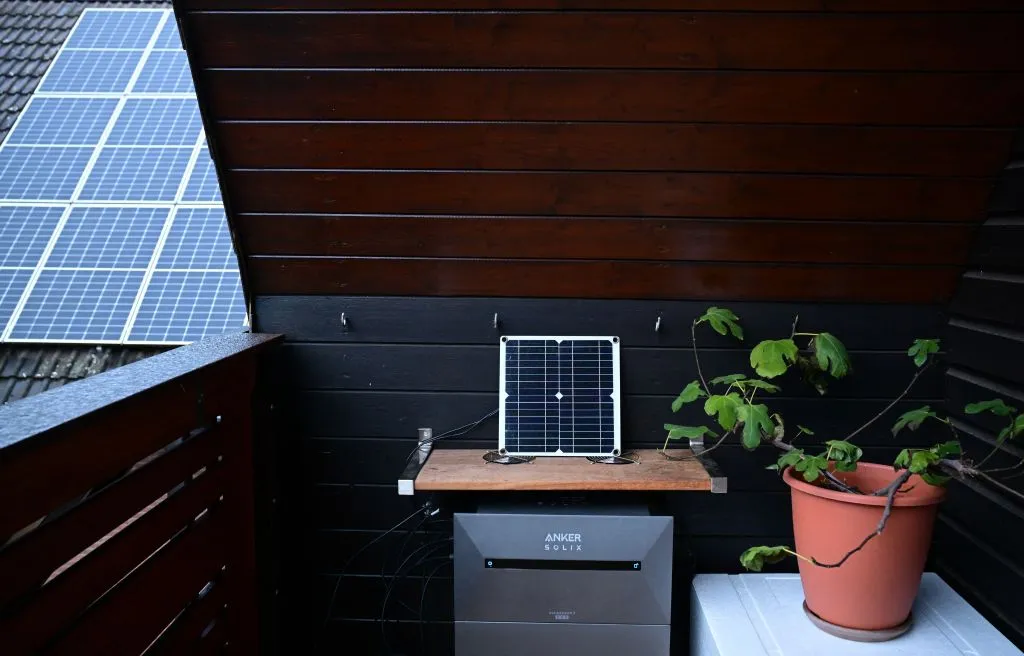
In countries like Germany, balcony-mounted solar panels are all the rage.

First image is of an overcast sky with a guy with two nearly-vertical solar panels

Third image is of a small solar panel under a roof receiving a little bit of light at an extreme angle through an opening in a covered attic balcony

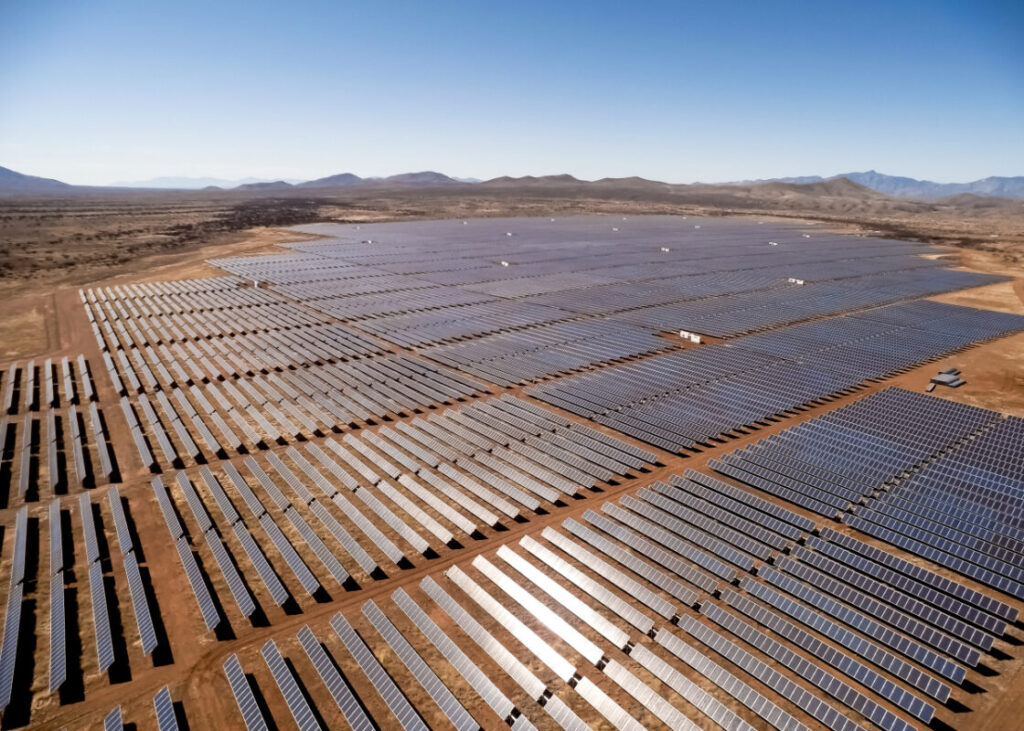
Here's a solar farm in the US:

https://www.energy-storage.news/wp-content/uploads/2024/08/de-shaw-1024x731.jpg

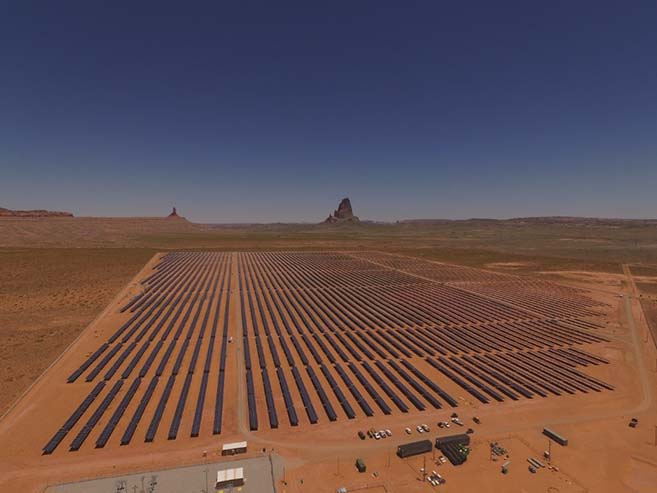
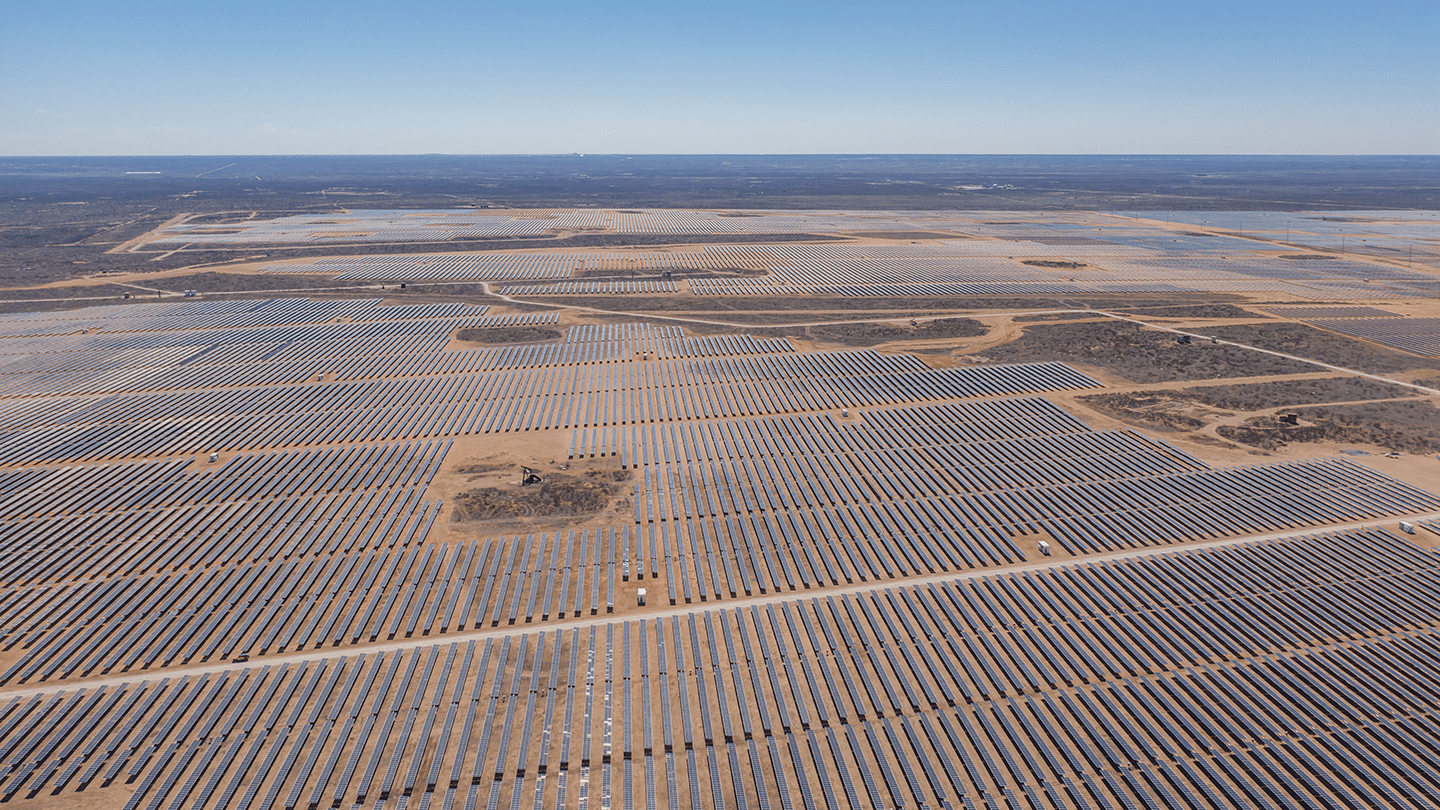
It's pulling a lot more power per panel.

Another:

https://www.fhwa.dot.gov/ipd/images/project_profiles/img_az_navajo_nation_kayenta_solar_program.jpg

Another:

https://cdn.orsted.com/-/media/feature/vocastimport/orsted_permianenergycenter_cod_0398_698890436958977.png?mh=1440

Does it make sense to stick solar panels on a house relative to drawing power from a solar farm? Sure, it can, if your house is remote and it's costly to connect it to the grid, or if what you're after is a secondary, backup source of power if you lose grid connectivity.

But if what you want is cost-effective generation, it's preferable to stick a panel on a solar farm somewhere where one can leverage economies of scale, maintenance is easy and done by someone who maintains a ton of these on a regular basis, and where you're optimizing location and panel orientation for solar potential.

Like, if you want more solar power on the European grid, you probably want more solar farms in Spain, which has substantially more solar potential than Germany:

https://globalsolaratlas.info/

Not someone sticking them on their balcony in Germany.

What Germany could do to help solar and wind, if it wants to do so, is drop complaints about building (inexpensive) above-ground transmission pylons, which would help smooth out different generation at different locations on the European grid.

https://www.cleanenergywire.org/news/farmers-and-grid-operators-demand-end-rules-prioritising-underground-power-lines-germany

Farmers and grid operators demand end to rules prioritising underground power lines in Germany

The Federal Requirement Plan Act (Bundesbedarfsplangesetzes), which provides a legal framework for the construction of the high-voltage transmission lines needed to reshape the power grid as ever-more of Germany’s power supply comes from renewables, prioritises underground cables over the construction of visible pylons, which have been met with public resistance.

“So far, we are assuming that all projects will be realised as underground cables,” a BNetzA spokesperson told the paper.

EDIT: If you want to criticize the US for something as solar goes, it'd probably be Trump throwing tariffs on everything, which makes it more costly to deploy solar panels and other electrical hardware manufactured abroad.

[–] tal@lemmy.today 2 points 7 months ago* (last edited 7 months ago) (3 children)

Note that the UK does not have a property tax, and is unusual in doing so; I recall reading that it is the only G7 member to not do so.

They do have a (mostly flat) council tax, and a transfer tax.

We have a few states in the US that don't, but normally there is an annual percentage tax on the value of a house. That varies by state, but is typically on the order of 1%.

[–] tal@lemmy.today 4 points 7 months ago

https://en.wikipedia.org/wiki/M16_rifle

39.37 in (1,000 mm) (M16A4)

I didn't know until today that it was exactly one meter long, though.

[–] tal@lemmy.today 0 points 7 months ago* (last edited 7 months ago) (1 children)

While we're talking about Austria, if we're going to a subnational level, check out the Austrian state flags. Over half of them are just a red-and-white horizontal stripe:

https://en.wikipedia.org/wiki/Flags_and_coats_of_arms_of_the_Austrian_states

Salsburg, Austria:

Tyrol, Austria:

Upper Austria, Austria:

Vienna, Austria:

Voralberg, Austria:

Not to mention the state of Hesse in Germany:

And then Poland:

Monaco:

and Indonesia:

[–] tal@lemmy.today 6 points 7 months ago* (last edited 7 months ago) (10 children)

🇮🇩 🇲🇨

🇸🇳 🇲🇱

🇳🇿 🇦🇺

🇻🇪 🇪🇨 🇨🇴

🇸🇮 🇸🇰 🇷🇺

🇱🇺 🇳🇱 🇭🇷 🇵🇾

🇱🇷 🇺🇸 🇲🇾

🇲🇽 🇮🇹

🇷🇴 🇹🇩

🇧🇭 🇶🇦

🇱🇮 🇭🇹

🇮🇳 🇳🇪

🇧🇴 🇬🇭

🇭🇺 🇹🇯

🇦🇷 🇳🇮 🇸🇻 🇭🇳

🇪🇬 🇮🇶 🇾🇪 🇸🇩 🇸🇾

The whole flag situation isn't really ideal.

view more: ‹ prev next ›