Saik0Shinigami

joined 2 years ago
[–] Saik0Shinigami@lemmy.saik0.com 3 points 4 months ago

The fact that I addressed some of these items literally line by line and you bring it up again as if I didn't address it tells me that you're arguing in bad faith. Have a good day. Find someone else to complain to.

[–] Saik0Shinigami@lemmy.saik0.com 1 points 4 months ago* (last edited 4 months ago) (2 children)

Forgive me for not covering 100% of this advanced topic in my 3 paragraphs on Lemmy... Nuance gets long, and most people have attention spans of a squirrel.


maybe it’s hard to distinguish between google services, but if you play some online game, chat over whatsapp or signal, or have a voip call, that’s an entirely different story.

Already covered as

That leaves just the raw connection analysis…

Where specifics can't be divined... but other details might.


these can probably be told apart by DNS requests

Addressed already with

DNS by default is often plaintext. You can setup your device to use DoH or other encrypted versions of DNS.


when having a voip call, through a service that supports peer to peer calls (most do, and it’s default on), an observer may even be able to deduct something about who you are speaking with, like what general area they live at.

Actually this is quite unlikely. ASNs are not as structured as you think. It takes an external database that specifically tracks DHCP'd ISP addresses. Case in point, when I moved to my new house... Google maps though I was a good 60 miles away from where I was... it was after repeated access to google maps and other service for about a month before maps started getting accurate with where I'm accessing their service from.

And that point is covered with

It would take a bunch of external additional data to actually tie you to anything directly, eg server logs or other sources… which usually means more than one party is already working together against you. At that point you’ve got bigger issues usually.


then what if you have apps that try to establish connections to services at home.

If you purposefully steer your car off the road... of course you're going to crash. If you're going to expose non-encrypted things onto the internet...

At that point you’ve got bigger issues usually.

I would suspect the untrusted wifi to NOT be the leading thing you'd want to care about in this situation. But even then... I would start making reasonable assumptions such as you're likely on a DHCP connection without static addressing... your site and resources will rotate IPs every once in a while. Makes tracking you even harder.


with HTTPS you leak your internal domain names because of TLS SNI.

Encrypted SNI (ESNI) / Encrypted Client Hello (ECH) exists... Cloudflare for example supports ECH, and they transit a LOT of data.

But once again... would be outside of the scope of discussion here. Yes... an ISP can make an educated guess of where you're likely to be going... and maybe even make a reasonable guess of what you could doing... But certainly not the details of it.


And this all ignores the fact that a random coffee shop isn't going to do full packet inspection to get this data to begin with. It's not worth it for them. They gain very little from collecting meta data without some bigger company backing them to do so... Which falls under

It would take a bunch of external additional data to actually tie you to anything directly, eg server logs or other sources… which usually means more than one party is already working together against you. At that point you’ve got bigger issues usually.

Edit: Typo that changed meaning. Fixed.
[–] Saik0Shinigami@lemmy.saik0.com 2 points 4 months ago (1 children)

The X is for the syncing phone book notification... It's not on the notice itself.

[–] Saik0Shinigami@lemmy.saik0.com 24 points 4 months ago (4 children)

HTTPS is used on virtually every site out there these days. That is used to encrypt your traffic from the get go. So specifics of the traffic/request won't be obvious/known. The EU could be big enough to force manufacturers to inject their certificates into devices... could be a man in the middle attack. But you can always just remove certs you don't trust from your devices.

DNS by default is often plaintext. You can setup your device to use DoH or other encrypted versions of DNS.

That leaves just the raw connection analysis... eg, that your device is sending traffic to some known IP... many site share hosts so that can be hard to determine though often not really... Proxy or VPN services can make it impossible to do this type of analysis... but then those services will be able to tell.

Ultimately being able to say that "Shalafi sent some packets to an IP that google owns and received a bunch back" could be email... could be youtube... could be any number of things... at some point it become educated guess at best. And what specifically happened (ex: Watched a video about tying shoes) is simply unknown. It would take a bunch of external additional data to actually tie you to anything directly, eg server logs or other sources... which usually means more than one party is already working together against you. At that point you've got bigger issues usually.

[–] Saik0Shinigami@lemmy.saik0.com 2 points 4 months ago

I somehow don't doubt the story. I've caught an Amazon driver pissing in a bush less than 100ft from a playground. Couldn't have driven around the corner and down the road a bit? Gotta be at the playground where little kids aggregate and play?

[–] Saik0Shinigami@lemmy.saik0.com 4 points 4 months ago* (last edited 4 months ago) (2 children)

Adding a member to a vdev does not automatically move any of the parity or data distribution off the old vdev.

Yes it does. ZFS does a full resilver after the addition. Jim Salter's write ups are from 4 years ago. Shit changes.

Edit: and even if it didn't... It's trivial to write a script that rewrites all the data to move it into the new structure. To say there's no valid cases when even in 2021 there was an answer to the problem is a bit crazy.

[–] Saik0Shinigami@lemmy.saik0.com 1 points 4 months ago* (last edited 4 months ago) (1 children)

I’m literally looking at my DNS records at cloudflare

PTR records are NOT on the domain side.

https://www.cloudflare.com/learning/dns/dns-records/dns-ptr-record/

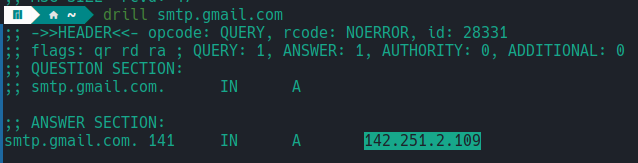
An example record lookup would be 8.8.8.8.in-addr.arpa. Like I've said twice now. YOU don't control google's PTRs (since you linked to google workspaces). They DO have PTRs setups.

IP of 142.251.2.109 resolved for my DNS.

https://easydmarc.com/tools/ptr-record-lookup?domain=142.251.2.109&dns_server=1.1.1.1&dns_type=PTR

Resolves to a record name of dl-in-f109.1e100.net

Edit: Another name for a PTR record is rDNS. Or Reverse DNS. and that name is a bit more descriptive in that it's IP -> Name rather than DNSes normal job of Name -> IP address

[–] Saik0Shinigami@lemmy.saik0.com 1 points 4 months ago* (last edited 4 months ago) (3 children)

Your page is explicitly a support page for dkim config. It is not a list of email requirements. YOU don't control their ptr records. Ptr records are placed on the IP space side. Google controls theirs for workspaces. So that page won't have help on the matter. Requirements haven't changed. I control systems that send millions of messages a month...

Ptr, SPF and dkim are now mandated. Dmarc is highly recommended for gmail...

Edit: https://forum.directadmin.com/threads/gmail-rejecting-emails-due-to-missing-or-incorrect-ptr-record-%E2%80%93-how-to-set-this-up-correctly.72802/
https://www.reddit.com/r/webdev/comments/1foik1l/false_error_message_does_not_have_a_ptr_record/
https://dmarcreport.com/blog/googles-guidelines-to-send-emails-to-gmail-users/

How many links you need before you recognize that you're wrong? All three of these are from last 10 months. One of which was from March.

[–] Saik0Shinigami@lemmy.saik0.com 1 points 4 months ago* (last edited 4 months ago) (5 children)

The first link in my previous comment is literally gmail returning an error because no ptr...

Edit: your page is about setting up dkim while using their workspaces. You don't control their ptrs.

Edit2: notice they don't talk about SPF or dmarc on that page either. SPF has been require for google as well for a while and dmarc is highly recommended though not strictly required.

[–] Saik0Shinigami@lemmy.saik0.com 1 points 4 months ago

But getting a static address for your VPS is likely much easier than getting it from certain ISPs.

For instance, Quantum Fiber doesn't support static IPs at all... But most VPSes can and do.

[–] Saik0Shinigami@lemmy.saik0.com 1 points 4 months ago (2 children)

ISP’s NAT

That has it's own name... CG-NAT. Thus why people are responding to you as if you're wrong. As you wrote it you are wrong though. But there's still answers like argo tunnels (if you are okay with cloudflare) and other similar solutions.

Or you can setup a vps and tunnel through that.

view more: ‹ prev next ›