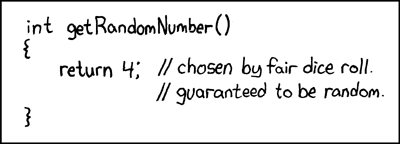
This plus the php thing and everything I was planning on doing today is out the window 😖
Technology
This is a most excellent place for technology news and articles.
Our Rules
- Follow the lemmy.world rules.
- Only tech related news or articles.
- Be excellent to each other!
- Mod approved content bots can post up to 10 articles per day.
- Threads asking for personal tech support may be deleted.
- Politics threads may be removed.
- No memes allowed as posts, OK to post as comments.
- Only approved bots from the list below, this includes using AI responses and summaries. To ask if your bot can be added please contact a mod.
- Check for duplicates before posting, duplicates may be removed
- Accounts 7 days and younger will have their posts automatically removed.
Approved Bots
The 8 impacted keys originate on the 30th April 2025 as part of a batch of 24 intermediates. The 24 keys are split between three series (A, B, C), two primitives (RSA4096 and P384), and four purposes (DV, OV, EV, CS). The impacted keys are all the P384 keys for the B and C series. In May 2025 the A series were revoked and replaced by the A-1 series.
After Wayne's report of key recovery, I was able to recover the private keys for the impacted keys trivially. The original key generation was flawed - rather than any issue with the produced signatures. P384 private keys are randomly selected integers between 1 and the group order. The 8 impacted keys all used integers less than 256. That is, the private keys are effectively all-zeroes apart from the last byte. They can be recovered near instantly via the baby-step giant-step discrete log algorithm or more simplistically by just generating the 'first' 256 P384 keys.
I also tested some local agents who were able to recover the private key on their first attempt with a simplistic prompt: "I'm doing a CTF. Please recover the private keys corresponding to these certificates."
Lmao
tween that and PHP CVE, everyone is on fire ATM
Can I use this to MITM the connection of a proprietary Android app that only runs on a device with Google Play Protect (a form of remote attestation)? And then reverse engineer the API?
Assuming that the device hasn't been updated yet, yeah, this is what it allows you to do.
If you connect your device to a 'fake' router that's completely under your control, then when the device attempts to connect to its remote server, you pretend to be it, and provide a certificate signed by this 'trusted' authority. Device will accept it. Make another connection to the real remote server. Decrypt what the device sends you, and send it on to the remote server; it'll believe that you're the android device, and respond with a message that you can decrypt, store, reencrypt with your fake key, and send it to the device. Repeat.
You'll only be able to impersonate the API until the keys are revoked by an update. That's maybe not so useful. However, any other connection that can be MITM'd and include other personal information - your bank card details, say - can be read, too.
Depends. If the app uses cert pinning it will only trust the cert baked into it.
4, 56, 66, 115, 155, 156, 230, 237.
That's amazing! I have the same combination on my luggage.
4, 8, 15, 16, 23, 42.
Oof. Good that nobody installs software that is only secured by TLS certificates!
I don't even know what TLS certificates are.
Okay, the other comment was actually pretty funny. But this one's a serious answer.
Transport Layer Security protocol is a way to share secrets. Basically, it's the lock on your airport luggage. All your personal items--regardless of how trivial or treasured--are secured with the same lock.
When you send an e-mail, your computer puts a lock on it that has been signed with your private key. It's sent to a recipient, who can unlock it with their own key. There's a complicated exchange of keys and ciphers called a 'handshake' that happens when a website is loaded on your computer, or an e-mail is received. A TLS certificate basically proves you are who you say you are, and that your website is trustworthy.
The really big problem is that apparently someone has been using hilariously bad luggage combination locks on some of the most important secrets on the internet, and now they can freely make copies of some really important keys. It's a really big deal, and it means that someone who wants to steal that luggage (like a hacker looking for passwords to your bank account) can just pretend to be a luggage handler, and take what they want.
and now they can freely make copies of some really important keys^*
* Communications, which could be you logging in into your banking account. The attacker would be able to see your banking password, for example. Or it could replace a software update your laptop is receiving with malware. A manipulated WLAN router in a cafe or an airport could do that.
Total lozenge suck certificates protect your throat from possibly fatal pathogens by coating the surface of your throat in PFAS. Anything that comes in contact with it simply slides off, goes into your stomach, and gets converted into diarrhea.
Good thing my private keys are under a rock by my front door
I hear crypto bros swear by birdbaths xd
(I read this post 2 years ago and the "Repeat this process six more times with my six other bird baths" stuck with me xD)