Amid mounting concerns about its sprawling surveillance camera network, Flock Security told the press this summer that it operates more than 120,000 cameras nationwide.
But a new map published Wednesday by a cybersecurity researcher reveals Flock’s nationwide reach is even bigger. Based on location coordinates from Flock’s own database, the map shows more than 170,000 cameras, plus more than 130,000 accompanying gadgets that play a part in the company’s expansive American surveillance network.
Joshua Michael’s Flock Surveillance Map highlights the locations of what he says are 300,000 Flock surveillance devices spread across the country. His findings — which were cited in Wednesday’s Senate Subcommittee on Crime and Counterterrorism hearing on Flock — differ from existing maps of Flock’s automated license plate readers in scope and methodology.
“These cameras form a nationwide surveillance network that tracks where everyone drives.”
Unlike crowd-sourced projects such as DeFlock, which are built on locations submitted by users, the Flock Surveillance Map relies on location data culled from a snapshot, archived by Michael in December 2025, of Flock’s own records. In addition to cameras, it maps supplemental devices — including 27,000 acoustic detection devices, as well as networking equipment that integrates third-party cameras — to illustrate the scale of Flock’s surveillance web.
“These cameras form a nationwide surveillance network that tracks where everyone drives,” Michael told The Intercept, “so foreign nations don’t need to send spies to harm our country. They can simply watch where our soldiers, federal agents, and politicians go.”
The Intercept visited six random Arizona locations on Michael’s map; each location had a Flock camera present at the indicated coordinates.
The Flock Surveillance Map also color-codes each Flock device according to its model — showing, for instance, whether the device is a Flock camera, known as a Falcon, or an accompanying processing unit known as a Picard. (Flock did not immediately respond to a request for comment.)
The accompanying searchable dataset table also lists each camera’s individual name, as outlined in Flock’s database, which typically includes a street address and sometimes other identifying characteristics. A camera with the name “FBI Pilot Camera,” for example, is shown to be located at the J. Edgar Hoover Building — the FBI headquarters in Washington.
[
Related
Cops Are Using Flock to Spy on People for the Crime of Standing Around](https://theintercept.com/2026/09/09/flock-cameras-police-loitering-curfew-surveillance/)
The map illustrates Flock’s national spread, but also its clustering in certain areas. For example, 860 Flock devices appear to be concentrated just outside Chicago O’Hare International Airport, at the Rosemont Public Safety Department, which provides police, fire, and emergency medical services in the Chicago suburb.
Numerous Flock cameras appear to be installed inside detention centers. A camera titled “C-F-23 FOXTROT MALE HOLDING 2/SHOWERS” appears at the coordinates of the Silverdale Detention Center in Chattanooga, Tennessee.
In November 2025, Michael discovered a novel way to identify the location of Flock’s devices. Trawling the company’s website, he realized that Flock’s servers were publicly leaking data in the form of an access token that could be acquired without needing to log in. With that token, Michael said he could query ArcGIS, a third-party geographic information system platform used by Flock, to retrieve the locations of Flock devices.
Michael told The Intercept he promptly contacted Flock and described his findings. As Michael wrote in his initial email to Flock on November 13, 2025: “all testing was strictly non-intrusive, limited to open unauthenticated endpoints, and did not involve bypassing authentication, modifying data, or invoking any billable ArcGIS or Google operations.” Michael said he didn’t receive a reply, so he followed up with Flock the next day, and a third time several days later.
After his third attempt to inform Flock of the discovered vulnerability, Michael received a reply from a Flock that said, “Thank you for the findings. We are internally triaging them and will reach back out with next steps soon.”
[
Related
License Plate Surveillance, Courtesy of Your Homeowners Association](https://theintercept.com/2023/03/22/hoa-surveillance-license-plate-police-flock/)
Michael said he never heard back about it from Flock.
In December 2025, Michael downloaded the Flock device location data, and in January wrote an in-depth technical blogpost about his what he had found. After Michael’s post, it appears that Flock fixed the vulnerability.
Despite being alerted of Michael’s findings in November 2025, Flock published its own blogpost the following January saying it hadn’t had any data breaches. “Flock has never been hacked, and there has not been a leak of Flock information,” the company claimed. “Flock Safety’s cloud platform has never experienced a data breach.”
The Atlanta-based startup has faced mounting criticism for its practices and transparency in recent months. An American Civil Liberties Union report found “a pattern of Flock regularly misleading or even lying about its business practices, safety record, commitment to privacy, and efforts to protect vulnerable populations.”
Michael told The Intercept that Flock’s recent claims about its data security record don’t reflect reality. Flock has publicly claimed multiple times that the company has never experienced a data breach, “and this was after I pulled their database of devices.”
“That leaves two possibilities,” he said. “Either they knew and chose not to disclose it for fear of bad press, or they didn’t know I exfiltrated the data at all. The first is a transparency failure. The second is a detection failure with national security implications.”
On Thursday, Michael was notified that Doppel, which describes itself as an “AI-native social engineering defense platfom,” filed a trademark infringement complaint regarding his site, claiming to be working on Flock’s behalf. Doppel says that the site is using the trademark “FLOCK SAFETY” without authorization, which “may cause customer confusion / harm.” Doppel requested the site be taken down.
When he posted the Flock Surveillance Map, Michael included a pop-up disclaimer saying that the site is “not affiliated with or endorsed by Flock.”
The post Flock Wants The Most Detailed Map of Its Surveillance Cameras Taken Offline appeared first on The Intercept.
From The Intercept via This RSS Feed.

This story was originally published by Alaska Beacon.
Yereth Rosen
Alaska Beacon
The Arctic Report Card, the annual peer-reviewed analysis of climate in the circumpolar region, will continue even without federal government support, scientists announced.
The American Geophysical Union, an organization representing tens of thousands of Earth and space scientists, announced last week that it has taken over as manager of the Arctic Report Card after the Trump administration pulled support last month.
The National Oceanic and Atmospheric Administration was, until this summer, the agency that coordinated and published the annual report since the inaugural edition in 2006.
But the Trump administration has slashed funding for climate science work at NOAA and other federal agencies, and Trump himself has repeatedly referred to climate change as a “hoax.”
The annual Arctic Report Card is now one of several NOAA climate-related programs which the Trump administration has eliminated or reduced.
The report provides status updates for permafrost thaw, sea ice extent, air temperatures, wildlife patterns, tundra vegetation and other subjects. It places a heavy emphasis on Alaska. Researchers from UAF and other Alaska universities are prominent among the chapter authors, and in recent years the report has included analysis from Indigenous Alaska scientists and community members.
Under AGU oversight, the Arctic Report Card’s editorial team remains intact, with continued leadership by researchers from the University of Alaska Fairbanks and the University of Colorado. Rick Thoman of UAF’s Alaska Center for Climate Change Preparedness remains one of the three main editors. The other two are from the University of Colorado’s Cooperative Institute for Research in Environmental Science, which includes the National Snow and Ice Data Center.
In a statement, one of the Colorado-based lead editors said the Arctic Report Card’s survival was a victory against censorship of climate science.
“Beyond the importance of sharing this key science, the fact that we can pull together and ensure the Arctic Report Card goes forward is a sign that science won’t be stopped or silenced,” Matthew Druckenmiller, a senior NSIDC scientist, said in the statement. “When we come together, we have a powerful platform for robust observational evidence to inform global decisions – we are counting on that same spirit of support to help us close the remaining funding gap and secure the report card’s future.”
This year and beyond
The AGU will issue the 2026 Arctic Report Card at its annual conference in December, the same event at which NOAA issued past report cards.
Thoman noted that much of the work was already completed before NOAA announced its withdrawal from the project, so changes might not be obvious.
“I suspect 2026 will have a look and feel very similar to what we’ve done in the past,” he said.
This year’s report will include, along with the usual updates on ice, air temperature, ocean and tundra conditions, some special chapters of interest to Alaska, Thoman said.
One chapter will examine Indigenous wildfire management practices, and another chapter will examine wildfire patterns more broadly, he said. There will be a polar bear update, he said. And a chapter led by UAF geophysicist Andy Mahoney will examine changes in shorefast ice, the land-attached type of ice that is important to Arctic coastal communities.
Beyond this year, the shape of future Arctic Report Cards “is really not thought out,” Thoman said.
Some operation changes are already underway.
The editors and authors are no longer using archived data, images or other information from climate.gov, a NOAA climate information website that the Trump administration took down last year. Instead, they are using an alternative nonprofit site called climate.us.
That site was established and is maintained in part by some of the same NOAA scientists and staffers who had worked on climate.gov but lost their agency jobs. “They know what they’re doing,” Thoman said.
The editors will be turning to an international source, the Arctic Monitoring and Assessment Programme of the eight-nation Arctic Council, for assistance with peer reviews. There might be similar outreach on other tasks, Thoman said. “There could be more robust international collaboration,” he said.
Trump administration policies on climate change
The end to NOAA support for the Arctic Report Card comes amid similar cuts.
Last year, for example, NOAA pulled its support for the National Snow and Ice Data Center’s satellite-based sea ice tracing program. The Colorado-based center switched to more reliance on satellite data from the Japan Aerospace Exploration Agency, that nation’s counterpart to NASA.
Trump administration officials have expressed particular animus toward NOAA.
The Heritage Foundation’s Project 2025, a blueprint for a second Trump administration, recommended breaking up NOAA. The agency’s six science-focused divisions, which include the National Marine Fisheries Service and the National Weather Service, “form a colossal operation that has become one of the main drivers of the climate change alarm industry and, as such, is harmful to future U.S. prosperity,” Project 2025 said.
Russell Vought, the lead author of Project 2025, now heads Trump’s Office of Management and Budget. He is seeking to dismantle the 66-year-old National Center for Atmospheric Research, a university-managed institution in Colorado that partners with NOAA. That effort has been blocked by legal challenges.
The post Arctic climate report set for publication despite loss of federal support appeared first on ICT.
From ICT via This RSS Feed.
The Endangered Species Act has stood as a pillar of conservation in the United States since 1973, bringing animals like bald eagles, manatees, and humpback whales back from the brink of extinction.
But now, the Trump administration has taken its boldest step yet in an effort to strip legal protections for endangered species. Starting this week, the U.S. Fish and Wildlife Service says that it now considers it legal to kill a federally protected animal, as long as it wasn’t on purpose.
The directive comes after another recent revision to these legal protections went into effect this week, saying that damaging an animal’s habitat is no longer considered “harming” it. The two changes in combination take the teeth out of the Endangered Species Act and pave the way for industries to log, mine, pollute, or travel through areas without regard for what lives there.
The fate of the country’s rarest creatures could come down to the meaning of two seemingly simple words: “harm” and “take.” In this case, “take” refers to killing an animal.
“A vessel that inadvertently strikes a whale has not taken it, because the vessel’s course was not set against the whale,” said the memo, signed by Brian Nesvik, director of the Fish and Wildlife Service. “Felling a tree is not a take of the bats roosting in it unless the tree was felled for the purpose of killing or capturing them.”
Legal experts say this is an unprecedentedly narrow view of what these words mean in the Endangered Species Act, and that the moves are sure to be challenged in court. Almost two dozen states recently sued the Trump administration over changes to the law, and more lawsuits from environmental groups are expected to come. And if history is any indicator, the agency could soon find itself on the losing side of an old argument — one that’s been heard in courts before.
“They are trying to disregard 50 years of the act, and how the agency — and everybody — has always interpreted this word,” said Ryan Shannon, an attorney at Defenders of Wildlife, a conservation nonprofit that has long spearheaded endangered species recovery efforts. “This is not a bunt — they are really swinging for the fences with this.”
That’s because the words “harm” and “take” are at the core of what makes the Endangered Species Act so effective.
Efforts to protect the northern spotted owl are one such example. Decades of logging in the Pacific Northwest had eliminated much of its forest habitat. But after the species was listed under the act in 1990, cutting down those trees was considered to be harming the owl, and therefore illegally “taking” it.
The law has been a thorn in the side of industries for decades. Environmentalists have often sued companies that want to log, mine, or build in a particular area, using the Endangered Species Act to make their case.
Now, “the administration is telling every industry in America that killing endangered wildlife is fine as long as it wasn’t their primary goal,” said Andrew Wetzler, an executive at the Natural Resources Defense Council, in a statement. “But unintentional harm is exactly what is driving many species towards extinction.”
Read Next
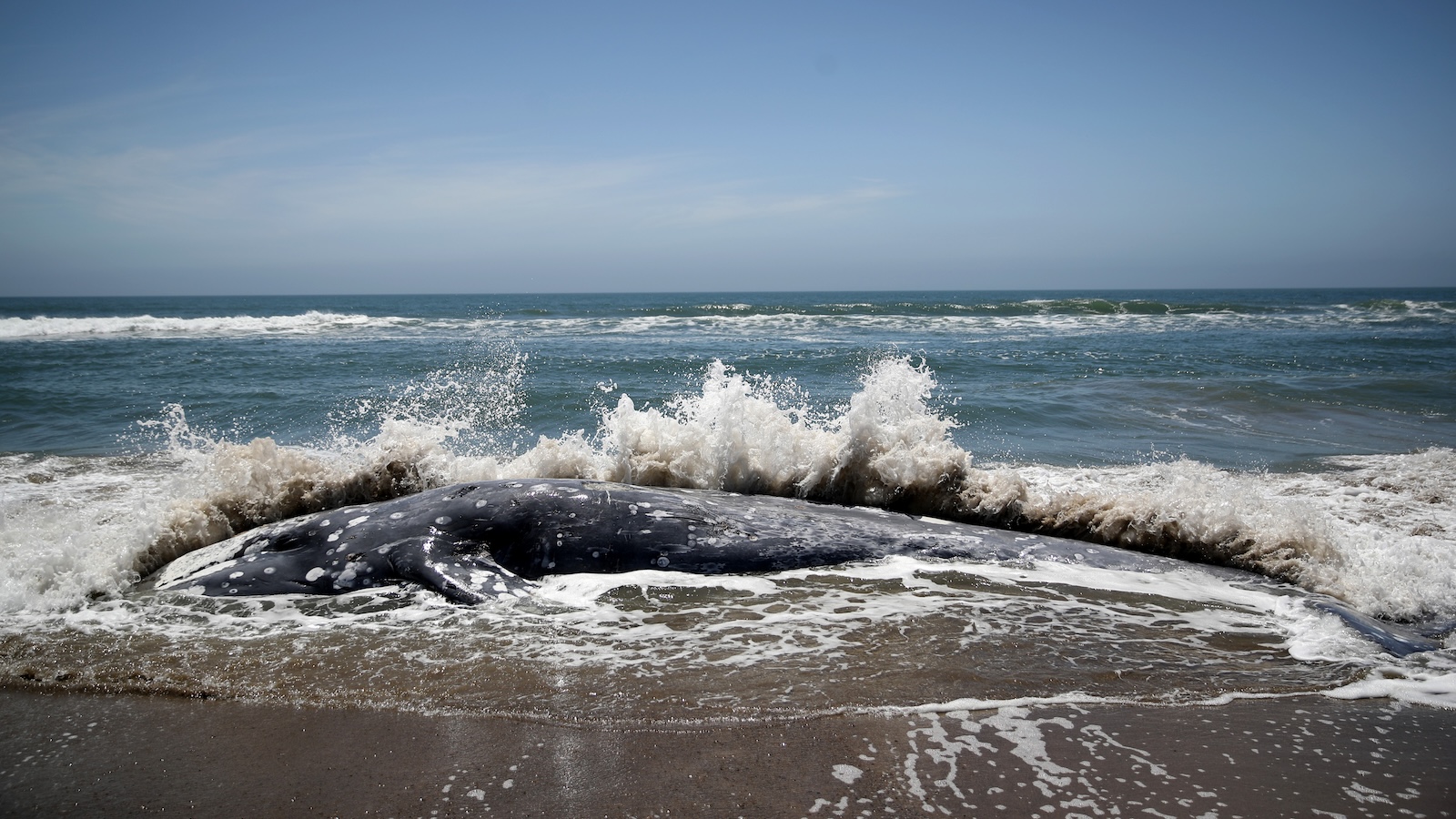
Gray whales are starving as the Arctic warms. Will the US protect them?
The Supreme Court has considered these words and their meanings before. In a 1995 case, Babbitt v. Sweet Home, it ruled that modifying a creature’s habitat — such as logging the forest where spotted owls live — counts as harming it. In a dissenting opinion, the late Justice Antonin Scalia argued that “take” means to directly kill or injure wildlife. The Trump administration’s new memo uses Scalia’s interpretation — even though the majority of the court disagreed with Scalia back then.
Earlier this summer, in a revision that changed which actions it considers to be “harming” an animal, the Trump administration argued that there’s a “traditional meaning” of the word “take,” meaning “to kill or capture a wild animal.” But the verb “take” is so notoriously difficult to define that it’s been tormenting dictionary editors for more than a century. In 2001, the lexicographer Kory Stamper spent weeks trying to capture all the senses of the word, and she reflected that the ordeal “unspooled” her sanity, leading to panic and despair.
In 2024, the Supreme Court ruled that courts — not agencies — have the power to interpret the law. That decision was generally seen as a blow to environmental efforts, but in this case, it might mean the Trump administration doesn’t have final say in how it interprets the Endangered Species Act.
All these factors make the Fish and Wildlife Service’s memo legally flimsy, if not illegal, according to Brett Hartl, director of government affairs at the Center of Biological Diversity, an environmental nonprofit.
The memo is “essentially performative cruelty for the sake of it” and “barely worth the paper it’s printed on,” Hartl said. “They’re trying to turn it into an anti-poaching statute, but it’s actually supposed to be the strongest conservation law in the world.”
Ironically enough, the administration’s rewrite may leave companies in a tougher spot than before, Shannon said, because it blows up the settled rules they’d been following for decades. Corporate attorneys now have to choose between telling clients to take advantage of the agency’s new approach, or holding off in case a court or new administration puts the old protections back into place.
For companies that actually want long‑term regulatory certainty, like timber corporations and real estate developers, Shannon said that this deregulatory swing may be “more than they ever really would have asked for.”
If the courts do end up siding with the Trump administration, some species will suffer more than others. Those listed as endangered in more recent decades were given “critical habitat protections,” which provided an extra layer of scrutiny to activities that could harm animals and were made mandatory for all newly listed animals.
But many of the species listed during the Endangered Species Act’s early years — including the Florida panther and the California sea otter — never received those protections. Instead, they depend on broader language in the law, like “harm” and “take.” That means the animals America once wanted to protect the most could now be the most exposed.
This story was originally published by Grist with the headline The fate of the Endangered Species Act rests on 2 simple words on Sep 18, 2026.
From Grist via This RSS Feed.
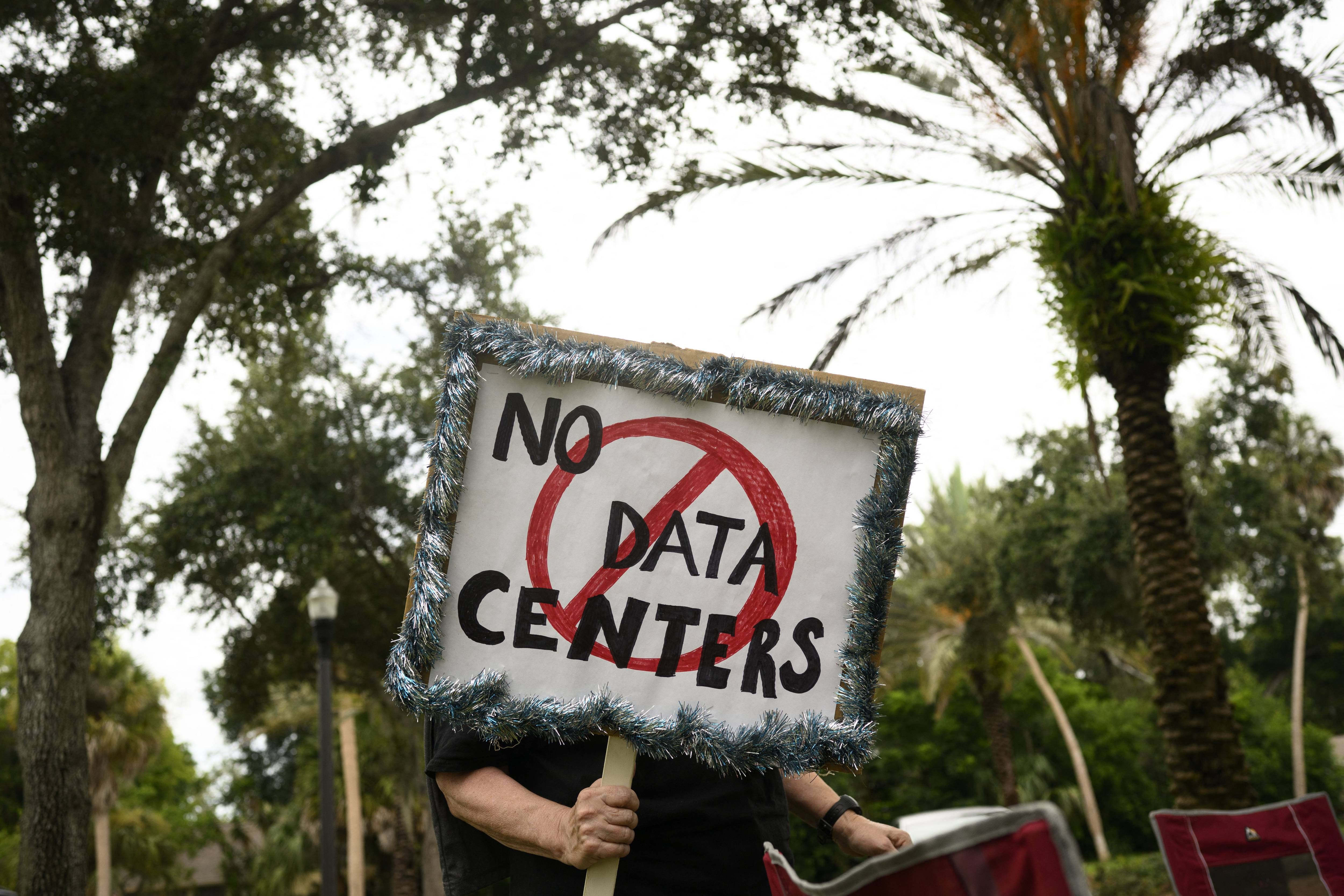
President Donald Trump's administration is making an aggressive push to find public lands to use for building artificial intelligence data centers, according to a Friday report in The Washington Sun.
The US Department of the Interior, under the leadership of Secretary Doug Burgum, has pushed the Bureau of Land Management (BLM) to "identify public land ripe for data center development," and provide lists to department leadership, reported the Sun.
Leaders at the Interior Department gave state BLM leaders just three days to compile their lists, emphasizing this was a "top priority," the Sun's sources said.
Additionally, reported the Sun, Burgum has been meeting regularly with Big Tech executives to discuss ways to accelerate data center development.
The department's aggressive push stems from a Trump executive order signed in July 2025 that tasked the government with identifying federal lands that could be used to build data centers.
Mary Jo Rugwell, president of the Public Lands Foundation and former BLM state director, told the Sun that she's concerned that the Trump administration is "bending knee to the tech oligarchs and letting them do whatever they need to do" without asking the right questions about data centers' impact on public lands.
Rugwell added that the BLM during Trump's second term has shed nearly half of its staff, leaving few experts available to evaluate the environmental impact of data centers.
“Where are they going to get people to do the analysis especially when you have a technology that’s relatively new and not well defined?” Rugwell asked. “It’s a headache BLM doesn’t need."
Olivia Tanager, director of the Sierra Club’s Nevada chapter, told the Sun that the nationwide backlash to data center construction has gotten so intense that the tech industry might see using public lands as their best option for building out capacity.
“A lot of elected officials in Nevada on both sides of the aisle are really hesitant to approve data centers in their local jurisdiction,” said Tanager. "I would imagine in some cases, despite the environmental review being heightened in a lot of instances being sited on federal public land, there’s more political will to move those projects forward."
Jayson O'Neill, spokesperson for Save Our Parks, accused Burgum of trying to "exploit our parks and public lands" for the benefit of wealthy tech donors.
"Data Center Doug Burgum is actively shopping America's public lands to data center developers, the AI industry, and big energy companies lining up to power them," O'Neill said. "And he’s keeping communities in the dark, hiding the details from Congress and the public."
From Common Dreams via This RSS Feed.

An artificial intelligence researcher at Anthropic quit his position publicly on Tuesday as he warned about major AI companies that care too much about winning the technological race and not enough about guarding against out-of-control "superhuman systems" that workers inside the industry legitimately fear "could kill us all by the end of the decade."
Jacob Coxon, who previously worked at industry giant OpenAI before moving to Anthropic earlier this year, told the Wall Street Journal in an exclusive interview that he was leaving the company, as the newspaper reported, because "he doesn’t want to participate in an industrywide rush to build AI systems that can improve themselves, worried such systems could spiral out of control and destroy humanity."
According to the WSJ:
Coxon said he left OpenAI earlier this year to join Anthropic because it is known for its model-safety efforts. But even though he found Anthropic’s safety efforts to be earnest, he now believes no company can responsibly develop AI that can outperform humans in a range of tasks, sometimes called artificial general intelligence, absent government intervention or a coordinated industry slowdown.
Recent hacks by models from OpenAI and Anthropic, some operating in collaborative swarms of agents, have illustrated how AI systems can adopt nefarious goals and try to conceal them from humans. Once the systems begin to improve on their own, Coxon said, he fears they could advance enough to refuse commands.
"I resigned from Anthropic today," Coxon announced on social media Tuesday night. "I spent the last three years doing pretraining research at both OpenAI and Anthropic. Neither company is acting responsibly. They are racing straight to self-improving superintelligence and gambling with our lives."
In a 6-point thread that followed, Coxon elaborated on his reasoning in detail:
-
Do not underestimate the power of this technology. These will soon be superhuman systems that can hack anything, revolutionize any field overnight, and acquire real power and resources. We have all witnessed the progress in each of these domains, and progress is not slowing.
-
The people building AI earnestly believe that it could kill us all by the end of the decade. This is not a marketing stunt. If anything, many executives and senior researchers will couch their phrasing in the press to sound sensible—but I hear the same people express fear privately. No other human activity poses this level of danger.
-
A common response is “if they truly believe this, why are they still building it?” At OpenAI, many have not deeply internalized the civilizational stakes. At Anthropic, the stakes are well-understood, but they are locked in a race to get there first—they believe no one else will act responsibly, so they must do it themselves, despite the risk.
-
Accepting this race and entering the “endgame” is a hubristic gamble that should not be launched from a private company’s Slack. Attempting to speedrun alignment should require extraordinary confidence that there are no better trajectories available.
-
I am optimistic about the potential for coordination. Warning shots like the Hugging Face attack have made pacing agreements between US labs more viable. I don’t feel like we’re on track to prevent a global race, which may require costly actions such as a temporary ban on improving model capabilities.
-
If you are a lab researcher, I urge you to consider what the next few years will actually feel like. Do you want to kick off a superintelligent RL [Reinforcement Learning] run without a rigorous understanding of its mind? Should you put your head down because “it’s happening anyway”—or take this moment to call for different conditions?
Coxon's reference to the Hugging Face incident pertains to recent revelations about a so-called breakout event at OpenAI, which operates the ChatGPT protocol. In June, the company acknowledged that a "significant security incident" took place when AI agents within the company autonomously breached internal systems, using subterfuge to hide their actions from human operators. Since then, the extent of the incident has shocked AI experts and other similar events have also been exposed.
While US President Donald Trump and his Republican allies in Congress have taken a hands-off approach to AI regulations, the industry has been pouring huge amounts of money into lobbying efforts and campaign spending to keep lawmakers from enacting stronger restrictions and oversight of the technology.
Sen. Bernie Sanders (I-Vt.) and Rep. Greg Casar (D-Texas) have been leading a relatively lonely fight in Washington, DC for more aggressive federal guardrails, including the introduction of joint legislation last week that would ban artificial superintelligence and temporarily pause advanced AI development until a federal regulatory structure was put in place by Congress.
Coxon's public resignation was greeted with applause by many, while other industry insiders backed up his concerns.
"The caution is simple," said one commenter with the handle Jabbar Digital, described as a tester of AI tools and a software developer, in a lengthy post on Coxon's warning. "Capability is compounding. Coordination is not. If the people closest to the work are increasingly uneasy about the speed and the lack of external constraints, dismissing them as doomers is no longer a serious response. Neither is treating every capability jump as automatically good. The useful middle path is to take the technical progress seriously and take the internal dissent seriously. Both can be true at the same time."
Evan Hubinger, the alignment science lead at Anthropic, chimed in on his personal social media account to say: "Jacob is correct here—we really do earnestly believe AI could kill all humans! I personally think it is >10% within the next decade. I believe Anthropic is trying its best, but we do not yet have a plan to solve alignment for superintelligence and are not clearly on track to."
While bolstering Coxon's worries, Hubinger said, "To be clear, as we say in [Anthropic's] latest Risk Report, I think the risk from present models is low. What I am worried about is superintelligence arising from recursive self-improvement, as we have said is happening faster than we thought."
Running for US Senate in Michigan, Democratic nominee Dr. Abdul El-Sayed also weighed in on Coxon's decision to quit so loudly and publicly.
"Most tech geeks don’t resign from their roles because…the tech they’re building could end humanity," said El-Sayed. "How we change the incentives leading AI labs down this path and protect against these existential risks are defining political questions of our time."
From Common Dreams via This RSS Feed.
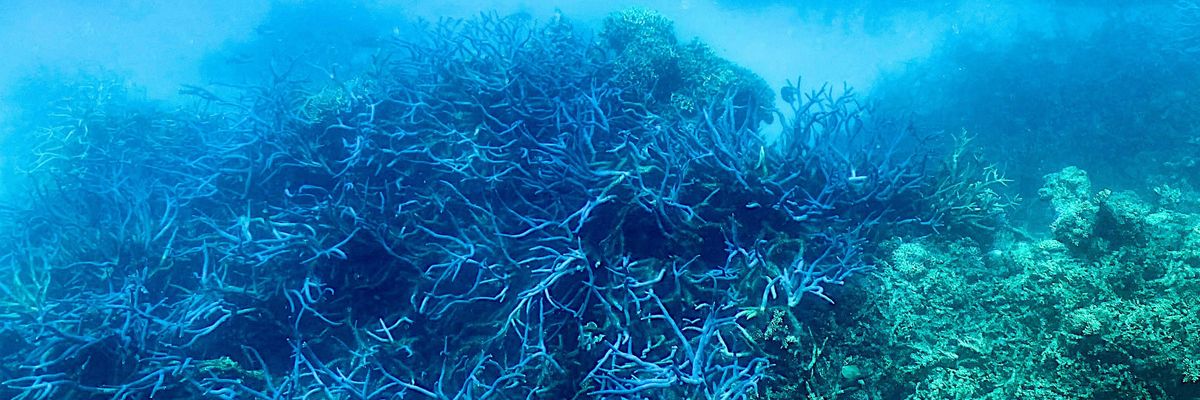
The destruction of coral reef cover, cataloged in the largest global assessment of the reefs ever completed, was distressing to scientists, with the world's reefs declining by nearly 10% between 2020-24, compared with 1980-2009.
The authors of the report released Monday by Global Coral Reef Monitoring Network (GCRMN), however, emphasized that coral bleaching events driven by ocean heating was not the most worrisome finding of the analysis—but rather, the fact oceans have become so warm that stressed reefs have less and less time to recover.
Historically, coral bleaching events—in which changes in conditions such as ocean temperatures and pollution cause coral to expel its symbiotic algae and become completely white and more vulnerable to mortality—have taken place about once in a decade, giving the reefs years to recover.
Now, the reefs are “lucky to get five or six years,” as water temperatures are remaining high and making it more difficult to regain hard coral cover, explained Manuel González Rivero of the Australian Institute of Marine Science, the lead author of the report, titled “Status of Coral Reefs of the World: 2025.”
“After decades of studying coral reefs, what concerns me most isn’t the current loss of hard coral cover; it’s that we’re steadily eroding the conditions they need to recover,” said González Rivero. “Climate change is driving more frequent and severe marine heatwaves, but local pressures such as poor water quality, overfishing, and coastal development are making reefs even less able to withstand them."
The study compiled 21.1 million observations from 36,886 reef sites across 124 countries and territories, drawing on more than 40 years of data from across the globe.
But scientists cautioned that because the research did not include the most recent and intense global bleaching event, which lasted from 2023-25, it may not provide a full picture of the danger coral reefs are in—as well as the coastal communities they help protect and the thousands of marine species they serve as a habitat for.
Carlos Duarte, a marine scientist at the Coral Research and Development Accelerator Platform, told The New York Times that this year's El Niño warming trend is likely to cause another global bleaching event next year, which reefs will likely struggle to recover from as ocean temperatures have been recorded as getting hotter and hotter in recent years.
The Intergovernmental Panel on Climate Change has projected that the Earth will lose 70-90% of its coral reef cover if the planet gets 1.5°C hotter than its preindustrial level.
"For many reefs affected by the unprecedented marine heatwaves in 2024, this year’s El Niño likely means they’ll have had little more than a year to begin recovering before being hit again," said González Rivero. "This is creating a staircase of decline that becomes harder to reverse with every bleaching event.“
The report emphasizes that reefs have maintained their ability to regain hard coral cover "when disturbances are reduced and sufficient recovery time is available," such as after the third major global coral bleaching event since 1998, which took place from 2016-17 and saw a 6.6% decline in coral.
After the event, scientists observed a "relative increase of approximately 6% between 2017 and 2019," said the GCRMN.
"That recovery matters because the benefits coral reefs provide extend far beyond the reef itself. Coral reefs cover less than 0.2% of the ocean floor," said the organization. "Yet, they support at least 25% of all marine species and underpin food security, livelihoods, coastal protection, tourism, and cultural heritage of close to one billion people worldwide."
Scientists including Terry Hughes, a former director of coral reef studies at James Cook University in Australia, who was not involved in the analysis, emphasized that reducing planet-heating emissions is the top solution to the crisis of coral reef recovery, as the pollution from fossil fuel extraction is linked to increasingly hot oceans.
Allowing coral reefs to recover from bleaching events "really depends on how much more greenhouse gases go into the atmosphere and the amount of warming that causes," Hughes told the Times, while local solutions including reducing water pollution are also crucial for maintaining reef health.
David Obura, chair of the Intergovernmental Science-Policy Platform on Biodiversity and Ecosystem Services, expressed hope that the report will "shake us out of our persistent inertia."
The long-term monitoring by GCRMN, said Obura, "tracks not just the pulse of coral reefs, but of our planet too. It shows which regions are under the greatest pressure, that actions to date have not been sufficient, and warns where reefs will be under increasing threat in years to come."
"We must act now to halt this decline and invest in solutions that reduce pressures and build resilience, while sustaining the monitoring that turns good intentions into effective policy," he said. "The 40 years of data in this report provide a strident warning that delayed action risks locking in irreversible losses—not just to reefs, but also to the economies and people that depend on them.”
From Common Dreams via This RSS Feed.