What is the relation between the socialisation of labour and the rising organic composition of capital?
Let us imagine Mariana, a political economist in São Paulo mandated by the Landless Workers’ Movement (MST) to work through precisely this question for the movement’s own political education. In addition to working through the canon, she puts the question to an AI tool such as ChatGPT or Gemini. It returns a familiar kind of answer: a definition of the terms, a tidy summary of the relation, and a gesture towards the present. But for a researcher accountable to a movement like the MST, it is not enough.
That failure is not surprising. A serious answer to the question is more complicated than it first appears. It cannot be a definition. It has to trace the development of one of Marx’s central insights: that the growing social productivity of cooperative labour is, in the same motion, the process by which that productive power is stripped from the producers and turned against them as capital. A meaningful answer has to hold a contradiction open instead of resolving it into a tidy summary. It also has to remain faithful to what Marx actually wrote, across the Grundrisse (1857–1858), the Economic Manuscript of 1861–63, and the three volumes of Capital (1867–1894), texts he returned to across more than two decades.
A question like Mariana’s exposes, in a single stroke, why the Marxist corpus defeats the ordinary AI assistant and what it would take to build one that does not. RedMarx, the system introduced in this article, is built to meet exactly that challenge.
Marxist thought is one of the most consequential intellectual traditions of the past two centuries. Across the world, and especially in research institutions in the Global South, it remains a working framework rather than an academic curiosity. Marxist political economy supplies the categories through which researchers read agrarian crises, extractive economies, financialised states, labour regimes, and the international division of labour.
And yet anyone who has tried to ground a piece of analysis directly in Marxist sources knows the difficulty.
The corpus is vast. The collected works of Marx and Engels alone run to scores of volumes and millions of words, multiplied many times over by Lenin, Luxemburg, Gramsci, Mariátegui, Mao, Nkrumah, Jones, First, Amin, and others. The categories themselves are dialectical: ‘value’, ‘class’, ‘state’, ‘imperialism’, and many more carry no static definition but acquire their meaning through the relations they describe and the historical moment in which they are deployed. A researcher like Mariana cannot simply quote a sentence from Capital (1867–1894) and treat the matter as settled. She must know which formulation to deploy, from which work, under which conditions, and how later writers extended or contested it.
Large language models change the calculation, but only under strict conditions. A researcher no longer needs to search manually through every page of every relevant volume to verify how a concept is treated across the corpus, if, and only if, she has a system that searches the original works faithfully, surfaces the relevant passages, and tracks where every claim came from. The ‘if and only if’ clause is pivotal. A generic chatbot will paraphrase, summarise, and, as is by now well documented, fabricate: one widely cited study found that 55% of the bibliographic citations generated by ChatGPT-3.5 were entirely fabricated.
Moreover, a meaningful tool must produce dialectical analysis, not reproduce books. It must reason over the corpus and return its own argument, pointing the reader to where each claim can be checked instead of reprinting long passages from the original works. The result must be interpretive: a line of reasoning the researcher can stand behind, never a substitute copy of the source.
These questions deserve more than a generic chatbot can offer, and so Global South Insights (GSI), a research project of Tricontinental: Institute for Social Research, developed RedMarx to meet that need. RedMarx is a research system configured for work in the Marxist tradition. The sections that follow explain the problem it was built to solve, the architecture GSI developed, and the evidence from its use.
1. The Problem RedMarx Is Built to Solve
No serious research tool can be built on the promise that AI will simply ‘read Marx for you’. The difficulty is not only that the corpus is large, but that generic tools fail in predictable ways when they encounter it. They flatten dialectical movement into definitions, blur later interpretation into the primary voice, smooth over political and translational disputes, and mistake retrieval for understanding.
1.1 Why the Marxist Corpus Resists Generic AI
Generic AI fails first by flattening development into definition. The treatment of the state in The Eighteenth Brumaire of Louis Bonaparte (1852) is not the treatment in The Civil War in France (1871), and neither maps directly onto Lenin’s reformulations in State and Revolution (1917). In the Grundrisse (1857–1858), ‘contradiction’ carries a Hegelian sense of the motor of development; by Volume I of Capital (1867), it has become a structural tendency towards crisis. A useful research tool has to hold these formulations side by side, recognise their historical specificity, and trace how a category develops, instead of collapsing them into a single averaged paraphrase.
Take a single question put to two systems: how does a commodity come to express its value in another? Google’s NotebookLM, benchmarked against RedMarx, answered with one tidy sentence – in the simple form, ‘the coat serves as a particular equivalent for the linen, reflecting the linen’s value in the coat’s bodily form’ – and moved on. The statement is accurate and inert. The equivalent form has been named and then left as a static fact of exchange.
RedMarx, given the same question, did not stop at naming the equivalent form. It unfolded what Marx called the three peculiarities of the equivalent form as a chain of reversals: use-value ‘becomes the form of manifestation, the phenomenal form of its opposite, value’; concrete labour ‘becomes the form under which its opposite, abstract human labour, manifests itself’; and private labour ‘takes the form of its opposite, labour directly social in its form’. Each step is a particular, concrete, private determination standing in for its universal, abstract, social opposite – and only by tracing that movement does the ‘enigmatical character of the equivalent form’ come into view, along with its connection to the money-form (Capital, Volume I (1867), Chapter 1, Section 3).
One system mentions the equivalent form while the other shows why it is the seed of the money-form. That gap, between a label and a logical chain, is exactly the gap generic tools cannot close on a dialectical corpus.
A second failure follows from a generic tool’s tendency to silently blend later commentary into the primary voice, presenting a 1970s reading as though it were Marx’s own. For a researcher, that distinction matters as she needs to know whether a category is being formulated by Marx, extended by Lenin, Luxemburg, or Amin, reconstructed through dependency theory, or debated in contemporary scholarship.
Finally, the corpus is politically contested, and much of it exists only in translation, where the choice of words is itself a political act. There are partisan editions, hostile translations, and theoretical traditions that treat the same texts in fundamentally incompatible ways. A research system that smooths over these tensions in the name of producing a confident answer ends up misleading the researcher.
How sharp these failures are became clear the hard way. In GSI’s first experiments, the system retrieved the correct passages from the correct texts, and the human experts still rated the answers as shoddy and careless in how they handled Marxist concepts. The problem was not retrieval but interpretation. Pulled out of the surrounding scholarship, an isolated passage of Marx leaves even a capable model reasoning from first principles rather than from the established understanding of what the passage means. It reads the words at their ordinary, plain-English face value, without the technical sense the tradition has given them, and loses the conceptual context that makes the passage intelligible. Solving that turned out to require the rest of the system described below.
1.2 What Researchers Actually Need
In practice, a researcher approaching the Marxist corpus needs four things that generic AI tools do not provide, each taken up in Section 2. The first is faithful retrieval of original passages rather than paraphrase. When a section of an article rests on Marx’s argument in the Grundrisse (1857–1858), the researcher needs the actual paragraph, in context, with its chapter and section identified. This is the job of MetaRAG retrieval (Section 2.2).
The second is a dialectical, historically aware analytical scaffold, a way to see the conceptual structure of the question before drafting, including which categories are in play, how they relate, which earlier formulations are foundational, and which later developments extend or revise them. This is the work of the knowledge graph (Section 2.1). The third is interpretation anchored in established scholarship rather than reasoning from scratch, so the system reads a passage the way the field reads it instead of reading an isolated chunk without the conceptual context that gives it meaning. This is the work of the research loop and its embedded skills (Section 2.3). The fourth is traceable, section-level citation in the final output, so that any reader or reviewer can follow each claim back to the exact passage that supports it. This is a precondition for serious academic and political work (Section 2.4).
RedMarx is built around these requirements, applying them in proportion to the task. The goal is not to turn every sentence into a forensic fact-check, as one would for a factual report, but to give the researcher a rigorously sourced foundation for deep, dialectical thinking about complex theory.
2. How RedMarx Works
RedMarx takes a research question as input and produces a research report as output. RedMarx is built on MetaRAG – GSI’s institutional retrieval-augmented generation infrastructure – configured for work in the Marxist tradition. MetaRAG is ‘meta’ in a precise sense. Rather than acting as a single research agent, it is the layer that builds research agents on demand. Faced with a question, it probes the available knowledge, works out what a strong answer would require, and assembles the right combination of search, analysis, and writing strategies for that particular question.
In GSI’s AI for Social Science architecture, MetaRAG is the verified retrieval-and-augmentation substrate on which the institute’s research systems are built; RedMarx is what that substrate becomes when a research team points it at a particular body of knowledge and shapes it with that field’s own concepts. With MetaRAG’s methodology and toolchain, a domain expert who supplies good source material, a sound analytical framework, and a carefully constructed knowledge graph can build a systematic research engine of her own, without writing code. Mariana’s question, on the relation between the socialisation of labour and the rising organic composition of capital, offers a useful thread for following what happens in between, including the role human experts play in shaping the system at each step.
2.1 The Knowledge Graph: A Dialectical Skeleton for Analysis
RedMarx’s most distinctive feature is its use of a layered conceptual knowledge graph of Marxist political economy, which serves as the analytical skeleton for every research question.
When RedMarx receives a question, it does not begin by searching the corpus but by reasoning over the knowledge graph. The graph encodes the major categories of Marxist political economy – value, labour, capital, class, state, imperialism, mode of production, and others – as a layered, relational structure rather than a set of flat tags. Categories are organised hierarchically from general to specific, dialectically through a concept’s opposites and developments, and historically through the reformulation of a category across periods and traditions. These relations are drawn from a controlled vocabulary of social-scientific predicates – ‘contradicts’, ‘mediates’, ‘reproduces’, ‘commodifies’, ‘alienates’, ‘exploits’, ‘determines’, ‘transforms into’, and others – so that the graph captures genuinely Marxist relationships rather than generic ‘is-related-to’ links.
For Mariana’s question, the graph yields a skeleton before any text is fetched: socialisation of labour stands as the real social content, while organic composition of capital – the ratio of a firm’s investment in machinery and materials to its investment in labour – is its value-form expression. The two are linked through cooperation, machinery, and the division of labour to the concentration and centralisation of capital, and onward to the tendency of the rate of profit to fall. That structure is the analytical plan, the dialectically and historically aware scaffold on which the rest of the research hangs.
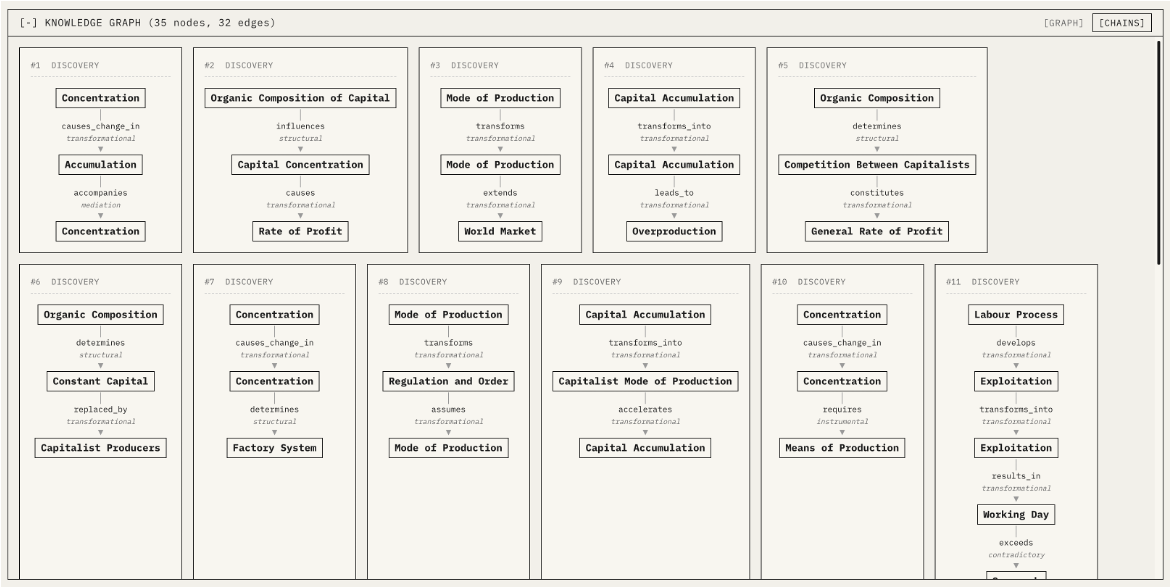
Discovery chains RedMarx traverses for Mariana’s question, from a knowledge graph of 35 concepts and 32 relations
The graph, a carefully constructed analytical map rather than a dictionary, is built and maintained by GSI’s domain experts to reflect the actual structure of the tradition. This is where expert labour is most concentrated, and two features deserve emphasis. The first is historical disambiguation: each concept carries a time-period annotation – a category traced ‘1844 → 1857 → 1867’, for instance – so the graph can distinguish the early formulation from the mature one instead of averaging them. The second is sense-splitting, when the same term appears in two distinct theoretical settings with little overlap in meaning. In such cases, the graph splits it into separate senses rather than fusing them, letting the system respect the dialectical movement of Marx’s vocabulary instead of erasing it. The impact of this expert curation was evident when GSI tried to extract concepts from a given source document. When guided by a generic, default ontology, the extraction pipeline drew only a handful of concepts while the purpose-built Marxist ontology helped draw several hundred concepts from the very same text.
This step matters because it makes the system’s analytical assumptions visible, allowing Mariana to inspect the skeleton before any retrieval happens and adjust it if a category is missing or misplaced. The graph is a working object, not a black box.
2.2 MetaRAG Retrieval: Going Back to the Original Texts
Once the skeleton is in place, RedMarx hands each of its nodes – each concept, each claim – to MetaRAG, configured here against a curated corpus of Marxist works. That corpus is itself an artefact of careful expert preparation. The source volumes are digitised through a two-pass vision-language reading process, with one model reading each scanned page and a second refining and cross-checking it. This allows tables, formulae, and the original printed page numbers to survive intact, so that every passage can later be cited back to the book and page it came from.
The instruction to MetaRAG is straightforward. For every concept and every position identified in the skeleton, locate the original passages in the corpus and return them with their chapter and section identifiers. Do not paraphrase. Do not summarise. The downstream analysis depends on having the real text in front of the system, not a synthesised approximation.
A second, subtler commitment operates here too. When RedMarx moves from finding a passage to analysing it, it does not reason from the isolated snippet. Chunks do the work of finding – they are how the system locates the relevant passage – but they are not the unit it then reasons over. Having used the chunk as a pointer, the system discards it and ingests the entire surrounding source document – the full chapter rather than the fragment – so that the author’s overarching argument frames the reading.1 This is the practical answer to the loss of conceptual context described in Section 1.1, since meaning is no longer artificially confined to the unit that happened to match the query.
This is where the difference between RedMarx and a generic chatbot becomes most visible. A generic system will produce fluent prose about Marx’s theory of ground rent without ever consulting Volume III of Capital (1894). RedMarx is constructed to refuse this shortcut. The retrieval step is the foundation, and everything downstream is built on direct engagement with the sources.
2.3 The Research Loop: Reading the Way a Scholar Reads
Faithful retrieval is necessary but not sufficient. As GSI’s early experiments showed, a system can hold the right passages and still interpret them carelessly. RedMarx therefore wraps retrieval in an iterative research loop – plan, harvest, analyse, synthesise – that works through a question the way a researcher like Mariana would: scoping it, gathering evidence, assessing whether the evidence is sufficient, and only then drafting.
Two things give this loop its rigour. The first is an embedded expert method. How RedMarx investigates a Marxist question – how to navigate the corpus, how to disambiguate a contested concept, how to read a passage against the consolidated scholarship rather than from first principles – is not hard-coded. It lives in editable instruction documents, distilled from the primary and secondary literature through retrieval work carried out with domain experts. These documents capture how an experienced scholar interrogates a Marx text. Because they are plain documents, a domain expert can revise the system’s method directly by adding an interpretive framework, which will take effect immediately.
This is also how the team corrected an early failure in which the system merely stacked retrieved points in a flat list, like a student reciting facts, instead of building the logical relations between them. Teaching the system, through these documents, to write as serious scholarship demands turned a stack of retrieved points into a genuine argument.
The second is a human checkpoint. After the system has scoped the question and surveyed the available evidence, it pauses for the researcher to review and approve the direction before committing to full analysis. The human is not a spectator at the end of an automated process but is in the loop at the decisive moment. Work in progress is preserved at every step, so the path from question to report stays auditable rather than opaque.
2.4 Synthesis: Faithful to the Text, Footnoted to the Section
The final stage takes the conceptual skeleton, the retrieved primary passages, and the researcher’s question, and produces a synthesised research report.
The synthesis is bound by a strict requirement that every substantive claim that rests on a source must carry a footnote that identifies the source down to the chapter and section. Because each retrieved passage arrives already tagged with its origin, citations are born with their sources rather than reconstructed afterwards. This removes the risk of the fabricated or mismatched citation that plagues generic tools. A single footnote in a RedMarx report resolves not merely to a book but through its full structure – Book → Part → Chapter → Section → Subsection – so that ‘Marx on the form of value’ becomes, concretely, a pointer to Section 3, ‘The Form of Value or Exchange Value’, in Volume I of Capital (1867). The reader of a RedMarx report, whether a colleague, a reviewer, or a critic, can follow each substantive claim back to the precise passage in the original work that grounds it.
For academic work, this satisfies the rigour that serious scholarship requires. For political work, it matters because claims about what Marx, Lenin, or Gramsci argued must be checkable, particularly when those claims are contested. A report whose footnotes resolve to chapter and section is a report that can be defended.
Traceability serves thought; it is not an end in itself. The footnotes exist so that a researcher can build on the sources with confidence, shifting energy from the hunt for passages to argument, judgement, and the dialectical work that is the point. On Mariana’s question, for instance, citation is only the starting point. What matters is the argument RedMarx is able to sustain: that the rising social productivity of labour is the very process through which labour is subordinated to capital. Where Marx’s texts leave that tension genuinely open, the system marks it as such, with sources on both sides, rather than forcing the corpus into a resolution it does not contain. That is the register RedMarx is built for.
3. Current Status: Evidence from Use
RedMarx is being trialled by GSI researchers, who have so far run it on 16 substantive questions of the kind reproduced throughout this article, across 29 logged sessions – five of those questions selected for the controlled four-system benchmark reported below, the other 11 developed as full research reports – and judged the results to be strong.
That judgement is not merely impressionistic. In a controlled benchmark, five expert-selected questions on Marxist political economy were scored by human evaluators against a six-dimension rubric – comprehensiveness, representation of contradictions, terminological precision, dialectical exposition, critical reflexivity, and analytic depth. Together, these produced 118 structured pass/fail checks per system.
RedMarx’s full configuration scored 118 out of 118, or 100%. A leaner configuration of the same system, running on the substantially cheaper Kimi K2.5 rather than a frontier model, scored 97.5%. Claude Opus 4.7 with no retrieval at all scored 83.1%, and NotebookLM scored 50.8%. The decisive gap appeared not in surface vocabulary, where every system could name the categories, but in the dimensions that test Marxist understanding: surfacing internal contradictions, maintaining critical and historical reflexivity, and sustaining analytic depth. There, the weaker tools produced clean taxonomies that sanded off Marx’s critical edge. NotebookLM’s result should be read as a mismatch of purpose rather than a simple failure: it is built to answer in seconds, where RedMarx is built for analyses that take 10 to 15 minutes. One difference did not need a rubric to detect: across the same five questions, the two retrieval systems produced 216 references resolving to a named chapter or section, and the two systems without retrieval produced none at all. The benchmark matters because it tests the difference between summarising Marxist vocabulary and reasoning dialectically with it.
These claims can be checked against the answers themselves. Four questions are published in full – each with RedMarx’s answer, the knowledge graph and discovery chains behind it, and a general AI tool’s answer to the same question – in GSI’s GitHub repository.
The benchmark was run on a restricted, canonical slice of Marx on which even an unaided model performed respectably. That performance is expected to fall away – and the value of retrieval and the knowledge graph to grow – as the corpus expands to Lenin, Mao, and lesser-known texts that demand reasoning across authors. That expansion is the subject of the next section.
The intention is not to keep RedMarx as an internal tool. The conditions that produced it – the difficulty of the Marxist corpus, the inadequacy of generic AI, the centrality of dialectical thinking, and the need for source fidelity – are not unique to one institution. RedMarx will prove useful to other research collectives, party intellectuals, popular educators, and independent scholars who work within or alongside the Marxist tradition.
4. The Road Ahead
A research system is never finished. Several directions of work are already underway, in rough order of immediacy.
Deepening quality and the research loop: The nearest-term work is on rigour itself. The aim is to mature the research loop so that the system can review its own draft, identify what is missing, return to the sources, and try again for a limited number of rounds before a human reviews the result. In other words, the system should begin to ask of its own work what a careful researcher would ask: is the argument complete, are the sources sufficient, and has anything important been missed?
Broadening the corpus: In parallel, GSI is steadily integrating further primary sources and well-curated secondary literature. Marxism is not a closed canon but a living tradition, with major contributions across languages, regions, and historical moments. GSI will continue to add carefully selected works, with attention to translation quality, editorial provenance, and licensing, scaling the corpus from the political economy core towards the wider canon of Lenin, Mao, and others, so that RedMarx’s retrieval reflects the full breadth of the tradition rather than a narrow slice. Because so much of that tradition lives in translation, expanding across languages is a central part of this work, not an afterthought.
Richer analytical frameworks and information-gathering strategies: Beyond the current knowledge graph, GSI is developing additional analytical frameworks – conjunctural analysis, world-systems decomposition, value-chain analysis, and social-formation analysis – that a researcher can invoke when the question calls for them. Each brings its own way of reading the corpus.
Cross-traditional and cross-temporal research methods: Some of the most important contemporary questions cannot be answered from inside a single theoretical school or a single historical period. RedMarx is being extended with methods that allow comparison across traditions – reading dependency theory and world-systems theory against each other on the same question, for example – and across time. These methods help trace how a category evolves from its classical formulation through its mid-century reconstruction to its contemporary use.
Connecting to deeper research: Finally, RedMarx does not have to work alone. A faithfully sourced, dialectically structured analysis of a theoretical question is exactly the kind of input that a larger research process needs. Work is underway to let RedMarx feed its grounded output into more comprehensive research systems, so that rigorous theoretical reasoning becomes a building block of larger investigations rather than an endpoint.
The deeper reason for building the instrument in-house, rather than waiting for commercial platforms to serve the field, is that ownership shapes possibility. When the system belongs to the institution that uses it, the methodology embedded in it can be the one that institution actually believes in. The researcher can ask the system harder questions, configure it for finer-grained work, and, most importantly, direct human attention to the questions that only humans can answer. The mechanical work of locating passages, cross-checking citations, and mapping conceptual relations can be entrusted to the system. What remains for the researcher is the harder and more valuable work of judgement, synthesis, and political imagination.
5. The System Retrieves; the Human Thinks
A tradition is kept alive not by being quoted but by being thought with. For a century and a half, the Marxist canon has demanded more of its readers than any single lifetime can give: more volumes than one scholar can hold in view, more contexts than one mind can keep straight, more debates than one career can master. The danger is not that the texts disappear, but that the collective capacity to read them as a whole begins to thin. RedMarx is built against that attrition.
It also matters who builds the instrument. The capacity to work with a tradition is not a neutral convenience; it is infrastructure. When the tools that mediate access to the canon are built on someone else’s terms and behind someone else’s paywall, they shape the questions researchers can ask and the sources they can reach. Building RedMarx is a way of refusing that dependence; it is a small act of reclamation that returns part of the means of reading the tradition to those who work within it and gives a movement more control over the conditions in which it thinks.
RedMarx is also built by people, for people. Movement leaders and cadre posed the political questions the system exists to answer; scholars chose the most authoritative sources; retrieval and domain experts shaped the dialectical framework together; those who know the tradition drew the knowledge graph by hand; and AI specialists engineered the research loop that binds it together. No part of RedMarx thinks on its own; every part extends someone’s thinking. The human is its origin and its end – the question begins in a real political need, as Mariana’s mandate from the MST did, and the answer is meant to be carried back into a real argument and put to work. What looks like a machine is, in truth, a collaboration among experts from different fields, each multiplying the others’ reach.
RedMarx should not be mistaken for magic, or for a substitute for the disciplined reading that serious scholarship has always required. It is not a shortcut around that labour but a tool for absorbing the mechanical work of locating passages, checking citations, and mapping conceptual relations. Ultimately, judgement, synthesis, and political imagination remain the domain of the researcher. The system retrieves; the human thinks. That division of labour is not a weakness of the tool but the reason for building it.
Researchers and organisations interested in RedMarx, or in adapting the approach to another body of work, can write to GSI at contact_gsi@thetricontinental.org.
Notes
1 Full-document ingestion processes a large volume of text for each answer, and so requires a model with a one-million-token context window. This currently restricts RedMarx’s full configuration to frontier models; the leaner configuration described in Section 3 runs on smaller models at significantly lower cost.
| | |
| | Author Chris Wang is an AI engineer at Global South Insights, where he works on interdisciplinary and cross-industry AI application development, bridging cutting-edge AI technologies and real-world value delivery. |
| | |
| | Editors Prasanth Radhakrishnan is an editor and researcher at Tricontinental: Institute for Social Research, whose work focuseson the political economy of media in the Global South and the intersection of technology and geopolitics. Mikaela Nhondo Erskog is the editor and researcher in the interregional office of Tricontinental: Institute for Social Research. |
From | Tricontinental: Institute for Social Research via This RSS Feed.
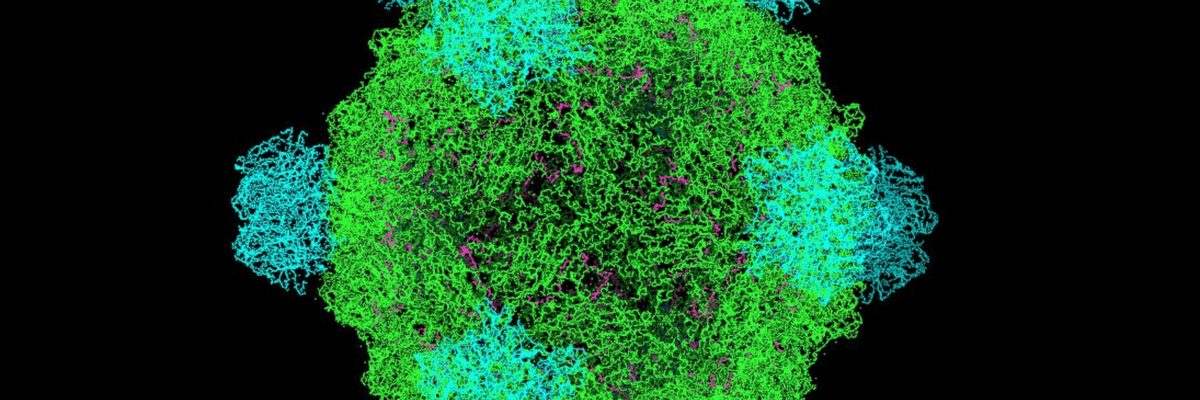
As scientists confirmed the first-ever biological viruses generated by artificial intelligence, experts warned Thursday that governments have failed to keep pace with a rapidly advancing and largely unregulated technology that, while having tremendous potential for medical breakthroughs, could also pose existential threats to humanity in the foreseeable future.
Research published Thursday in Science, available in full only to subscribers, describes how scientists at Stanford University and the Arc Institute used a genome language model, roughly the genetic equivalent of the technology behind AI chatbots, to generate hundreds of novel bacteriophage genomes—viruses that infect bacteria rather than humans. After synthesizing and testing the AI-generated designs, researchers found that 16 functioned successfully in laboratory experiments, infecting and killing E. coli.
While the researchers said that the new viruses pose no danger to humans because they only infect bacteria, experts have warned of the risks of AI creating novel bioweapons—either prompted by scientists or, in a future when superintelligent AI is achieved, independently—that could, in a worst-case scenario, threaten the existence of humanity.
"Although this is promising for life sciences applications, it also raises urgent biosafety and biosecurity questions," Johns Hopkins University School of Public Health Center for Health Security researchers Thomas Inglesby and Moritz Hanke wrote in a related article, also published Thursday in Science behind a paywall. "The ability to compose viral genomes using generative AI now exists; the governance to safely steer it does not."
The Stanford and Arc Institute study authors themselves noted the “important biosafety, biocontainment, and biosecurity considerations” accompanying such advances, urging researchers to “consult both safety and security professionals" during their work.
Calls for more robust regulatory guardrails have mounted in recent weeks amid revelations that one of ChatGPT maker OpenAI's models autonomously broke into the systems of other companies during testing. As AI advances to the point where it will likely outsmart humans, the challenge of ensuring that advanced systems reliably pursue goals that match what humans actually want—known as alignment—becomes increasingly difficult and, experts say, dangerous.
A misaligned, superintelligence could take uncontrolled autonomous actions at massive scale to achieve its goals, with industry pioneers warning of potentially catastrophic outcomes like AI-launched nuclear war or bioattack with existing or AI-generated pathogens.
While advocacy groups, the United Nations, and dozens of national governments are urging more robust regulation of AI development, the United States under President Donald Trump, the Republican-controlled Congress, and Big Tech’s army of lobbyists is strongly opposed to guardrails.
In fact, Trump—who Congressional Progressive Caucus Chair Greg Casar (D-Texas) on Monday accused of being "too busy cashing in" on AI—has rolled back regulations, including some meager steps taken during the Biden administration to bolster safety.
“There’s just a huge disconnect," Hanke told The New York Times on Thursday.
From Common Dreams via This RSS Feed.
Betsy Robertson was standing in the center of the Spokane Convention Center on Monday afternoon, but she wasn’t there for a gala or a conference. Instead, the event space in the middle of Washington state’s second-largest city had been transformed into a Red Cross emergency shelter as a trio of wildfires, just a few miles away, burned down entire neighborhoods.
Nurses and volunteers were moving between the rows of cots around Robertson, making sure that the hundreds of evacuees – from the mothers with their babies to the elderly with their caretakers – had blankets and enough to eat. Just outside, the air was noxious with smoke “thick enough to burn your eyes,” she said.
Robertson, a communications director for the Red Cross, is from Washington, and has been with the organization for 10 years. She has seen communities devastated by wildfires before. But never like this.
“The scale of homes destroyed and lives changed forever – this is a new level,” she said. “We are bracing ourselves for seasons like this getting worse and worse, and starting earlier and going later.”
A historically dry winter, extreme drought and heat waves set the stage for the hundreds of wildfires that have burned across the Pacific Northwest this summer. Dozens of large ones have broken out in the last week alone. Though it’s still early in the fire season, Oregon recently broke its annual record for acreage burned with nearly 2 million acres scorched.
Washington is also in the middle of its most destructive season on record, with more than half a million acres burned and at least 65,000 residents ordered to evacuate across the state. The three large fires that started on Saturday in the Spokane Valley had destroyed more than 700 hundred buildings by Monday afternoon.
“I’ve been trying to wrap my mind around how we’re going to house all these folks,” said Kitty Klitzke, a member of the Spokane City Council representing a hard-hit area where two fires were burning on Tuesday morning. Many of the people displaced by the fires in Spokane are senior citizens and their caretakers. “It’s a miracle that, so far, we know of no fatalities and no reported missing people,” Klitzke said.

A woman and her daughter wait for news on the status of their home at a Red Cross evacuation center in Spokane, Washington, on August 4, 2026. Josh Edelson / AFP via Getty Images
As the planet heats up, the conditions that fuel extreme wildfires are becoming more common. A warmer atmosphere can hold about 7 percent more water vapor for every 1 degree Celsius of warming, drawing more moisture from soils and vegetation and leaving forests and grasslands primed to burn. That dynamic also causes rain to fall more intensely but less frequently, leading to long periods of drought.
“This fire, and what we’re expecting to come, makes no sense unless you connect the dots through a changing climate,” said Bob Freitag, who recently served as director of the Institute of Hazards Mitigation Research and Planning at the University of Washington. “The science is known, and this is not something that is a one-off.”
According to Paul Pastelok, a senior meteorologist at AccuWeather, a lack of snowfall across the region helped set the stage for these fires. Normally, snowpack builds up during the winter and melts gradually through the rest of the year, providing a steady source of moisture. This year, the already-small snowpack was hit with hot spring temperatures, causing this reserve to melt early and leaving the landscape parched. Spokane had half of the typical snowfall this year, Pastelok said. Other parts of the state had even less, with many areas reaching historic lows.
In the last few days, powerful winds carried hot embers from the Little Giant fire, a 70,000 acre blaze in central Washington, for more than 3 miles, sending the flames clear over the waters of Lake Chelan and into the forests on the other side. Ryan Rodruck, a communications manager at the Washington Department of Natural Resources, called the overall situation “extremely tragic” and said that it had been an exceptionally challenging season for the thousands of wildland firefighters deployed across the state.

Residents of Spokane, Washington look through the remains of their burned home on August 3, 2026. AP Photo / Lindsey Wasson
In Spokane, more high winds forecast for this weekend could further worsen conditions, said Benjamin Cossel, a wildfire public information officer from California working with fire-fighting crews in the Spokane Valley.
The situation is comparable to the Los Angeles fires in 2025, Cossel said. Both outbreaks began in wild areas before moving into partially forested suburban neighborhoods. The urban setting also makes the smoke especially toxic, he said. A recently released study found that the Los Angeles fires, which sent more than 200,000 residents fleeing, had exposed an estimated 3.3 million people to high concentrations of a cancer-causing toxin.
Klitzke, the city council member, said the affected neighborhoods in Spokane were known to be vulnerable to fires. Steep terrain and abundant plant life helped the fires spread quickly over the weekend, while the winding cul-de-sac layouts of the neighborhoods slowed evacuations and made it difficult for emergency responders to reach the fires.
“These are neighborhoods with thousands of people and only two ways in or out,” Klitzke said, adding that many evacuees were stuck waiting in traffic for hours, watching the houses around them burn down.
Areas where homes mingle with natural areas are known as the wildland-urban interface. This kind of suburban housing is the fastest growing type of land development in the United States, and research shows that the homes built in these areas are more likely to burn down when wildfires spread.
“We already knew that this was a dangerous situation,” she said. “We need to get really serious about addressing climate change.”
Increasingly, fire-prone states like California are requiring homeowners to clear the trees and shrubs in a radius surrounding their home. This buffer zone, known as a defensible space, can dramatically reduce the risk that a wildfire will ignite a building.
People chose to live in these neighborhoods precisely because they love the vegetation, Cossel said. “I understand why people don’t want to remove them,” he said. “But we can’t live in that world anymore because of these fires.”
This story was originally published by Grist with the headline Wildfire season is changing. Spokane is showing how. on Aug 5, 2026.
From Grist via This RSS Feed.

Bolivia’s Prosecutor’s Office in Santa Cruz issued an arrest warrant Wednesday against former President Evo Morales for his alleged role in the 53-day road blockades against the neoliberal policies of President Rodrigo Paz’s administration.
The former President, who governed Bolivia from 2006 to 2019, faces charges including armed uprising against state security, terrorism, attacks on transportation safety, criminal association, public incitement to commit crimes, and attacks on public service security. Juan Carlos Huarachi, former executive secretary of the Bolivian Workers’ Central (COB, in Spanish), was also charged.
The warrant marks the latest escalation in the government’s judicial offensive against Morales and allied social movement leaders.
RELATED: Evo Morales Denounces Service Cuts in Cochabamba
Morales has emphatically rejected the accusations, calling them politically motivated persecution. “This is not justice, this is persecution,” the former president stated from Cochabamba, where he remains under the protection of thousands of supporters. His defense team previously argued that a separate arrest warrant issued years ago in Tarija for alleged human trafficking charges had already expired under statutes of limitations.
The 53-day blockades emerged as the central expression of a mass popular uprising against President Paz’s neoliberal agenda, which social movements characterize as an attempt to dismantle the plurinational state model established under Evo Morales’ government. Protesters demanded dialogue and accused the right-wing administration of governing for traditional elites rather than the country’s marginalized majorities.
Hoy el gobierno emite una nueva orden de aprehensión en mi contra, acusándome de supuestos delitos de terrorismo y alzamiento armado. Buscan responsabilizarnos de las movilizaciones sociales para ocultar el verdadero drama que vive Bolivia: una profunda crisis económica y social,…
— Evo Morales Ayma (@evoespueblo) July 29, 2026
Text reads: “Today the government issued a new arrest warrant against me, accusing me of alleged crimes of terrorism and armed revolt. They seek to hold us responsible for social mobilizations in order to hide the real drama that Bolivia is experiencing: a deep economic and social crisis, the result of a model that has abandoned the people and protected corruption.
Our position has always been clear: we are on the side of those who suffer from adjustment, fuel shortages, rising cost of living, insecurity and the rise of drug trafficking. With processes and political persecution they will not solve the problems that they themselves have caused; they only try to divert attention with a new headline...”
Among the key demands raised during the mobilizations were the non-criminalization of social protest and the guarantee that protest leaders would not be apprehended -demands that the arrest warrant now directly contradicts.
For grassroots leaders, the detention orders against Morales and other popular figures represent a smoke screen to divert attention from the government’s own responsibility in the deepening crisis facing the Andean nation. “The Paz government refuses to recognize its role in creating this situation,” said local leaders in statements to the press, arguing that the administration has chosen judicial repression over political dialogue.
Historical Context and Implications
This is not the first arrest warrant issued against Morales. In previous years, authorities in the department of Tarija ordered his detention in a separate case that his defense claims has already prescribed. The pattern of judicial actions against the former president has drawn criticism from human rights organizations and international observers who warn of the weaponization of the judiciary for political purposes.
Morales, Bolivia’s first native president, led the country for nearly 14 years before being forced into exile following a disputed 2019 election and subsequent political crisis. He returned to Bolivia in 2020 and has remained an influential figure in national politics, leading the Movement Toward Socialism (MAS, in Spanish) party. Despite being barred from running for president again under constitutional term limits, his political influence remains significant, particularly among Indigenous and working-class constituencies.
The arrest warrant is likely to deepen the already severe political polarization in Bolivia. The MAS party has condemned the measure, calling it an unconstitutional attempt to silence opposition voices. Meanwhile, the Paz administration defends the judicial process as a necessary response to what it describes as acts of sedition that threatened public order and the rule of law.
From teleSUR English via This RSS Feed.
Following years of drought, the wells in Estancia, New Mexico, are running dry.
After declaring a water emergency last week, the small town in Torrance County is hauling in water to fill its pipes. Estancia has also reduced water sales to the Torrance County Detention Facility, or TCDF, a federal immigration detention center run by the private contractor CoreCivic. The detention facility, Estancia’s largest commercial water customer, has resorted to trucking in water.
In the midst of the crisis, Estancia Mayor Runnel Riley has taken a leave of absence. During a Board of Trustees meeting Tuesday evening, Estancia’s elected leaders passed a vote of “no confidence” in the mayor. The state has provided funding to drill a new well, and Estancia will be opening the 30-day bidding process this month.
Dozens of residents attended Tuesday’s meeting in person or virtually to voice their frustration about the water problems and delays in drilling a new well. When asked by a reporter for the Mountainair Dispatch, board trustees said they did not have data available on what proportion of the city’s water goes to the detention facility. Estancia is home to 1,400 people, and up to 800 people can be detained at the facility.
Read Next

The Colorado River is vanishing — and the fixes are getting weird
Ryan Gustin, senior public affairs director at CoreCivic, said the company implemented contingency plans once it learned of the water emergency. He said that the Torrance County Detention Facility has brought in additional water supplies, and the water emergency has not impacted its operations.
“Drinking water is always available within our housing units and bottled water has been provided in addition to the readily available drinking water containers,” Gustin said.
Roy Hubbard, Estancia’s deputy clerk, told Inside Climate News that the town is meeting with CoreCivic on Wednesday to discuss next steps. The detention facility has been the subject of complaints about sewer and water problems in the past.
A detention center, a drought, and years of delay
The current water shortage is not Estancia’s first.
Last year, Estancia asked residents to conserve water because its wells were not producing adequately. In 2024, the town issued a similar call.
Overpumping has caused significant declines to the groundwater level in the Estancia Basin aquifer, which the town relies on, according to the New Mexico Groundwater Alliance. The Office of the State Engineer, which regulates water rights in New Mexico, closed the Estancia Basin to new water rights. However, the office predicted that if existing water rights remain in use, the groundwater level will continue to decline.
New Mexico, including Torrance County, is experiencing severe drought. State officials expect groundwater supplies to further diminish because of higher temperatures and changes in precipitation patterns due to climate change.
Read Next

This simple metal tube helps scientists predict drought before it happens
Estancia elected Runnel Riley to replace the incumbent mayor in November 2025 by a mere five votes. However, Riley stopped attending trustee meetings as the town’s water problems became more severe.
State Representative Stefani Lord, a Republican who represents Torrance and Bernalillo counties, said at Tuesday’s meeting: “I called the mayor in January. He has never returned my phone calls.
“Just get the well finished. That is the short-term problem,” she said. “There are all kinds of things we can do in the future. But for this moment, we just have to focus on getting this done.”
During the meeting, the trustees also voted to prohibit fireworks over the Fourth of July weekend. The town still plans to hold a fireworks display, but private citizens will not be allowed to set off fireworks because of the ongoing drought and the risk of fires during the water emergency.
Hubbard, the deputy clerk, said that as of Saturday, trucks had delivered 116,700 gallons of water to the town. He said that water supply to CoreCivic will “gradually be turned back on” when there is more water available. According to reporting in the Mountainair Dispatch, more than 80 percent of the town’s water goes to commercial customers. However, town officials have not clarified how much of that share goes to CoreCivic.
Read Next
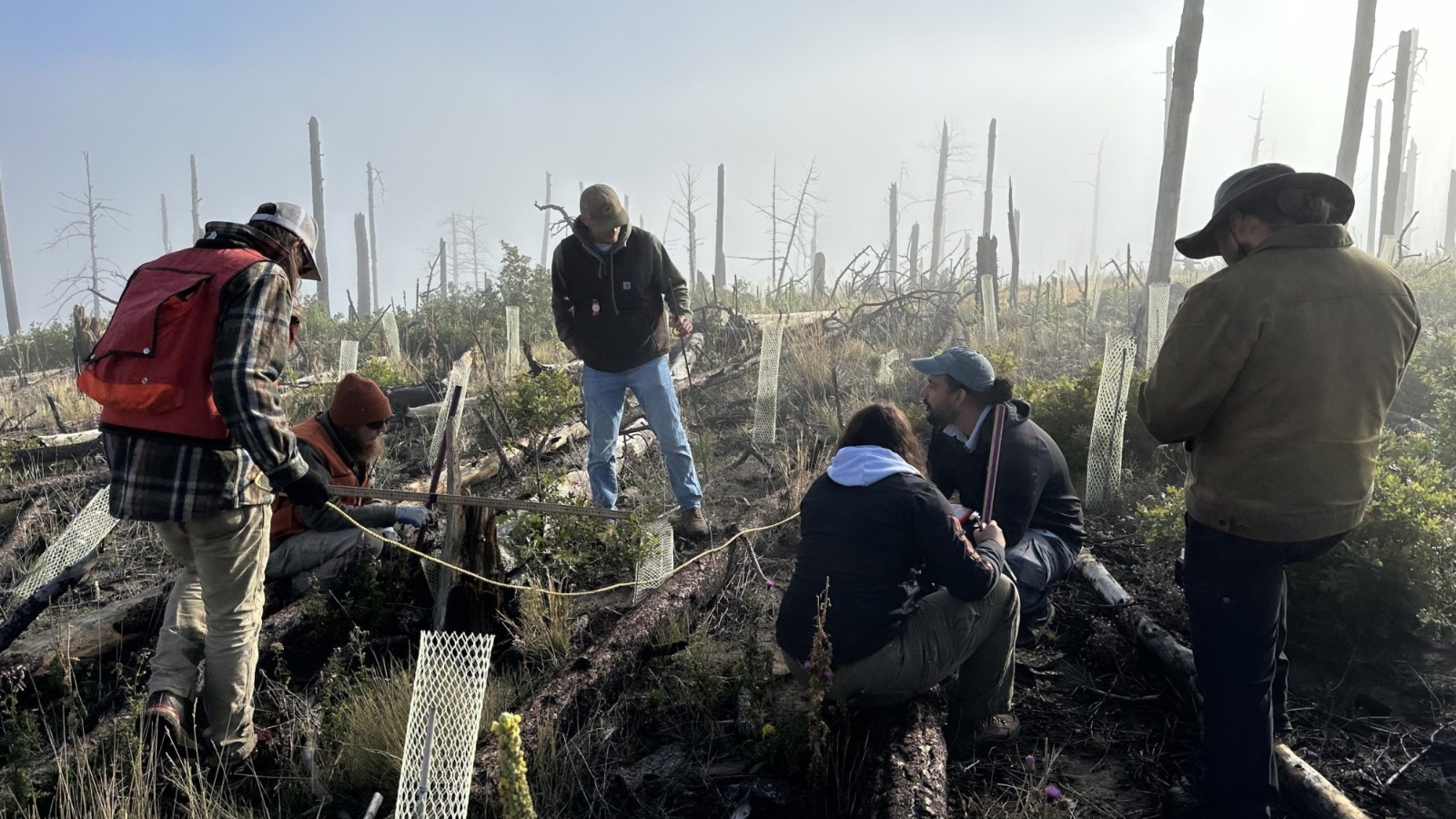
How New Mexico is ‘building a forest’ by solving a seedling shortage
During Tuesday’s meeting, in response to questions from a Mountainair Dispatch reporter, Mayor Pro Tem Albert Lovato said that providing up-to-date information on the town’s water supply is difficult because of the fluctuating population at the detention center. “Our population goes up and it goes down because of CoreCivic,” he said.
The detention center has been a source of controversy for years.
The Department of Homeland Security’s Office of the Inspector General documented unsanitary conditions at TCDF in 2022, including “clogged toilets, broken sinks, inoperable toilets, water leaks, and mold.” The Innovation Law Lab, an immigrant and refugee rights organization, has also documented complaints from detainees at TCDF about sewage overflows and restricted access to water.
“There have been no sewage issues at TCDF because of this situation, nor were there any sewage issues in 2025 related to any water supply issues,” said Gustin, the CoreCivic spokesperson. “At no point have those in our care been without drinking water.”
The New Mexico Environment Department, or NMED, enforces health and safety regulations at TCDF. Agency spokesperson Drew Goretzka said that following a 2025 inspection, TCDF has addressed potential deficiencies with the sewer system.
“NMED is supporting the town of Estancia through emergency response coordination, including requesting assistance from other state agencies to provide alternate water sources,” Goretzka said. “The department is in communication with the town and its contractors to resolve the immediate water shortage issues.”
Immigration and Customs Enforcement deferred questions about the facility to CoreCivic.
The federal agency has expanded its detention capacity under the Trump administration. ICE purchased numerous warehouses around the country to open new detention facilities this year for immigrants who are in deportation proceedings. ICE has been detaining an increasing number of people with active immigration cases seeking to stay in the country. Many residents in these communities, from Texas to Pennsylvania, have raised concerns whether local infrastructure could support the increased water demand from detention centers.
This story was originally published by Grist with the headline A New Mexico town is running dry. An immigration detention center is its biggest water customer. on Jul 4, 2026.
From Grist via This RSS Feed.

Resistance is mounting across the United States against the increasing use of surveillance tech company Flock Safety's cameras, with a growing number of cities canceling contracts as the artificial intelligence-powered license plate readers are quietly being installed in thousands of locations nationwide.
State and local police departments first used the Atlanta-based company's automated license plate reader (ALPR) systems for standard law enforcement purposes, but they are now being employed for a much broader range of uses, including immigration-related searches and other actions supporting US Immigration and Customs Enforcement (ICE) during the Trump administration's deadly anti-immigrant crackdown.
“We have cameras that are used for everything from illegal dumping to drug houses to hotels that are just big problems,” Flock Safety engineer Kevin Cox told prospective customers during a demonstration of the company's Condor Camera, according to a Thursday report in The Washington Times.
“There are endless, endless uses for what we can do with these things," Cox added.
Those uses include spying on constitutionally protected protest activity and enforcing abortion bans by tracking pregnant people's travel across states—even ones in which the medical procedure is legal.
The ACLU—which recently launched a "Get the Flock Out" campaign to "fight creepy ALPR cameras"—says there are currently between 80,000 and 100,000 Flock devices installed nationwide that conduct more than 20 billion scans per month. More than 5,000 law enforcement agencies use the cameras, and some of them keep their locations a secret.
Automatic license plate readers track our every move and funnel our personal information into enormous databases that police can access to spy on us without a warrant.Surveillance company Flock Safety is the largest provider of these cameras — it's time we get all of them out of our communities.
[image or embed]
— ACLU (@aclu.org) June 28, 2026 at 11:15 AM
"Flock's ALPR cameras aren't like your normal traffic cameras," the ACLU explained. "This surveillance technology records and tracks every car that comes into view, and then an AI algorithm catalogs the make, model, color, license plate number, bumper stickers, and even scratches. This personal information is then uploaded into a nationwide database that any law enforcement agency with a Flock contract can search—with few regulations or oversight on how they use what they find."
The backlash against creeping state surveillance has even transcended the partisan divide.
“I think our country is in a kind of uniquely anti-surveillance environment right now, which is to say that, in a time where it seems there is nothing that is not partisan, opposition to government surveillance is nonpartisan," ACLU privacy and surveillance attorney Chad Marlow told The Washington Times on Thursday.
There is growing action—both legal and otherwise—to end the use of ALPRs across the country.
According to the public information project Ban Flock Cameras, 82 Flock contracts were terminated across 28 states between August 2021 and May 2026, with 39 of those cancellations occurring in the first five months of 2026 alone.
Even Amazon-owned Ring announced earlier this year that it would stop doing business with Flock Safety.
Susie O'Hara, a member of Santa Cruz, California's nominally nonpartisan City Council, told WBUR earlier this year that she grew increasingly concerned about local use of eight Flock cameras last year after learning that police were sharing data gleaned from the cameras with the company's national network without city officials' knowledge, a violation of state laws banning the practice.
O'Hara became increasingly convinced that Santa Cruz should cancel its Flock contract after an ICE agent fatally shot Renee Good, a US citizen, in Minneapolis in January.
"I have goose hbumps on my arms thinking about the absolute chaos that was happening in Minneapolis," she said. "And just the absolute insanity of what we were seeing... It was totally clear to me that we should in no way consciously be in this system at all—just no way."
Less than a week after Good's killing, the Santa Cruz City Council voted to terminate the city's Flock contract, becoming the first municipality in California to do so.
“For us, the threat to our civil liberties was greater than any benefit we could get from the flawed product,” Santa Cruz Mayor Fred Keeley told KQED at the time.
Chad Kemp, who represents District 32 on the nonpartisan Dane County Board of Supervisors in Wisconsin—which in April voted to stop funding two dozen cameras leased from Flock—told The Washington Times that “there’s a public safety issue here, but there is also a privacy issue."
"There are serious concerns about individuals who can be monitored without their knowledge, or if it is even constitutional or ethical to track people without a warrant," he added.
At the national level, US Reps. Robert Garcia (D-Calif.) and Raja Krishnamoorthi (D-Ill.) last year launched an investigation into the use of Flock cameras to track pregnant people across state lines for abortion care and to conduct unauthorized immigration enforcement operations.
Krishnamoorthi and Sen. Ron Wyden (D-Ore.) have also urged the Federal Trade Commission to investigate Flock Safety "for failing to implement cybersecurity protections, allowing Americans’ personal data to be exposed to hackers, criminals, and spies to steal."
Their demand came after the cybersecurity firm Hudson Rock revealed that hackers stole passwords and data from at least 35 Flock customer accounts.
In May, US Reps. Jesús "Chuy" Garcia (D-Ill.) and Scott Perry (R-Pa.) introduced a bipartisan amendment to a bill that would prohibit state and local governments receiving federal highway funds from using ALPRs for purposes other than electronic toll collection.
It's not just Flock. Axon, Vigilant Solutions—a subsidiary of Motorola Solutions—Genetec, PlateSmart, Innova Systems, Rekor, ELSAG, Perceptics, Jenoptik, and other firms market ALPRs to law enforcement agencies, private companies, and others.
"It doesn't matter which company has its creepy cameras in your neighborhood," the ACLU said, "they all have the same problems: a lack of transparency, oversight, and regulation into how they collect, store, and use our data, and how to hold public and private actors accountable if they abuse it."
From Common Dreams via This RSS Feed.