
this post was submitted on 25 May 2026
594 points (98.7% liked)

Ask Lemmy

39716 readers
1906 users here now

A Fediverse community for open-ended, thought provoking questions


Rules: (interactive)


1) Be nice and; have funDoxxing, trolling, sealioning, racism, toxicity and dog-whistling are not welcomed in AskLemmy. Remember what your mother said: if you can't say something nice, don't say anything at all. In addition, the site-wide Lemmy.world terms of service also apply here. Please familiarize yourself with them


2) All posts must end with a '?'This is sort of like Jeopardy. Please phrase all post titles in the form of a proper question ending with ?


3) No spamPlease do not flood the community with nonsense. Actual suspected spammers will be banned on site. No astroturfing.


4) NSFW is okay, within reasonJust remember to tag posts with either a content warning or a [NSFW] tag. Overtly sexual posts are not allowed, please direct them to either !asklemmyafterdark@lemmy.world or !asklemmynsfw@lemmynsfw.com. NSFW comments should be restricted to posts tagged [NSFW].


5) This is not a support community.
It is not a place for 'how do I?', type questions. If you have any questions regarding the site itself or would like to report a community, please direct them to Lemmy.world Support or email info@lemmy.world. For other questions check our partnered communities list, or use the search function.


6) No US Politics.
Please don't post about current US Politics. If you need to do this, try !politicaldiscussion@lemmy.world or !askusa@discuss.online


Reminder: The terms of service apply here too.

Partnered Communities:

Tech Support

No Stupid Questions

You Should Know

Reddit

Jokes

Ask Ouija


Logo design credit goes to: tubbadu


founded 3 years ago
MODERATORS
 

Are these really the people that should be required to work so much? Isn't their job about handling life and death daily? Wouldn't we want exactly these people to come fully rested to work every single day and be fully staffed?

I don't know if there are jobs with similar stakes that are so carelessly staffed and disgustingly paid.

(page 2) 50 comments
sorted by: hot top controversial new old
[–] mechoman444@lemmy.world 10 points 1 day ago* (last edited 1 day ago) (1 children)

You know what's funny? I actually think the situation is a lot better than you're making it out to be.

You're not entirely wrong. There absolutely are positions in hospitals where people do insane schedules like 24 or 48 hour shifts. But that's mostly concentrated around emergency medicine, trauma, surgical residency, ICU coverage, and certain on-call specialties. There’s definitely a culture surrounding ER staff and surgeons where sleep deprivation almost gets treated like some badge of honor.

But the majority of the medical world in America does not operate like that.

Most hospitals primarily run on normal shift structures. Nurses on regular floors and patient wings are usually working standard 8 or 12 hour rotations with multiple shift changes throughout the day just like any other industry. And once you get into private practice, some doctors are only in office a few days a week seeing a relatively small number of patients across different locations.

People also forget hospitals are not run exclusively by doctors and nurses. They're massive operations with huge amounts of support staff, technicians, imaging departments, transport, administration, custodial staff, billing, labs, and so on, most of whom work completely normal schedules.

So yes, what you're describing does exist. But I don't think it's remotely as universal or apocalyptic as people make it sound. A lot of public perception comes from dramatized media where every hospital is portrayed like a nonstop trauma center operating at DEFCON 1 twenty-four hours a day.
[–] GladiusB@lemmy.world 3 points 1 day ago

Of course not. People take naps when it dies down in open rooms.

[–] disregardable@lemmy.zip 106 points 2 days ago (9 children)

Because the alternative is the rich paying more in taxes, and we can't have that obviously.

load more comments (9 replies)
[–] Horsey@lemmy.world 22 points 1 day ago* (last edited 1 day ago) (11 children)

You know, healthcare jobs are the only ones I see “advertised” here in the Southwest. There are billboards for all sorts of medical careers. I’ve had friends and acquaintances talk about being a nurse as a backup career plan.

Nursing is a career path where you cannot rise to the top ranks. Nurses cannot ever rise above doctors, because the next step up is a doctor. The repeat clients in a hospital setting in the southwest are drug addicts or psych patients. The “average” person going to the hospital is going there with something severe. Not to say that everyone doesn’t deserve care, but know your patient base. Nurses are strapped in the entire shift, and being late from lunch is like being late to work. It’s incredibly stressful, and there are studies that essentially show that nurses are worked to the mental and physical limit in their lifetime.

Nurses are treated like shit, and there’s a steady stream of them leaving the profession or moving into admin positions where they’ll settle in; you’re way better off in every way to just aspire to the admin jobs with a master’s of public health. Tell your friends. You’re welcome.

[–] Appoxo@lemmy.dbzer0.com 5 points 1 day ago* (last edited 1 day ago)

Nurses can absolutely advance careers.
Either through more training to become a professional in a specific topic (or expanding to freelancing on the side) or going into a more administrative part of the hospital like schedules, ordering etc.
But medically speaking, you are right. Only as far as you can until you need to study humane medicine.

load more comments (10 replies)
[–] SabinStargem@lemmy.today 4 points 1 day ago* (last edited 1 day ago)

Because the wealthy can afford to have well-rested medical professionals at a moment's notice. Elites would care much more about the wellbeing of the typical doctor, if they had to have the ordinary doctor working on them.

[–] SaveTheTuaHawk@lemmy.ca 4 points 1 day ago* (last edited 1 day ago)

This is why a very conservative estimate of 1/20 hospital deaths are attributed to medical error.

[–] Aceticon@lemmy.dbzer0.com 12 points 1 day ago (1 children)

Having been chronically overworked for a while in my profession, the last thing I want is my life in the hands of somebody chronically overworked.

At least in my profession the mistakes I made because of being so tired did not kill anybody or handicapped somebody for life.

[–] atro_city@fedia.io 7 points 1 day ago

My thoughts exactly. Overworking is bad in general, but in life-or-death industries, it shouldn't be happening.

[–] EndlessNightmare@reddthat.com 18 points 1 day ago (3 children)

I'm not really OK with it, but I never got a vote on the subject.

load more comments (3 replies)
[–] imhungry@leminal.space 2 points 1 day ago* (last edited 1 day ago) (1 children)

Healthcare isn't the same as other jobs. It's better to do several 12 hour shifts in a row for 3-4 days than to take 5-6 8 hour shifts in a row. It's better to do them all in a row at once rather than take days off in between. Work when you have momentum. You will burn out a lot faster if you work every single day, even if it's for a short period of time.

load more comments (1 replies)
[–] bouh@jlai.lu 3 points 1 day ago

Capitalism can only provide basic services to everyone if those services are borderline slavery. It works for all the basic needs : food, healthcare, construction.

One might say it only works through slavery for everything because most of the non essential things come from other countries you can call colonies. But the thing is that without redistribution the basic services cannot be paid correctly.

[–] Apytele@sh.itjust.works 18 points 1 day ago* (last edited 1 day ago) (2 children)

Most of them actually. Am a nurse and was once psychiatrically hospitalized alongside a train conductor and we really bonded over our ridiculous and yet supposedly "high reliability industry" jobs. She actually got hooked on speedballs because there's some weird loophole in our state where the train conductors need to give something like 48–72h notice or something to take sick leave so most of them just show up for their 16h shifts fucked up on amphetamines to stay awake then benzos so the amphetamines don't give them tachycardia and one of her managers actually basically gave her a pep talk on which doctors to go to and what to say to get them prescribed legally but given that they're both extremely addictive substances her dosages spiraled wildly out of control extremely quickly such that she was only able to get effective doses extralegally. On the plus side though losing that job and getting shipped to the other end of the state just to find a bed got her away from both her dealer and her cartoonishly abusive ex (even a week into her stay the bruising was pretty wild). And then actually when I left the hospital my third time I met my now husband in partial although we lost touch for like a year until we ran into each other again and he helped me escape my much more subtly shitty relationship and actually graduate / get licensed (if you think nurse pay is shit I was getting paid $12.50 as a nursing assistant working with criminally insane men and that was after the promotion).

load more comments (2 replies)
[–] towerful@programming.dev 57 points 2 days ago (4 children)

We aren't. But it's generally better for patient care. It's the same nurse/doctor seeing through more of the care of a patient with less handovers.
Handovers are where minor details or context can be forgotten, dropped or misunderstood - especially after a really tough shift.
Patients also get to see the same faces more often, which makes them feel like they are being taken care of - as opposed to a part being made in a machine.

But it's wrong. It would be better to have 8 hour shifts with 2-4 hour overlaps between shifts. So it's not a handover, it's an actual rounds, it's actually servicing patients and so on.
But that is likely very intrusive for patients, and 4-8 hours of the shift is with someone else (who you might not like or agree with) and communicating (which can be tiring).

So yeh, it's not great. Understaffing doesn't help, especially since these are people that genuinely care about their work. It's pure exploitation, because it is cheaper and hospital administration can justify it and get away with it (or whatever is higher that hospital admin in the case of free healthcare).

In some cases, it's budget and exploitation. And it's bullshit.
But there is a genuine argument that a doctor who is fully informed and tired is better than a doctor who is fresh and oblivious.

[–] masterspace@lemmy.ca 52 points 2 days ago* (last edited 1 day ago) (3 children)

I'm always slightly skeptical of this answer just because residency pretty much intentionally gaslights doctors into thinking that exhausted decision making is normal and unavoidable... All because the guy who started medical residencies had a massive cocaine addiction and it was 1900.

I'd be curious to see a study with data on patient outcome, wait time, use of resources etc, that measures exhausted double shifted doctors, vs fresh doctors with more context switching, vs fresh doctors + appropriate overlap to avoid context switching.

[–] turmacar@lemmy.world 23 points 2 days ago (3 children)

They've done those studies and context switching has historically been where the most problems occur. Whether they've repeated them with modern electronic medical records and systems, I don't know. I think most people agree there's probably a better middle ground between 8 hr shifts (3 handoffs a day) and the standards set by a dude who liked to experiment with coke and meth.

One of the big issues that I feel like doesn't get touched on as much is longer shifts allow less doctors, which reinforces the artificially low doctor graduation rates. The national board in the US pegs the graduation at X thousand new doctors every year and that number is mostly tradition / vibes. No we don't want to compromise on the ability of new doctors, but "gestures vaguely to US healthcare" good lord do we need more of them. Much the same could be said for nurses.

And all of that circles back around to not wanting to dilute traditionally higher paying job markets with more practitioners because the for-profit system will try to wring out every cent they can.

load more comments (3 replies)
load more comments (2 replies)
load more comments (3 replies)
[–] HobbitFoot@thelemmy.club 37 points 2 days ago (4 children)

A combination of a few things.

First, the founder of modern medical teaching was a man who loved cocaine and created a fairly aggressive education program which fed into a profession without work-life balance. The profession hasn't self-reformed while cases where skilled labor has massive overtime is generally more regulated.

Second, the cost of education is enormous. Medical training for a doctor costs north of half a million dollars, so there is a high cost to training an additional doctor. Because of that, it is more cost effective to add additional shifts to existing doctors and nurses.

Third, a lot of doctors have a god complex and don't want to admit they are fallible people. Because of this, they resist a lot of best practices other industries; checklists for operations are a 21st century "medical technology". There isn't a push within the industry to study how people fail like there is in other industries.

[–] OwOarchist@pawb.social 17 points 1 day ago* (last edited 1 day ago) (4 children)

Because of this, they resist a lot of best practices other industries; checklists for operations are a 21st century “medical technology”.

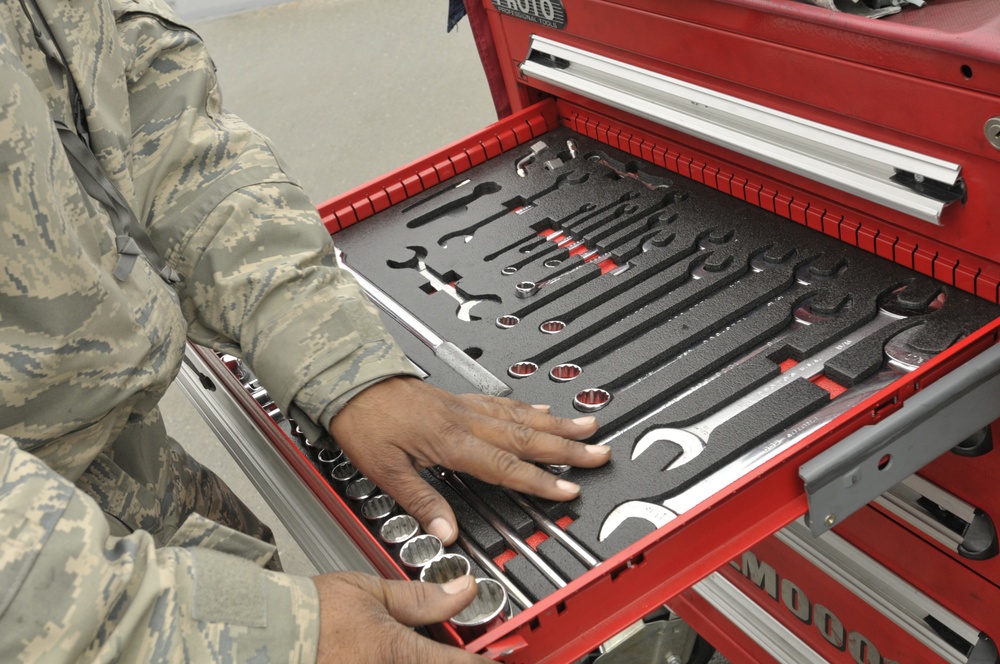
When I was an electronics technician in the Air Force, 'tool accountability' was huge. All toolboxes were arranged with individual foam cutouts for every individual tool, no matter how small, so it would be quickly and easily obvious from a mere glance if a tool was missing from the toolbox, leaving an empty cutout behind. (Like this.) Paperwork was required to check tools out of and into tool boxes. At the end of every job, the toolbox had to be checked -- both the paperwork and visually -- to ensure no tools were missing. (And if tools were missing, the job wasn't done until those tools were found and accounted for.)

And that's because aircraft in general -- and jet engines in particular -- really don't like lost tools banging around loose inside. I didn't even work on engines, or even on aircraft, but the Air Force had adopted these policies service-wide to prevent accidents resulting from lost tools left inside engines.

Which is why it baffles me that surgeons can sometimes accidentally leave a tool inside a patient. Working on a real human body is way more important than anything I worked on ... and human bodies don't like foreign objects left behind any more than jet engines do. Plus, those surgeons are getting paid so much more than I did, and they even have assistants in the room to handle the tools for them. How the fuck have they not managed to have a similar system of tool accountability, preventing them from leaving tools behind inside patients?

load more comments (4 replies)
[–] HubertManne@piefed.social 19 points 2 days ago (1 children)

on the third point the it was the anesthiesa professional group which made the push for the much more rigorous process that greatly improved outcomes. So there is some precedence for the profession realizing it needs to improve processes.

load more comments (1 replies)
load more comments (2 replies)
[–] deadymouse@lemmy.world 3 points 1 day ago

Capitalism has no pity.

[–] A_Random_Idiot@lemmy.world 27 points 2 days ago (6 children)

Because one lunatic doctor had a cocaine addiction and could go days at a time without sleep, so he demanded the same from all his students who werent riding the white lightning, which inevitably left a deep cultural impact and expectation for everyone that followed to do the same, because "I suffered, so you suffer too"

load more comments (6 replies)
[–] blargh513@sh.itjust.works 18 points 1 day ago

The decision making center of your brain is the prefrontal cortex. It's the really thinky bit. It is what does the explicit thought about novel situations. When something is done "instinctively" or out of habit, that's usually handed off to the amygdala. It's used more for stuff that you've done many many times before.

When you are tired, haven't eaten well, and any number of other conditions that overworked and overstressed doctors face, your prefrontal cortex will do a lousy job. The amygdala will actually secrete chemicals that inhibit the performance of the PFC. As such, routine things are probably ok. something novel comes up? Bad times.

I'd prefer my doctor is well rested and in a good frame of mind to make quality decisions, thank you.

[–] luthis@lemmy.nz 34 points 2 days ago

I'm not OK with it and I vote with this specifically in mind.

[–] BradleyUffner@lemmy.world 18 points 2 days ago (4 children)

If I recall, most medical mistakes take place over shift changes. Things like a patient getting a double dose of meds because they didn't realize the prior shift already gave them. The idea is that minimizing the number of shift changes reduces the number of mistakes.

[–] magnetosphere@fedia.io 14 points 1 day ago

This is the explanation I’ve heard. It seems like someone should have thought of a better solution by now, though.

[–] Sludge@sh.itjust.works 15 points 2 days ago (12 children)

This is accurate. It has to do with minimizing handoff risk.

https://pmc.ncbi.nlm.nih.gov/articles/PMC7539758/

Lots of uneducated responses in this thread that are pure conjecture and drivel.

load more comments (12 replies)
load more comments (2 replies)
[–] FlashMobOfOne@lemmy.world 18 points 2 days ago (1 children)

We're not.

We're just powerless to change it outside of our local jurisdiction.

load more comments (1 replies)
[–] ichwillhierraus@feddit.org 1 points 1 day ago

I would agree to eliminate the double shifts...if we also van their peivste working in the afternoon.

(In spain they work foe the public...but then thwy also have a private consultation during the evenings, so they work until late and the next day they may have an operation. Also they tend to recommend you to avoid the private way and go to their consultation privatly).

load more comments
view more: ‹ prev next ›