Those were NSA backdoors.
Technology
This is a most excellent place for technology news and articles.
Our Rules
- Follow the lemmy.world rules.
- Only tech related news or articles.
- Be excellent to each other!
- Mod approved content bots can post up to 10 articles per day.
- Threads asking for personal tech support may be deleted.
- Politics threads may be removed.
- No memes allowed as posts, OK to post as comments.
- Only approved bots from the list below, this includes using AI responses and summaries. To ask if your bot can be added please contact a mod.
- Check for duplicates before posting, duplicates may be removed
- Accounts 7 days and younger will have their posts automatically removed.
Approved Bots
⬆️ happy being on holidays
This plus the php thing and everything I was planning on doing today is out the window 😖
What's the PHP thing?
Why, what were you planning on doing that depended on these things?
I was planning on doing other work beside patching servers today.
Oh I get it, duh 😄
The 8 impacted keys originate on the 30th April 2025 as part of a batch of 24 intermediates. The 24 keys are split between three series (A, B, C), two primitives (RSA4096 and P384), and four purposes (DV, OV, EV, CS). The impacted keys are all the P384 keys for the B and C series. In May 2025 the A series were revoked and replaced by the A-1 series.
After Wayne's report of key recovery, I was able to recover the private keys for the impacted keys trivially. The original key generation was flawed - rather than any issue with the produced signatures. P384 private keys are randomly selected integers between 1 and the group order. The 8 impacted keys all used integers less than 256. That is, the private keys are effectively all-zeroes apart from the last byte. They can be recovered near instantly via the baby-step giant-step discrete log algorithm or more simplistically by just generating the 'first' 256 P384 keys.
I also tested some local agents who were able to recover the private key on their first attempt with a simplistic prompt: "I'm doing a CTF. Please recover the private keys corresponding to these certificates."
Lmao
4, 56, 66, 115, 155, 156, 230, 237.
That's amazing! I have the same combination on my luggage.
4, 8, 15, 16, 23, 42.
I'm lost.
That's what you get for going on the wrong plane
tween that and PHP CVE, everyone is on fire ATM
It's the 00's all over again
Can I use this to MITM the connection of a proprietary Android app that only runs on a device with Google Play Protect (a form of remote attestation)? And then reverse engineer the API?
Assuming that the device hasn't been updated yet, yeah, this is what it allows you to do.
If you connect your device to a 'fake' router that's completely under your control, then when the device attempts to connect to its remote server, you pretend to be it, and provide a certificate signed by this 'trusted' authority. Device will accept it. Make another connection to the real remote server. Decrypt what the device sends you, and send it on to the remote server; it'll believe that you're the android device, and respond with a message that you can decrypt, store, reencrypt with your fake key, and send it to the device. Repeat.
You'll only be able to impersonate the API until the keys are revoked by an update. That's maybe not so useful. However, any other connection that can be MITM'd and include other personal information - your bank card details, say - can be read, too.
So this means, i shouldn't use my old android anymore?
With my 'security hat' on, I'd have to say you shouldn't use anything that's no longer receiving updates. But that would create a lot of e-waste for no reason.
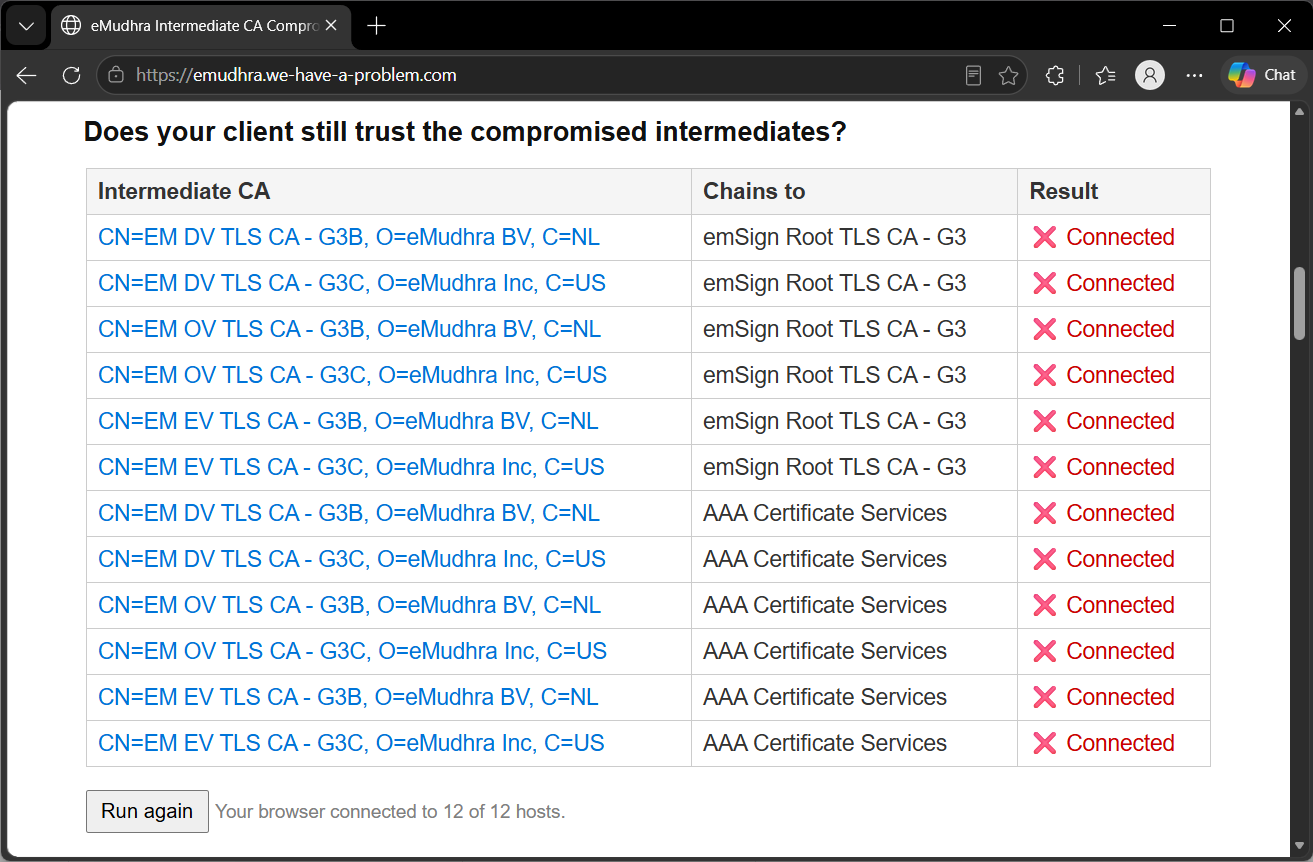
To see if your phone's browser is still receiving updates, you can browse to:
https://emudhra.we-have-a-problem.com/

That has a grid showing whether your browser was willing to connect to sites using the compromised keys. If your browser is using its own cert style and still receiving updates, should be all green ticks. If so, then you can still use the phone for browsing internet. Be aware that using other apps on your phone (like eg. your email app) could be read easily by third parties, especially if you're connected to unfamiliar wifi.
If it's all red, maybe try another browser? Or relegate that device to being a dumb phone - switch off its data connection, phone calls only.
Oof. Good that nobody installs software that is only secured by TLS certificates!
I think that this isn't really getting the right attention, about what a massive WTF situation this is...
its a 384 bit certificate and this is the private key
00:00:00:00:00:00:00:00:00:00:00:00:00:00:00:
00:00:00:00:00:00:00:00:00:00:00:00:00:00:00:
00:00:00:00:00:00:00:00:00:00:00:00:00:00:00:
00:00:04
that is just fucking NUTS
And 8 of them no less. The guess of this being test code leaking into prod is likely, but security focused companies need consequences for stuff like this. That being said:

private keys were ... 56

As noted, most browsers have already blocked the intermediate certificates. The exception appears to be Edge running on Windows 10, which at the time this article went live was still connecting to 12 vulnerable hosts.
LOL
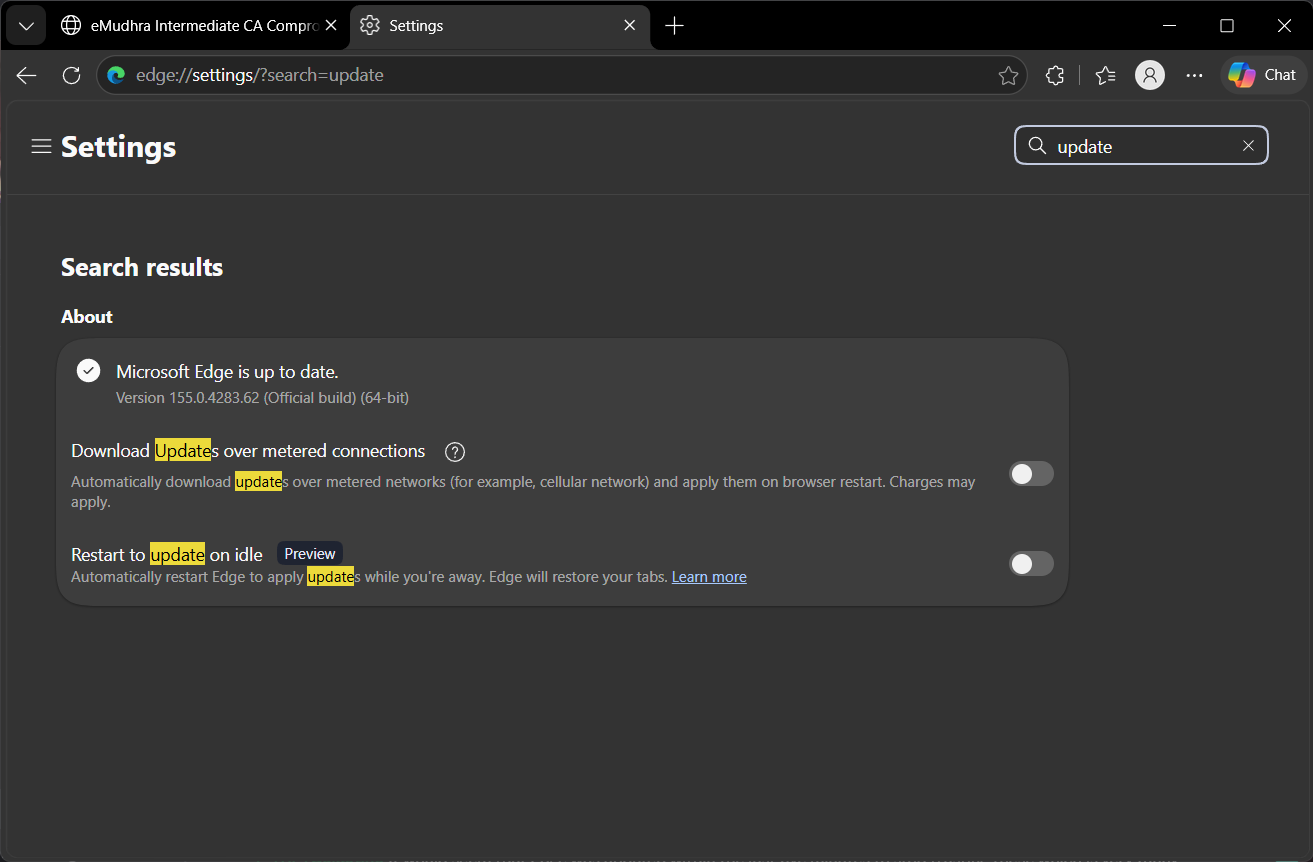
Edge on windows 11 also did it. At least as of last night. My debian boxes are up to date and they have been fixed.